



San Luis is advancing an ambitious innovation project with environmental and social impact. The provincial Ministry of Science and Innovation led a meeting with representatives from the National Commission on Space Activities (CONAE), where actions were outlined for the development of a green data laboratory and monitoring.
This new initiative aims to apply satellite technology and analysis tools to improve the quality of life in the province. The focus will be on optimizing water use, detecting fires in a timely manner, protecting public health, and boosting sustainable agricultural production.
The laboratory will use information generated by sensors and satellites to prevent environmental risks and support territorial planning. The creation of this space not only positions San Luis as a reference in applied science, but also puts technology at the service of the ecosystem.
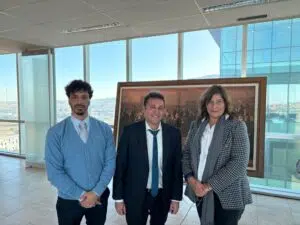 Minister Delfor Sergnese with representatives of the National Commission on Space Activities. Photo: San Luis News Agency.
Training for an Intelligent Future
In addition to environmental monitoring, the project includes a significant investment in training. Training will be provided to public sector workers in the management of geospatial data and new management tools.
The goal is for technical teams to make more precise and efficient decisions in areas such as agriculture, health, or environmental protection. This forward-looking vision reinforces the role of knowledge as the cornerstone of regional development.
Collaboration with CONAE and the Gulich Institute will also provide access to cutting-edge technology and specialized knowledge. Together, San Luis is committed to integrating science, innovation, and sustainability to actively address the challenges of climate change and responsible resource management.
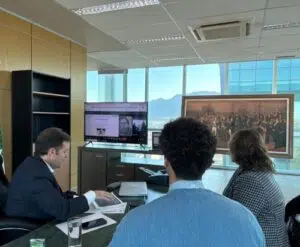 Minister Delfor Sergnese with representatives of the National Commission on Space Activities gathered for the creation of the green data laboratory. Photo: San Luis News Agency.
What Are the Contributions of Data Laboratories to the Environment?
Data laboratories applied to the environment allow for more efficient and proactive management of natural resources. Through the analysis of large volumes of information, it is possible to detect changes in ecosystems, monitor air and water quality, and predict natural disasters such as fires or floods.
These technological platforms also contribute to reducing the impact of human activities, as they provide tools to optimize agricultural practices, control deforestation, or assess the progress of climate change. By having updated and accurate data, more sustainable public policies are favored.
Furthermore, data laboratories promote a culture based on scientific evidence, strengthening environmental education and citizen participation. Transparency in access to information allows entire communities to actively engage in environmental care.


