



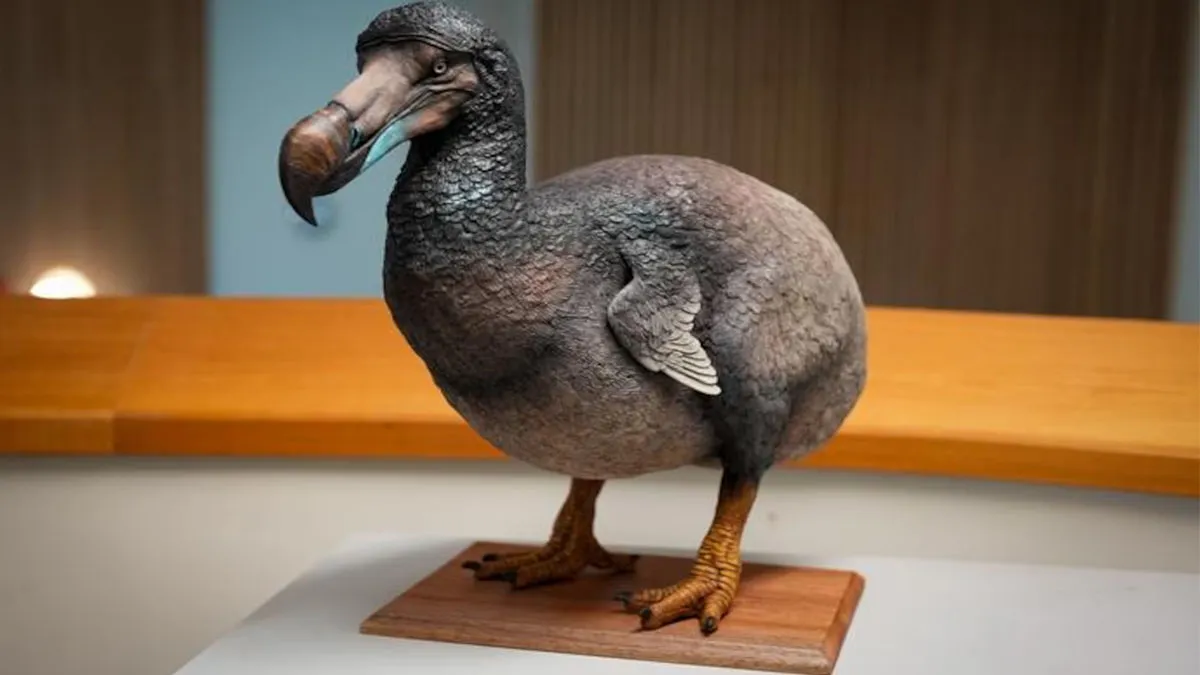
More than three centuries after its disappearance, the legendary dodo could walk on Earth again. A team of scientists from the company Colossal Biosciences, based in Texas, announced a key breakthrough in their attempt to bring back this flightless bird native to the island of Mauritius in East Africa.
The project, which combines genetic engineering and conservation, aims to reverse one of the greatest symbols of human-caused extinction. However, the promise of “de-extinction” also raises a series of ecological dilemmas and ethical issues.
The company has managed to cultivate pigeon germ cells, precursors of eggs and sperm, an essential stage for the process. These cells belong to the Nicobar pigeon, the closest relative of the dodo, which would allow recreating its genome with genetic editing tools.
Scientists estimate that the process could be completed in less than a decade. To achieve this, they are already working on locating safe habitats in Mauritius, free of invasive predators, to reintroduce the species under controlled conditions.
Genetic engineering and ecological dilemmas
The plan is based on the CRISPR technique, capable of editing DNA with precision. Through it, embryos of current birds would be modified to reproduce the physical and behavioral characteristics of the dodo. The ultimate goal is to create a self-sufficient population, with enough genetic diversity to sustain itself.
However, scientific enthusiasm faces environmental and ethical questions. Some specialists warn that beyond the technological feat, the resulting organisms might not be true dodos, but hybrids imitating their traits.
Additionally, there is concern about the ecological impact of reintroducing a species that disappeared centuries ago into a deeply altered environment. The current flora and fauna of Mauritius are no longer the same, and a mistake could create imbalances in the ecosystems.
The pros and cons of reviving extinct species
Proponents of de-extinction argue that these projects drive scientific development and environmental awareness. They believe that recovering lost species could restore damaged ecosystems and partially reverse the human footprint on nature. They also open the door to new genetic conservation strategies for species in critical danger.
Among the advantages is the technical learning derived from the process: tools like CRISPR could be applied to the preservation of threatened animals or to strengthen their resistance to diseases and climatic changes.
However, critics argue that such initiatives divert resources and attention from the urgent problems facing current biodiversity. Instead of bringing back the dodo, they warn, it would be more effective to protect the thousands of living species that are on the brink of extinction.
The debate is open. While some celebrate the rebirth of the bird symbol of extinction, others remind us that the true victory is not in reviving what was lost, but in preventing new disappearances. The future of the dodo, once again, will be a lesson on the limits and responsibilities of science in the face of nature.



