



In 2021, the United Kingdom became the first country to legally recognize octopuses, lobsters, and crabs as sentient beings. The amendment to the Animal Welfare Act extended protection beyond vertebrates, including these invertebrates with complex central nervous systems.
This advancement was driven by the research of philosopher Jonathan Birch, a professor at the London School of Economics, who led an independent review commissioned by the British Government. Based on more than 300 scientific studies, he concluded that cephalopods and decapods possess cognitive and neural capacities that justify their inclusion in legislation.
The role of the documentary
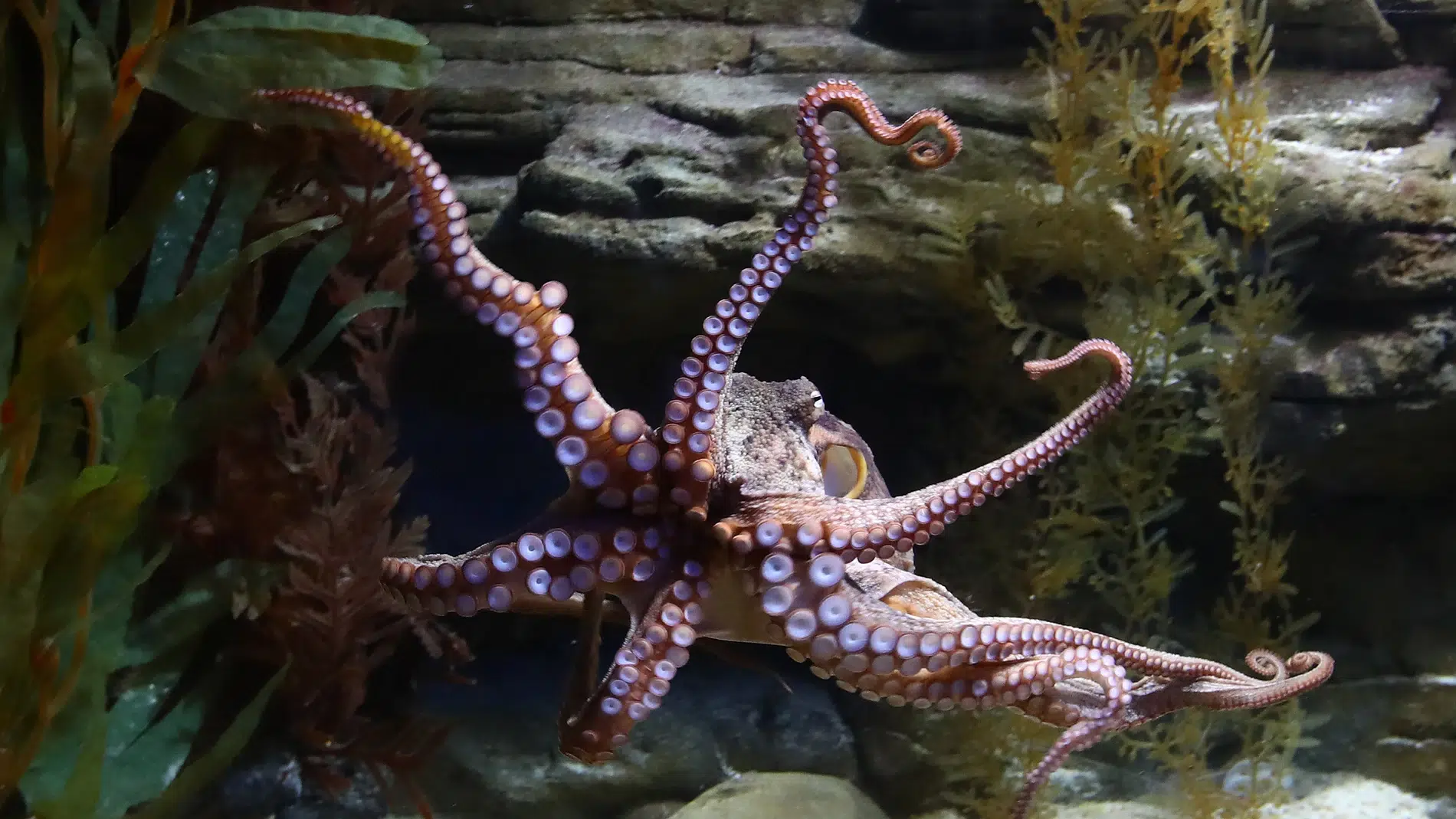
The documentary “My Octopus Teacher”, Oscar winner in 2021, popularized the idea that octopuses could have emotions and fostered a more empathetic view towards these animals. For many, it was the starting point of a cultural shift that influenced the political decision.
Scientific criteria
Birch and his team applied eight scientific criteria to assess sentience, analyzing:
- Behavior: reactions to harmful stimuli.
- Cognition: learning and problem-solving ability.
- Neurobiology: complexity of their nervous systems.
The report concluded that these animals show responses consistent with the experience of pain and emotions, justifying their legal protection.
Practical implications
One of the immediate effects was the ban on boiling alive octopuses, lobsters, and crabs, considered one of the most painful forms of death. Additionally, plans were established to implement stricter protections in animal welfare, covering pets, livestock, and wildlife.
Official statements
The Animal Welfare Minister, Lord Zac Goldsmith, highlighted that the United Kingdom “has always been a pioneer in animal welfare” and that the Action Plan for Animal Welfare seeks to establish some of the most advanced protections in the world.
Ethical reflection
Birch warned about the risk of empathizing only with animals closest to our sensitivity:
“There is a danger that we decide that the animals we empathize with are the ones that feel, and those with which we find it hard to empathize, like invertebrates, do not feel. And, of course, it is not that simple.”
The legal recognition of octopuses and other invertebrates as sentient beings marks a milestone in animal ethics and law. This change not only protects species traditionally considered food resources but also redefines the human relationship with biodiversity, expanding the scope of animal welfare towards complex and fascinating forms of life.


