



The National University of La Plata (UNLP), through its Faculty of Engineering, is developing two key instruments for the SABIA-Mar satellite, a mission by CONAE aimed at observing the sea and Argentine coasts.
These are a satellite environmental data receiver and a GNSS navigation receiver, which will allow the collection of meteorological information and ensure the precise location of the vehicle in orbit.
Scientific Objectives
SABIA-Mar aims to generate strategic information on:
- Sea color and primary productivity.
- Marine ecosystems and the carbon cycle.
- Coastal water dynamics.
- Fishery resources and water quality in estuaries.
This data will be fundamental for the sustainable management of fishing, environmental monitoring, and global oceanic research.
The DCS Receiver
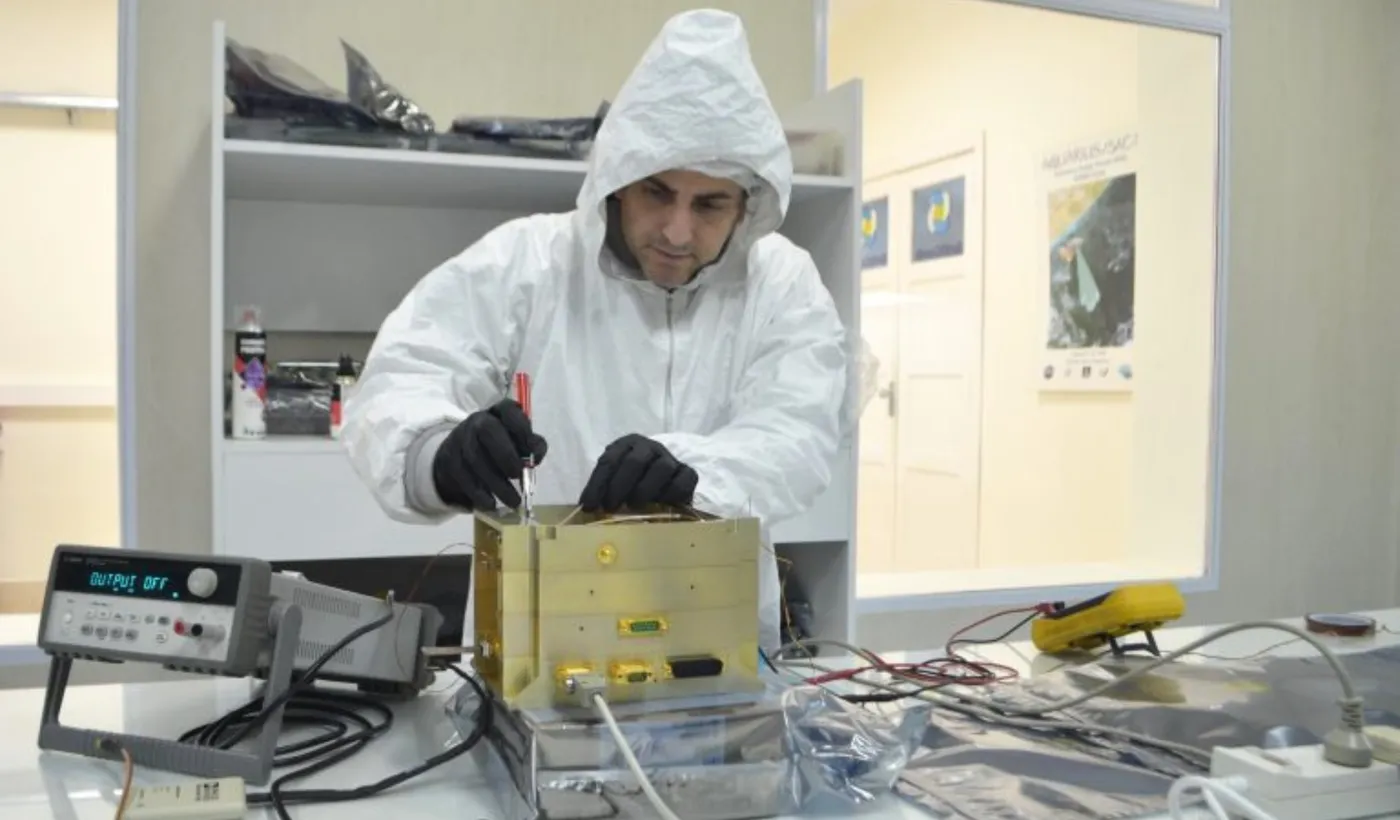
The Data Collection System (DCS) was designed by the GrIDComD group. This device will allow data retrieval from remote platforms such as buoys, glaciers, or meteorological stations. It is an evolution of the system used in the SAC-D/Aquarius (2011) mission in cooperation with NASA.
According to Dean Marcos Actis, this development revives the national capability to collect environmental data from space, interoperating with international systems like ARGOS, but with the advantage of reducing costs thanks to proprietary technology.
The AGR-T Receiver
The second contribution is the GPS AGR-T, developed by the SENyT group. It is the first of its kind manufactured in Argentina and already integrated into the satellite. It includes:
- Radiation-resistant electronic design.
- Software under space standards.
- Validation tests.
Its local development represents a step towards technological sovereignty, as these devices are usually imported at costs close to 1.5 million dollars, while the national prototype demands only a third of that value.
Strategic Importance of the Argentine Sea
The Argentine Sea covers more than 6.5 million km² of continental shelf, with high biological productivity and strategic value. Its study is vital for:
- Sovereignty and resources: exploration and exploitation rights in the EEZ.
- Sustainable fishing: species like shrimp and squid.
- Biodiversity: benthic ecosystems and submarine canyons.
- Climate change: the role of oceans in carbon absorption.
The creation of Marine Protected Areas (MPAs) seeks to harmonize conservation, economic development, and responsible tourism.
With SABIA-Mar, Argentina strengthens its presence in oceanic research and consolidates the ability to produce its own space technology.
The contributions of the UNLP not only strengthen the national scientific system but also ensure concrete tools for the conservation of the Argentine sea, a space that represents 36% of the sovereign territory and has historically been underexplored.



