



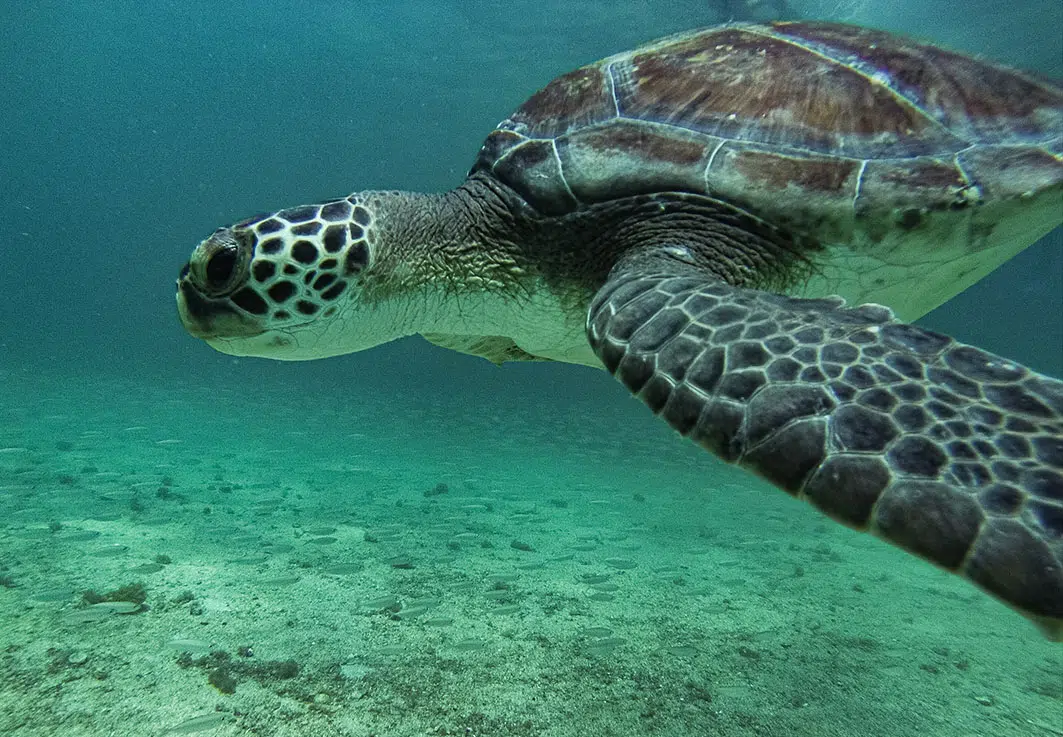
New database facilitates tracking the origin of sea turtles to optimize animal conservation
For over 100 million years, sea turtles have honed their extraordinary navigation skills. These ancient creatures are capable of traveling thousands of kilometers from the beach where they were born to then return to the exact same place to build their nests and lay their eggs.
This process has led, over time, to various genetically distinct populations unique to specific nesting regions for each of the seven species of sea turtles.
These crucial variations could be the key to protecting sea turtles more effectively, which face numerous threats derived from human activity.

ShellBank, an initiative of WWF, is presented as the world’s first global traceability tool and database of DNA of sea turtles.
Its goal is to reverse the decline of these species and contribute to the recovery of their populations. By safely extracting DNA from any sea turtle, whether from a live specimen, a part, or a derived product, it is possible to analyze it in the public and open-access database of ShellBank.
This allows conservationists, researchers, and law enforcement authorities to detect which populations are at greater risk and direct precise and specific protection efforts. Additionally, they can contribute new data to help track, locate, and protect endangered sea turtles globally.
To date, more than 13,000 samples from over 50 countries have been incorporated into the ShellBank database. The platform is supported by a core team of partners, including the Australian Museum’s Australian Centre for Wildlife Genomics, NOAA’s Southwest Fisheries Science Center, and the TRACE Wildlife Forensics Network.
Combating illegal trade and bycatch
Human activities have negatively impacted the populations of these ancient creatures through the illegal trade of the turtles themselves, their parts, eggs, and meat, as well as through accidental capture in fishing nets, among other threats.
Despite the fact that a global ban on their trade was enacted in 1977 and there are multiple policies to reduce bycatch and overexploitation, the capture and illegal trade of sea turtles persists.
One of the greatest challenges in combating these practices is the inability to identify which specific populations are being captured and, therefore, which are at greater risk.
ShellBank represents a turning point in addressing this lack of data on sea turtles, helping governments, conservationists, and communities connect the dots to implement more focused protection measures and animal conservation.
The data can also improve our understanding of how specific sea turtle populations feed, nest, and migrate, and whether they interact with neighboring populations. This information is crucial given the extensive threats these species face.

The figures are alarming: in the last 30 years alone, it is estimated that at least 1.1 million sea turtles have been hunted and illegally exploited in 65 countries. Of that number, it is likely that at least 22% have been subject to international trade.
It is estimated that between 2017 and 2020, around 460,000 individual shell items were found for sale, and significant illegal markets still exist. Additionally, more than 85,000 sea turtles were accidentally captured in fishing nets worldwide between 1990 and 2008.
ShellBank is already beginning to change this situation. Earlier this year, researchers from the University of Hong Kong, in collaboration with the Hong Kong federal government and ShellBank, sampled and analyzed more than 100 turtle shell items from seizures to better understand how to dismantle the illegal trade.
Knowing where turtles are most frequently poached can help authorities take steps to protect these species.
The platform not only helps to curb poaching; it also provides conservationists with crucial and accurate data on different target populations. For the first time in the Coral Triangle —a marine area in the western Pacific Ocean— local researchers and citizen scientists from Papua New Guinea and Indonesia have mapped seven genetically distinct hawksbill turtle populations that were previously unknown.
In the Java Sea, Indonesia, a study revealed multiple unique genetic variations in just six nearby nesting sites, surprising scientists with the diversity found in such a small area.
A more promising future for the world’s sea turtles
Sea turtles are fundamental to ocean ecosystems and cultures around the world. The more ShellBank grows, the better we can understand these fascinating and ancient animals, and thus discover the missing pieces to ensure animal conservation in the years to come.


