



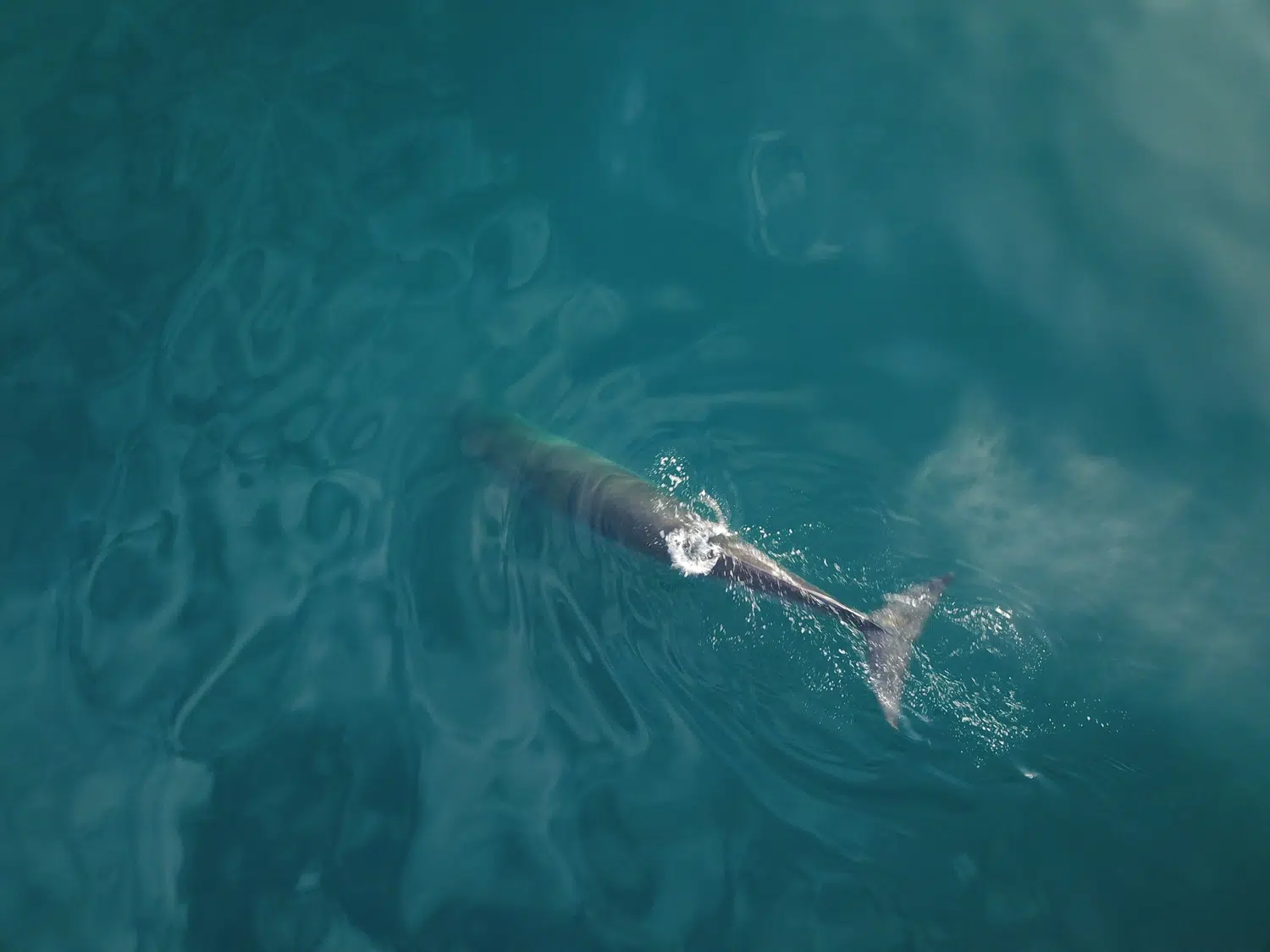
The Patagonian coast has become a key stage for marine science. In the last fifteen years, the sei whale experienced a historic population recovery in the southwestern Atlantic, transforming the Gulf of San Jorge into an indispensable space for its survival.
In response to this phenomenon, a team of researchers led by Mariano Coscarella (CONICET), along with professors from UNPSJB, NOAA, and Rewilding Argentina, decided to track the species’ movements using satellite technology to understand how they utilize the Patagonian environment.
Satellite Technology on the Trail
Scientists installed long-duration transmitters on three specimens, capable of emitting signals throughout their oceanic journey. The first data revealed that one of the animals reached as far as southern Brazil before losing the signal, reinforcing the hypothesis that their breeding areas might be located there.
Currently, two whales are transmitting in real-time from the Brazilian coast, which could provide unprecedented information about the final destination of their migration.
The Map of Biodiversity
Most of the tracking is conducted near the Punta Marqués Protected Natural Area, where the specimens gather massively. Although there are exceptional enclaves further north, such as the Patagonia Azul Provincial Park, it is in the Gulf of San Jorge where the highest biological productivity is recorded.
This ecosystem attracts seabirds, dolphins, schools of fish, and other whales, becoming a unique space for science. Satellite data confirmed that the sei whales remain in a strip of 30 to 40 km close to the coast, feeding exclusively there. The area of greatest use extends from the north of Comodoro Rivadavia to the south of Caleta Olivia.
Conservation Strategies
Understanding this population dynamic is essential for designing management strategies and evaluating the creation of a protected marine area that ensures long-term habitat conservation.
Researchers emphasize that the information obtained will guide public policies, regulate tourist activities, and strengthen the protection of a key ecosystem for the biodiversity of the Argentine Sea.
The Patagonian Rigor and the Future of Whale Watching
The research faces extreme conditions: the Gulf of San Jorge, with its open mouth, exposes vessels to a climate similar to the open ocean. Successfully placing the equipment on the animals required years of technical trials and collaboration with local navigators who know the secrets of the sea.
This learning not only contributes to science but also lays the groundwork for a future tourist whale watching system in the southern zone of Chubut, diversifying the regional economy and promoting conservation.
The satellite tracking of the sei whale in Chubut opens an unprecedented window into the knowledge of a species that has chosen Patagonia as a food source.
Discovering their migratory routes and breeding areas will allow for the consolidation of conservation strategies and project a future where science, tourism, and environmental protection coexist in balance.



