



On August 2, 2027, the most extensive total solar eclipse of the modern era will occur. According to the magazine Space.com, it will far exceed the one recorded in April 2024.
Unlike that event, whose totality lasted 4 minutes and 28 seconds, the upcoming one will reach more than six minutes in various points of the planet. Therefore, it is considered a milestone for contemporary astronomy.
Additionally, the band of totality will be about 258 kilometers wide. The shadow cone will cover approximately 2.5 million square kilometers.

Why will it last so long?
The exceptional duration is explained by the orbital position of the Moon. On that date, it will be closer to the Earth, projecting a wider and more persistent shadow.
As a result, the alignment between the Sun, the Moon, and the Earth will be especially favorable. This will allow the darkness to prolong in certain regions.
The total trajectory will extend for more than 15,000 kilometers. However, the phenomenon will not be visible in America or Oceania.
Instead, it will cross the north of Africa, the Arabian Peninsula, and the Mediterranean. More than 57% of the world’s population will be able to observe at least a partial phase.
Zones of totality and strategic points
The eclipse will pass through 11 countries in the eastern hemisphere. For this reason, cities like Lisbon, Madrid, and Paris will record significant partial visibility.
Totality can be observed in Cádiz and Tarifa in Spain, as well as in Tangier, Oran, and Sfax. It will also cover Benghazi, Sohag, and Luxor.
In Luxor, the phenomenon will reach one of its peak points. The climatic stability and the position near the Nile make it a key destination.
Other locations like Jeddah and Sana’a will also experience total coverage. The duration will vary depending on the location and local time.
What is a solar eclipse and why is it relevant?
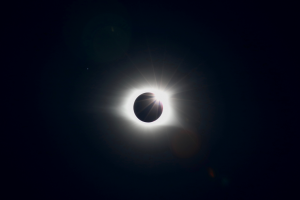
A solar eclipse occurs when the Moon comes between the Earth and the Sun. During totality, the solar disk is completely covered.
This phenomenon allows the observation of the solar corona, invisible under normal conditions. It also provides unique opportunities for scientific research.
From an ecological perspective, these events generate temporary variations in temperature and animal behavior. Some species modify their activity in response to the sudden darkness.
Although the annular eclipse of 2026 will not be visible from Uruguay, the one in 2027 will set a historic record. Its magnitude and geographical extent will make it one of the most relevant astronomical events of the century.


