



An Argentine startup succeeded in transforming shrimp waste into a revolutionary technology for agriculture and was awarded by the UN.
It is Unibaio, the company distinguished as “Innovation of the Year” at the World Food Forum 2025 of the United Nations.
Their scientific development allows farmers to reduce up to 50% the use of agrochemicals without losing productivity.
For this reason, it was selected among more than 1,500 startups worldwide that seek to transform the way of producing, processing, and consuming food.

From the laboratory to the field, the Argentine startup that applies science
The initial project of this Argentine startup was born in 2011 as a scientific research.
It was led by Claudia Casalongue, senior researcher at CONICET and doctor in plant physiology.
For years, Casalongue dedicated herself to finding ways to help and protect plants against diseases without overusing chemicals.
To achieve this, she specialized in their hormonal system.
This is how she found a polymer of natural origin that plants detect and receive very well: chitosan.
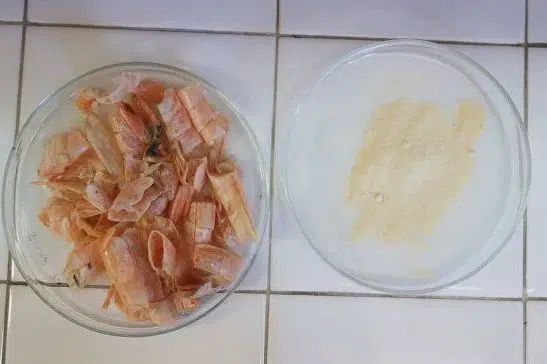
“Beyond the scientific and complex name, the curious thing is that this polymer is also on the surface of shrimp waste, which accumulates in Patagonia and many of the fisheries come from Mar del Plata,” explained Matías Figliozzi, economist and CEO of Unibaio.
This same polymer present in shrimp shells is also found in the shells of insects and fungi that attack plants.
Thus, when detected, plants automatically activate their natural defense system.
“Claudia came up with the idea of using this to ‘trick’ plants, making them believe they are going to be attacked and have an active role in their protection,” detailed Figliozzi.
By stimulating this mechanism, the plant absorbs phytosanitary products and other products used much better.
This significantly improves efficiency and reduces the amount of chemicals without losing yield, which is exactly what producers seek.
“You can use half the amount of glyphosate, which is the most common herbicide, and have the same effect in the field,” affirmed the CEO of the Argentine startup.
Nanotechnology to enhance waste
Later, engineer Vera Álvarez, doctor in Materials Science and CONICET researcher, with extensive experience in the field of nanotechnology, joined the project.
Álvarez is also deputy director of the Institute of Research in Science and Technology of Materials (INTEMA-CONICET-UNMDP) and was the first woman appointed president of the Argentine Nanotechnology Foundation (FAN).
As a founding partner of Unibaio, Álvarez was responsible for modifying this polymer on a very small scale, to generate new properties and make it more useful in achieving the goal.
“Everything we don’t eat —the shell and head of the shrimp— is accumulating in mountains in Mar del Plata and Patagonia,” expressed Figliozzi about the raw material they use.
The path of Unibaio, from research to the global market
After achieving the scientific objectives, they were motivated by the idea that the research should not be limited to a scientific paper.
Therefore, the developers aimed for science to truly reach agricultural producers and the general public.
“This is achieved through a product that people can buy. And that is a business,” argued Figliozzi.
That’s when they approached the incubator of the National University of Mar del Plata, which contributed to the creation of the startup.
Co-founders Daniela Caprile, doctor in Science and Technology, and Florencia Salcedo, doctor in Biological Sciences, also joined.
“During the pandemic, I joined as an economist to help think about the technology in a global way, because there is an opportunity to apply this worldwide,” Figliozzi stated.
Thus, in 2022 they began to receive the first private investments and to work on the concept of the product they wanted to create.
Thus, Turbo Charge was born, launched this year to the market. “Potato growers in Mar del Plata can use it to enhance and improve the efficiency of the most common fungicides,” detailed the CEO.
And he highlighted: “They will have more potatoes, but using less chemical“.
The Argentine startup that expands to the world
The technology has already been implemented in Chile, in tomato plantations, with the most prominent food company in that country.
In April, they also began working with the largest apple producer on the east coast of the United States, thus expanding their international reach.
Currently, Unibaio consists of five co-founders and has a total of fifteen employees.
The company includes scientists from various disciplines, among which chemistry, biology, and materials stand out.
“At the same time, we are conducting tests with some of the largest agrochemical companies in the world to include our powder —which is, physically, a ‘little powder’— in their products, and thus help them create more efficient new technologies for the whole world,” projected Figliozzi.

International recognition and future projection for the Argentine startup Unibaio
In this path, they presented themselves at the World Food Forum, a competition organized by the United Nations.
This edition included 1,500 startups from around the world, with agriculture and food technologies.
The project advanced to become one of the eight finalists, and they were invited to present it in Rome, Italy, at the annual meeting of the United Nations Food and Agriculture Organization (FAO) that took place from October 10 to 17.
The Argentine startup Unibaio was evaluated by a jury that finally awarded the team the Innovation of the Year prize.
“It is a great recognition. It has a financial prize, but what is truly relevant is the visibility,” highlighted Figliozzi.
And he emphasized, above all, “the opportunity to connect with decision-makers on a global scale, such as the largest in the agrochemical world and people belonging to the government,” highlighted Figliozzi.
The project is focused on solving the problems faced by large food companies, “like McCain, a producer of French fries, or the largest coffee producer in the world,” they detail.
These are “very large corporations, trying to have the most sustainable practices possible because their customers —us, the consumers— demand it.”
Considering the changes in global regulations, entrepreneurs see that the market is moving towards reducing the use of chemicals in food.
“So they pressure farmers, but they generally don’t have many alternatives: if they stop applying chemical products to protect crops or to nourish them, the plants grow less and produce less food. That would make the agricultural business unviable,” concluded the CEO.
Therefore, for farmers, the product represents a great opportunity and they are very willing to try it because it does not pose an additional risk.



