



In urban areas, soil pollution is a direct consequence of industrial and domestic activities. Residues of oils, smoke from wood stoves, and gases emitted by vehicles release toxic compounds that accumulate on the surface. Among them, Polycyclic Aromatic Hydrocarbons (PAHs) are especially dangerous due to their ability to affect both ecosystems and human health.
A study by the Institute of Biodiversity and Environment Research (INIBIOMA, CONICET-UNCo), in collaboration with the University of Granada, revealed that a particular type of plant, liverworts, could become a powerful tool to recover contaminated soils. Their effectiveness increases when associated with arbuscular mycorrhizal fungi in a symbiotic process.
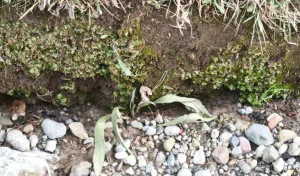
Liverworts grow forming green carpets in humid areas. This growth pattern allows them to act directly on the soil surface, where PAHs and other contaminants accumulate. Trials showed that they can absorb these compounds almost completely, restoring vitality to the terrain.
Another advantage is their rapid regeneration cycle. Even if removed, they can cover the affected area again in just 15 days. This makes them ideal candidates for continuous processes of cleaning degraded spaces.
Beyond liverworts: natural solutions for soil
Although liverworts and their association with fungi offer an effective strategy, there are other natural methods capable of remediating contaminated soils. Among them, phytoremediation stands out with deep-rooted species like poplars and willows that extract heavy metals and contaminants from deeper layers.
Another technique is bacterial bioremediation, which uses microorganisms capable of degrading hydrocarbons and pesticides, transforming them into non-toxic compounds. These bacteria can be applied directly to the soil or in controlled environments, such as bioreactors, before returning the treated soil.
There is also mycoremediation, which utilizes specialized fungi to break down complex contaminants, including industrial solvents and plastic residues. Fungi release enzymes that disintegrate dangerous molecules, allowing the soil to regain its chemical and biological balance.
The combined use of these strategies multiplies the possibilities of environmental recovery. Adapting the method to each type of pollution and the characteristics of the terrain is key to achieving lasting and sustainable results.
 Tiny plants and mycorrhizal fungi help repair soil pollution. Photo: CONICET.
Plants and fungi, the new allies of the planet
The association between liverworts and mycorrhizal fungi presents a special potential for areas where pollution is concentrated in surface layers. In addition to absorbing hydrocarbons, these organisms can incorporate other contaminants, such as microplastics, paving the way for broader solutions to urban and industrial issues.
The ecological value of this strategy not only lies in its cleaning capacity but also in its low environmental impact and the possibility of applying it in sensitive environments without harming local biodiversity. It is a concrete example of how science can draw inspiration from nature to address increasingly urgent environmental challenges.
The finding also raises new questions: how are contaminants transported within the plant, what mechanisms regulate this process, and if it is possible to optimize it to increase efficiency. Solving these mysteries will allow perfecting the technique and expanding its use in different contexts.
In a world where pollution is advancing at an alarming rate, finding in organisms as small as liverworts an effective response offers hope and reaffirms the need to investigate solutions that work in harmony with ecosystems.



