



An international team from the IIAP, the PUCP, and the Montgomery Botanical Center identified a new cycad species in the Loreto region: Zamia urarinorum.
This discovery, published in Phytotaxa, constitutes the first description of a Zamia species adapted to Amazonian flooded soils, making it a highly relevant botanical record for studies on resilience and evolution.
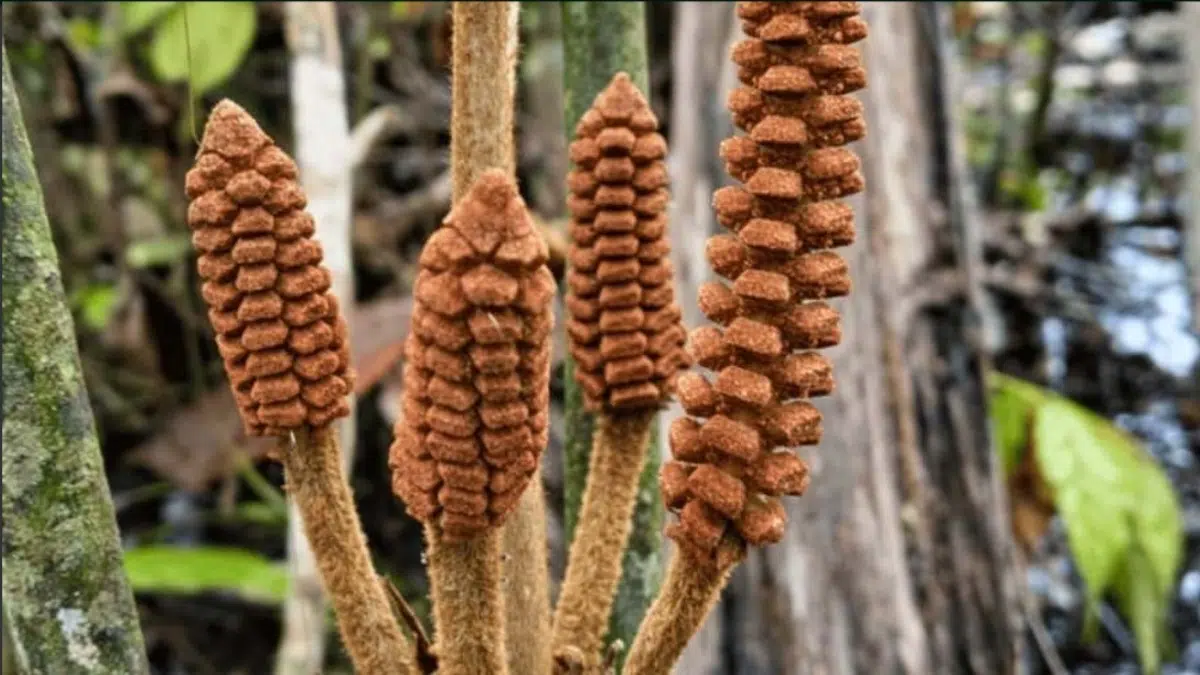
The plant features slender stems and fronds up to 2.5 meters, with narrow leaflets and serrated edges. It is dioecious, with male and female cones in brown and yellowish-green tones. Its ability to tolerate oxygen deficiency in moist environments is unique within the genus.
Key Ecological Functions
Zamia urarinorum plays a fundamental role in aguajales and shebonal forests:
- Regulates the water regime in saturated soils.
- Contributes to carbon storage, vital for regional climate health.
- Its smaller seeds reflect an adaptation to extreme conditions.
Scientists from IIAP emphasize that its presence is essential for the balance of soils and local biodiversity.
Fieldwork and Community Collaboration
The record was the result of expeditions conducted in 2025 in the communities of Raya Yacu, Nuevo Horizonte, and Puerto Rico (Loreto).
Co-author Michael Calonje highlighted the importance of collaboration with indigenous communities to ensure the success of the research.
Immediate Threats
The species faces risks from:
- Agricultural expansion in wetlands.
- Oil spills contaminating soils and waters.
- Infrastructure projects degrading floodable ecosystems.
The IIAP requested its protection under IUCN criteria, emphasizing that the loss of Zamia urarinorum would irreversibly affect the water balance and carbon storage in the Loreto jungle.
Call for Conservation
Researchers insist on the need to:
- Monitor the species population.
- Develop urgent conservation plans.
- Design protection strategies linked to regional climate health.
Botanist Malcolm A. Jones emphasized: “It is crucial that we continue monitoring this species to prevent its disappearance, given the threat that Amazonian ecosystems face from human activity.”
The discovery of Zamia urarinorum reinforces Peru’s role as a reference in Amazonian botany and underscores the urgency of protecting endemic species. Its unique ability to survive in floodable soils makes it a living fossil and a strategic resource for water regulation and carbon storage.
The conservation of this plant not only preserves biodiversity but also contributes to the climatic resilience of the Amazon.


