



The city of **Formosa**, capital of the homonymous province in northern Argentina, was chosen among **60 international participants** to be part of a pilot program for the **implementation of alternative energies in housing**, promoted by the [**Bloomberg Foundation**](https://www.bloomberg.org/).
Together with **Buenos Aires**, it is part of the group of **nine selected cities** to develop innovative projects that promote **urban energy transition** ([source](https://noticiasambientales.com/energia/la-energia-solar-record-en-2025-se-disparan-las-instalaciones-fotovoltaicas-y-hay-un-fuerte-lider-en-esta-transicion/)).
### Climate commitment and international cooperation
Formosa adheres to the **Global Covenant of Mayors** and strengthens its territorial planning.
The initiative is part of the **International Ideas Exchange Program**, consolidating Formosa’s commitment to the **Global Covenant of Mayors for Climate and Energy**, which brings together more than **13,500 cities committed to [climate action](https://noticiasambientales.com/innovacion/the-climate-reality-project-refuerza-la-accion-climatica-en-america-latina-con-un-entrenamiento-en-mexico/)**.
According to **Clara Mancebo**, responsible for the Environmental Technical Area of the municipality, this recognition positions Formosa as a city committed to **mitigating and adapting to climate change**, allowing for the **replication of local and global solutions** within a network.
### POT 40 and urban planning with a climate focus
The Territorial Planning Plan incorporates sustainability and **energy efficiency criteria**.
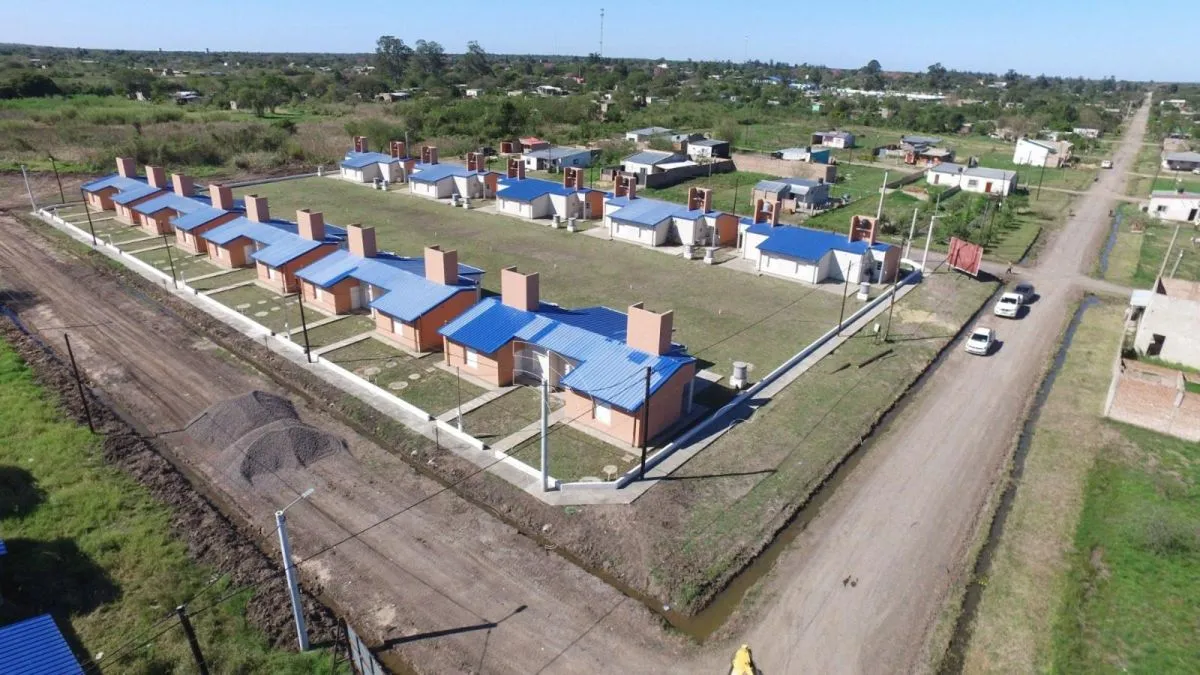
The projected actions align with the strategic vision of Mayor Jorge Jofré, who promotes **POT 40 (Territorial Planning Plan)** as a tool to **integrate climate solutions into urban growth**. As a first step, the city commits to **measuring its carbon dioxide emissions** and developing a **Climate Action Plan** that will include public policies aimed at **residential energy efficiency**.
### Alternative energies in housing: environmental, economic, and social benefits
Energy transition improves quality of life and strengthens **urban resilience**.
The incorporation of **clean technologies in households** allows for:
– **Reducing air pollution** by eliminating CO₂ emissions and other harmful gases
– **Contributing to the fight against climate change** by reducing dependence on fossil fuels
– **Taking advantage of inexhaustible natural resources** such as the sun and wind
– **Generating economic savings** by reducing electricity and gas bills
– **Promoting energy independence**, especially in rural or isolated areas
– **Increasing property value** by incorporating sustainability criteria
### Accessible and viable technologies for urban and rural environments
Solar panels, aerothermy, and hybrid systems as scalable solutions.
Renewable energy can be **generated anywhere**, even where the conventional electrical grid does not reach.
Technologies such as **photovoltaic solar** or **aerothermy** are **accessible, safe, and adaptable** to different types of housing, allowing for **expanding energy coverage** and **reducing climate vulnerability**.



