



In line with its sustainability strategy and strengthening of the value chain, MetroGAS conducted a session on inclusive business involving more than 10 companies from various sectors, with the aim of promoting commercial links with productive units from the third sector.
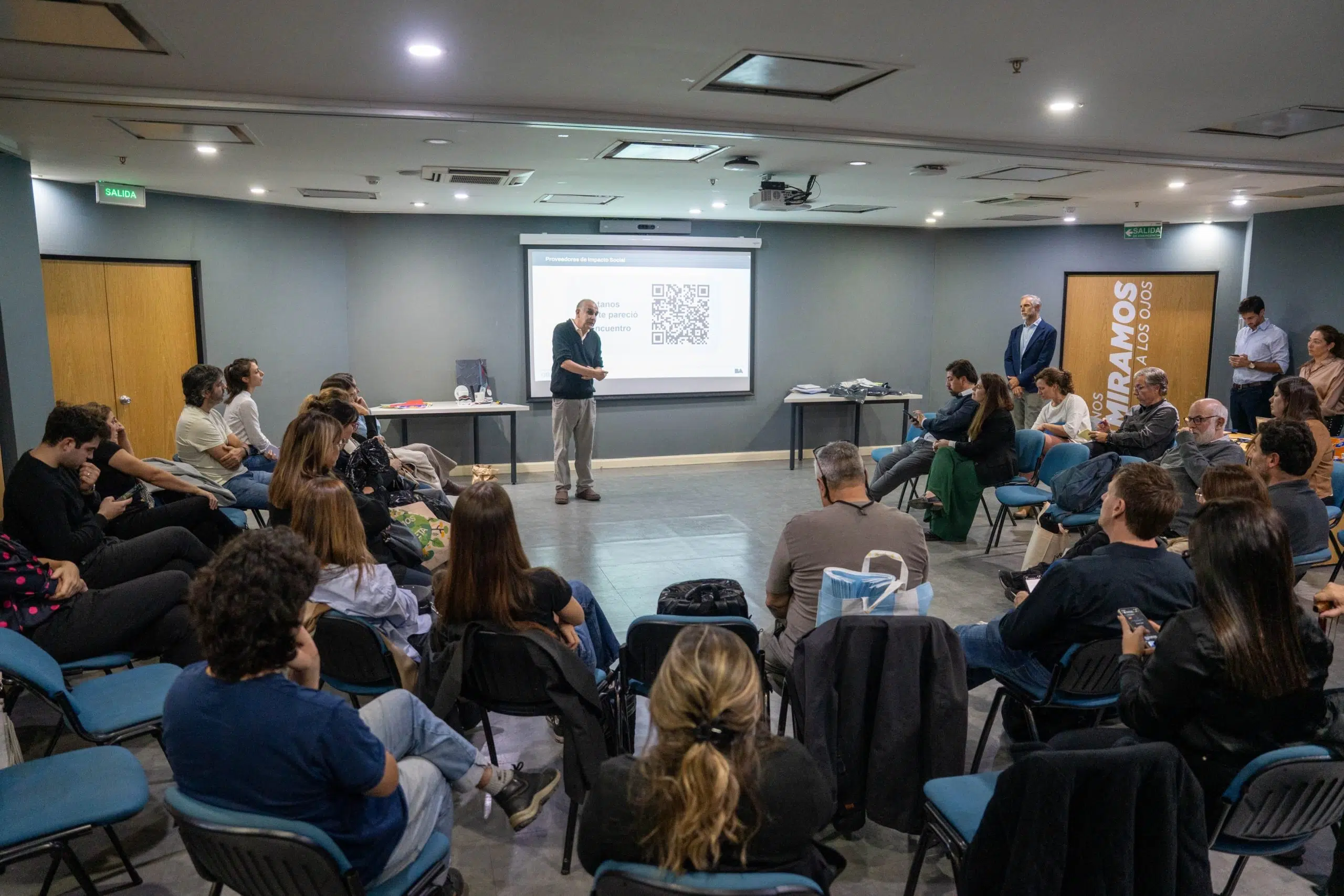
Together with the Ministry of Human Development and Habitat of the City of Buenos Aires Government and the CODE organization, the country’s largest natural gas distributor hosted the “Sustainable Value Chains Day”, attended by representatives from Coca Cola, Renault, Grupo Arcor, Pampa Energía, Holcim, AySA, and TGS, among other companies.
The opening was led by Pablo Ordoñez, founding partner of CODE, and Fernanda Reyes, Undersecretary of Human Potential Development of GCBA, who highlighted the importance of bringing together the public sector, the private sector, and cooperatives that need to make their work visible in one space.
The session connected the Sustainability and Purchasing representatives of the participating companies with leaders of productive units to generate commercial opportunities with social impact. During the meeting, organizations and cooperatives presented their products and services, focusing on their potential integration into value chains.
In this context, MetroGAS shared the case developed in 2025 with the Multipolar Foundation, an organization that creates job opportunities for homeless people and adapted its processes to produce fences and wooden crates for public works of the company.
The experience allowed visibility of the results for both MetroGAS and the foundation, as well as the model implemented to consolidate this type of links. The process included challenges related to financing, productive capacities, and administrative aspects, which required adjustments in internal procedures and sustained support.
“The development of inclusive suppliers requires a long-term perspective. It’s not just about incorporating an actor into the value chain, but about creating conditions for them to grow and sustain themselves over time. This also involves reviewing our own processes, in which different areas of the company were involved,” stated Hernán Chiesa, Public Affairs and Sustainability Manager of MetroGAS.
During the session, the Rolta printing company – a member of the 3 de Agosto workers’ cooperative – presented the products it develops with various private sector companies. Also participating were San Cayetano, a productive unit in the textile sector, and Herrería Atuel, a cooperative that promotes the labor reintegration of people who were deprived of their liberty through projects in the metalworking sector.
All the productive units that participated are part of the Red de Valor Buenos Aires, a space that connects companies and suppliers with social impact, and seeks to facilitate their connection and scalability.
This type of meeting strengthens the articulation between the private sector, the public sector, and cooperatives, with the aim of contributing to the development of local economies. From MetroGAS, they highlighted that the value of these initiatives lies in their collective construction and their growth potential as more actors join.



