



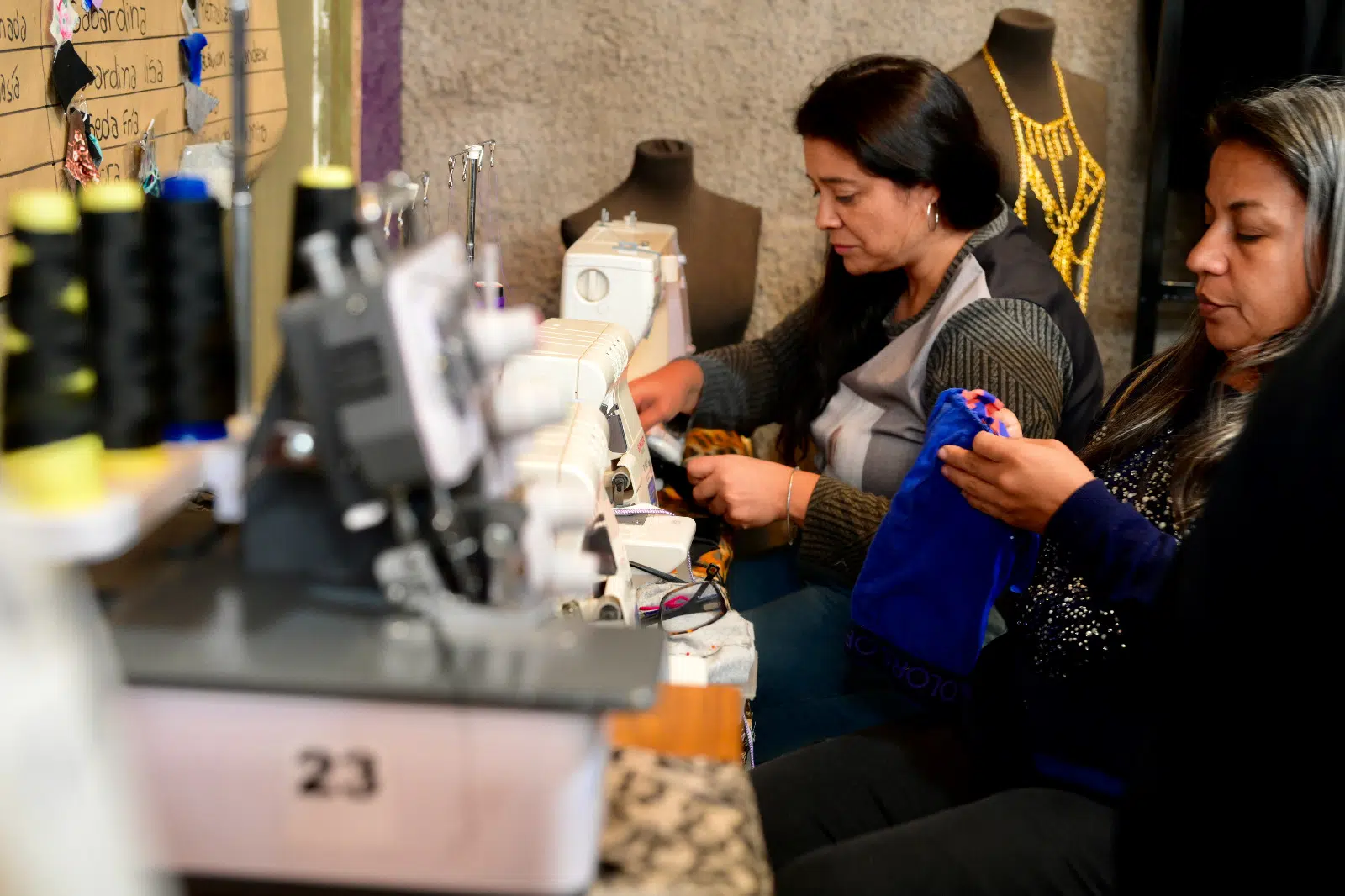
In Godoy Cruz (Mendoza), a group of women participates in the recycling and textile design workshop of the CostuRed program, which turns materials discarded by industries and businesses into new garments and accessories.
The initiative seeks to reduce the environmental impact of the fashion industry, considered the second most polluting on the planet due to its water consumption, greenhouse gas emissions, and massive waste generation.
Objectives and institutional coordination
The project arises from the coordination between the Directorate of Environment, Energy and Climate Change and the Directorate of Education and Labor Training of the municipality.
As explained by Nicolás Tello and Belén Verasay in a dialogue with the Los Andes portal, the objective is to link companies that generate textile waste with local entrepreneurs, promoting the circular economy and new productive opportunities.
The work process
- Collection and classification of fabrics by the Environment team.
- Planning of workshops according to season and type of available inputs.
- Training in design, sewing, digital marketing, and commercialization.
- Free delivery of materials to participants and entrepreneurs, under responsible use criteria.
Products and creativity
The participants develop accessories such as bags, backpacks, and toiletry bags, as well as innovative proposals like aprons, pet beds, and garments intervened through customization techniques. The diversity of materials forces design adaptation, enhancing creativity and generating unique pieces.
Entrepreneur testimony
One of the participants is Aivi Sissa, creator of Hilaría Circular, who found in textile design a way to channel her concerns about mass consumption. Her project is based on the reuse of scraps to create unique pieces. “It’s not as simple as receiving something for free. There’s a cost in that whole process,” she explained to the cited portal, highlighting the cleaning and classification of materials as part of the invisible work behind each product.
She currently specializes in bags and plans to expand into clothing. Her time at CostuRed allowed her to access key supplies and training, consolidating her formal venture. She also highlighted the sense of community generated in the workshop: “We help each other a lot, both technically and creatively.”
Social and environmental impact
The program not only teaches sewing and reuse techniques but also tools to build a brand and participate in fairs. It functions as a space for support and exchange, fostering collective learning and the circulation of knowledge.
In a context where it is estimated that 73% of clothing ends up in landfills or is incinerated and less than 1% is recycled, initiatives like CostuRed show how sustainable design and community collaboration can open new ways of producing and consuming.
The Godoy Cruz workshop is an example of how fashion can reinvent itself through recycling and the social economy. By transforming waste into valuable products, economic opportunities are generated, the community is strengthened, and it contributes to addressing the global environmental crisis.



