



They traveled to Buenos Aires with a mission: Latin American teachers and students presented unprecedented projects to address a socio-environmental issue in the grand final of the second edition of the Copa Climática 2025.
Meet the winning team and get inspired by the Latin American students!
August 26, Buenos Aires. The Copa Climática 2025, the second edition of the socio-environmental challenge promoted by Eco House Global, reached its final stage. After months filled with climate change training, games, and teamwork, it was defined that the 1st place goes to the project from Ecuador, “Revive la Quebrada”!
What is the “Revive la Quebrada” project that is already inspiring young people from different countries about?
The initiative has an ambitious goal: to recover the Tingo ravine. The project was born from the Ángel Polibio Chaves Educational Unit and aims to reduce greenhouse gas emissions through proper management of urban solid waste.
 Winning team: “Revive la Quebrada” project[/caption>
The Copa Climática represents more than an event to empower youth through education.
It is a space for training, cooperation, and youth leadership. Through Latin American football, the educational platform allows young people to train in climate-related topics and create solutions with real impact in their communities.
In this 2025 edition, we had a unique call! More than 2300 people registered and 300 teams from different Latin American countries competed: Ecuador, Argentina, Colombia, Mexico, Paraguay, Chile, Honduras, Panama, El Salvador, and Peru.
Reaching the final was not easy. Since March of this year, out of the 300 registered teams, only 4 projects made it to this decisive stage held at the UdeSA campus (Universidad de San Andrés, Buenos Aires).
The most anticipated decision was made by a jury with great regional recognition, formed by representatives from PNUD Latin America and the Caribbean, UNICEF Regional, the University Network for the Climate Crisis (RUCC), and the Sustainability Engineering Career from the Universidad de San Andrés.
 Teachers and students in the final
Which projects made it to the final? From reforestation, waste management to urban resilience in the face of a regional challenge
The selected projects represent concrete solutions to reduce polluting emissions in their communities. The proposals range from reforestation, waste management, to urban resilience with a shared goal: to motivate more people to act on the climate crisis and build more sustainable communities.
Revive la Quebrada (Pichincha, Ecuador) – First Place
The “Revive la Quebrada” project is an initiative of the Ángel Polibio Chaves Educational Unit that aims to reduce greenhouse gas emissions through proper waste management of urban solid waste. The initiative aims to recover the Tingo ravine.
Echar Raices (Buenos Aires, Argentina) – Second Place
“Echar Raíces” is a mitigation project through school reforestation. From Bede’s Grammar School, they promote planting native species in the school with the vision of being able to expand and replicate in other establishments.
This activity would involve the students themselves, so they can learn and become aware of the importance of environmental care.
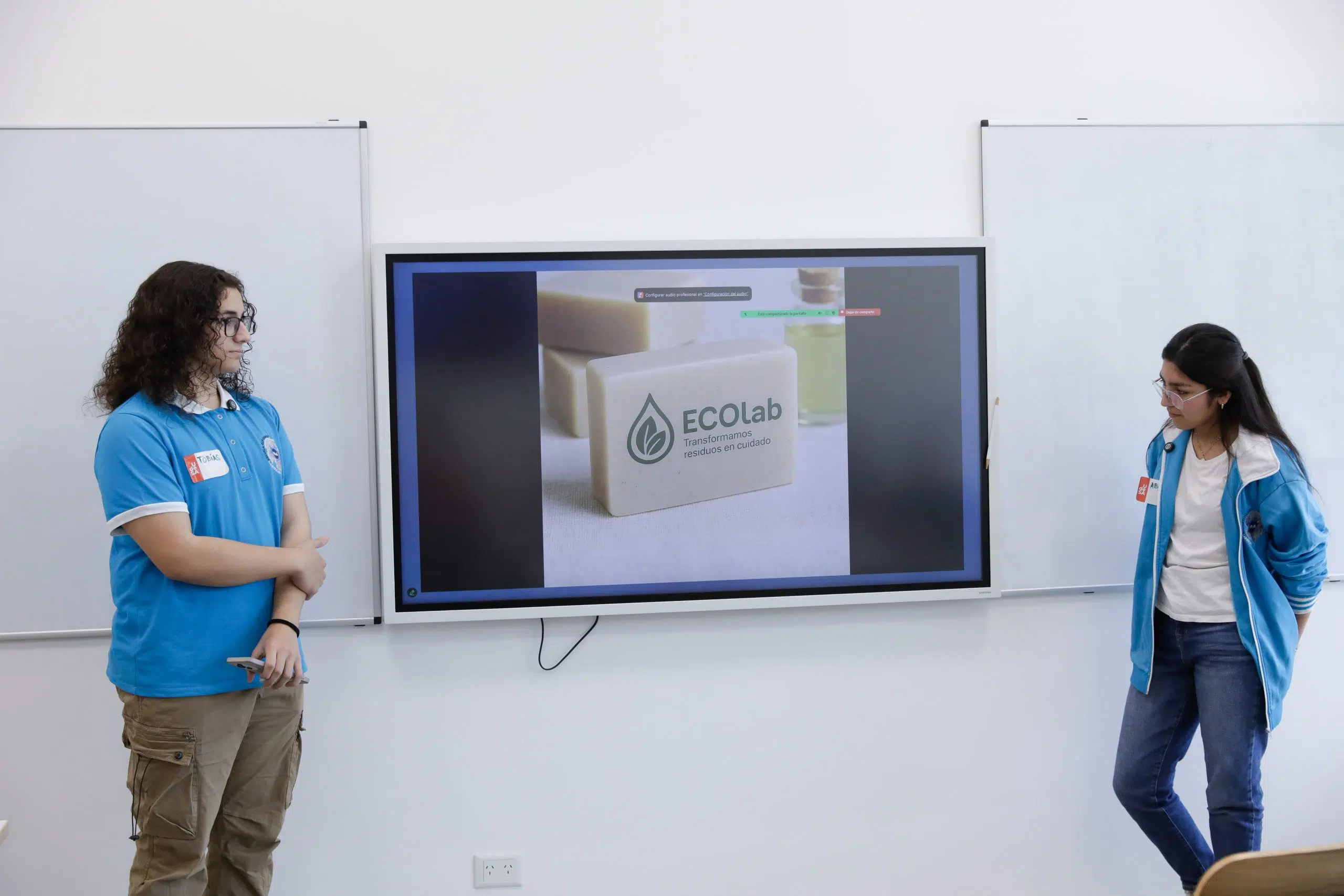
Ecolab (Córdoba, Argentina) – Third Place
Ecolab contributes to caring for an increasingly scarce resource, drinking water. This project reduces emissions associated with poor waste management, generating a positive impact in the face of the climate crisis.



