



In Argentina, more than 100 million liters of used vegetable oil (UVO) are discarded each year, and 90% comes from households. A large portion ends up in drains and watercourses, generating a significant environmental impact. According to the FAUBA and the company DH-SH, each person produces on average 2.5 liters of UVO per year, but only 22% separates it at the source for recycling.
The impact is enormous: just one liter of oil can contaminate up to 1,000 liters of water. When it comes into contact with rivers or lakes, it forms a surface film that prevents oxygen exchange, affecting fish, plants, and aquatic organisms.
Global Context
The water crisis is critical worldwide. According to the UN and WHO (2022-2025):
- More than 2 billion people lack access to safe drinking water.
- At least 1.7 billion consume water contaminated with fecal matter.
- 80% of industrial and municipal wastewater is discharged without treatment.
In this scenario, the management of used vegetable oil becomes a key challenge to reduce water pollution.
An Opportunity for Transformation
The sustainability manager of DH-SH, Antonella Druetta, points out that UVO can become a valuable resource:
“While its incorrect disposal can contaminate water and soil, when properly separated it can be recovered and used as a raw material for biofuels.”
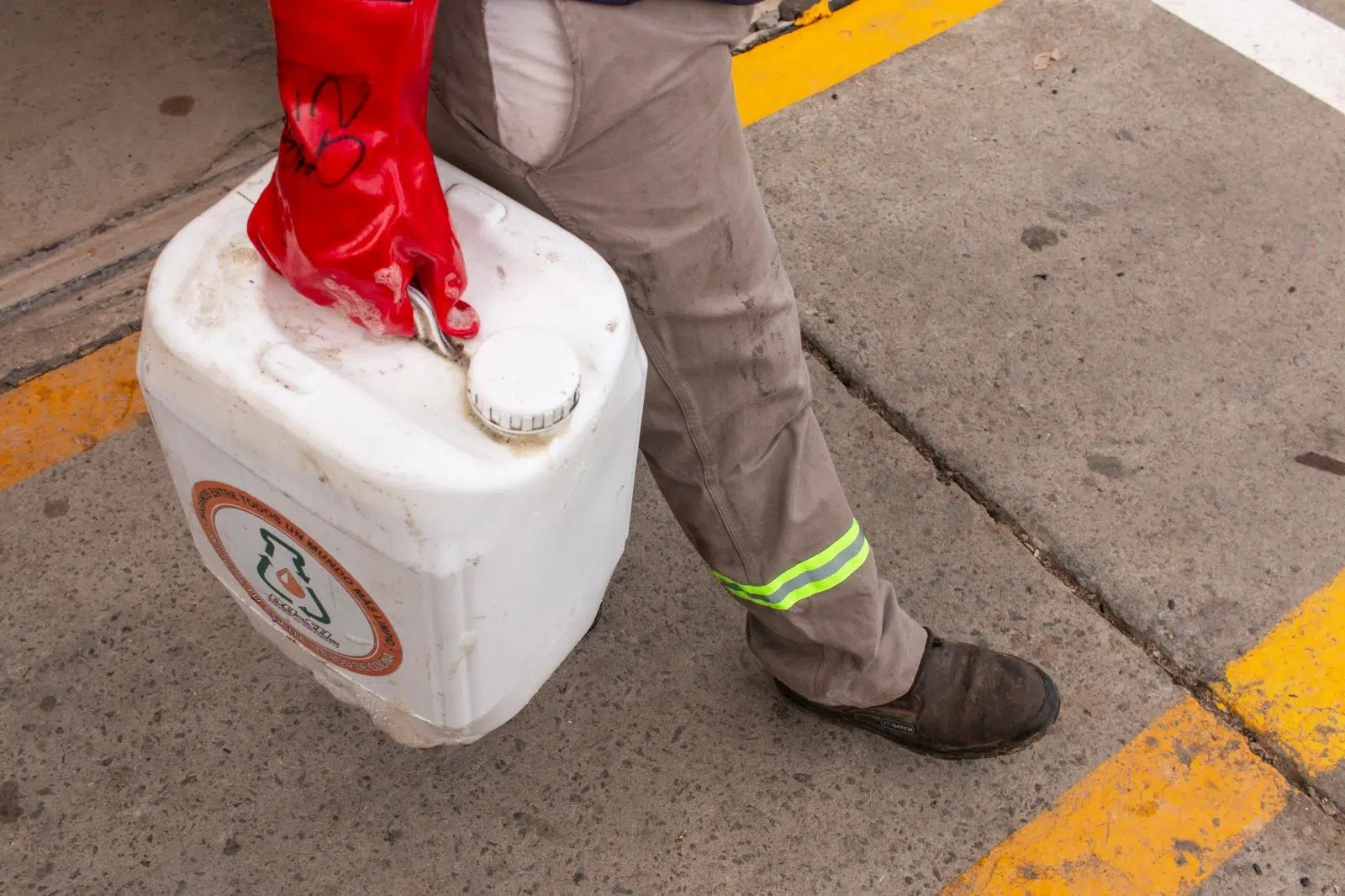
In fact, recycling used oil allows for the production of second-generation biofuels, transforming a polluting waste into clean energy.
Ongoing Initiatives
Since 2017, the company DH-SH has been promoting the campaign “Recycle Your Oil”, with three main focuses:
- Small generators: households that can bring their oil to green points.
- Large generators: food establishments that produce large volumes of UVO.
- Environmental education: talks and activities in schools to foster awareness from an early age.
Highlighted results:
- More than 200 educational talks in institutions across the country.
- Nearly 6,000 students reached.
- More than 400 green points installed in 15 provinces.
Positive Impact of Recycling
In 2024, DH-SH recovered 11,903 tons of UVO, preventing the contamination of 12.9 million m³ of water, equivalent to more than 5,000 Olympic pools.
Since the start of the campaign in 2017, 45,000 tons have been collected, protecting nearly 49 million m³ of water (20,000 Olympic pools).
How to Recycle at Home
- Let the used oil cool down.
- Place it in a clean, dry plastic container with a lid.
- Continue adding oil to the same container.
- Take the full container to the nearest green point.
That oil, which would otherwise be a polluting waste, becomes raw material for biofuels.
Used vegetable oil is currently one of the main invisible water pollutants in Argentina. However, it also represents an opportunity for the circular economy: with recycling campaigns, environmental education, and citizen participation, it can be transformed into clean energy and a strategic resource to tackle the water and climate crisis.



