



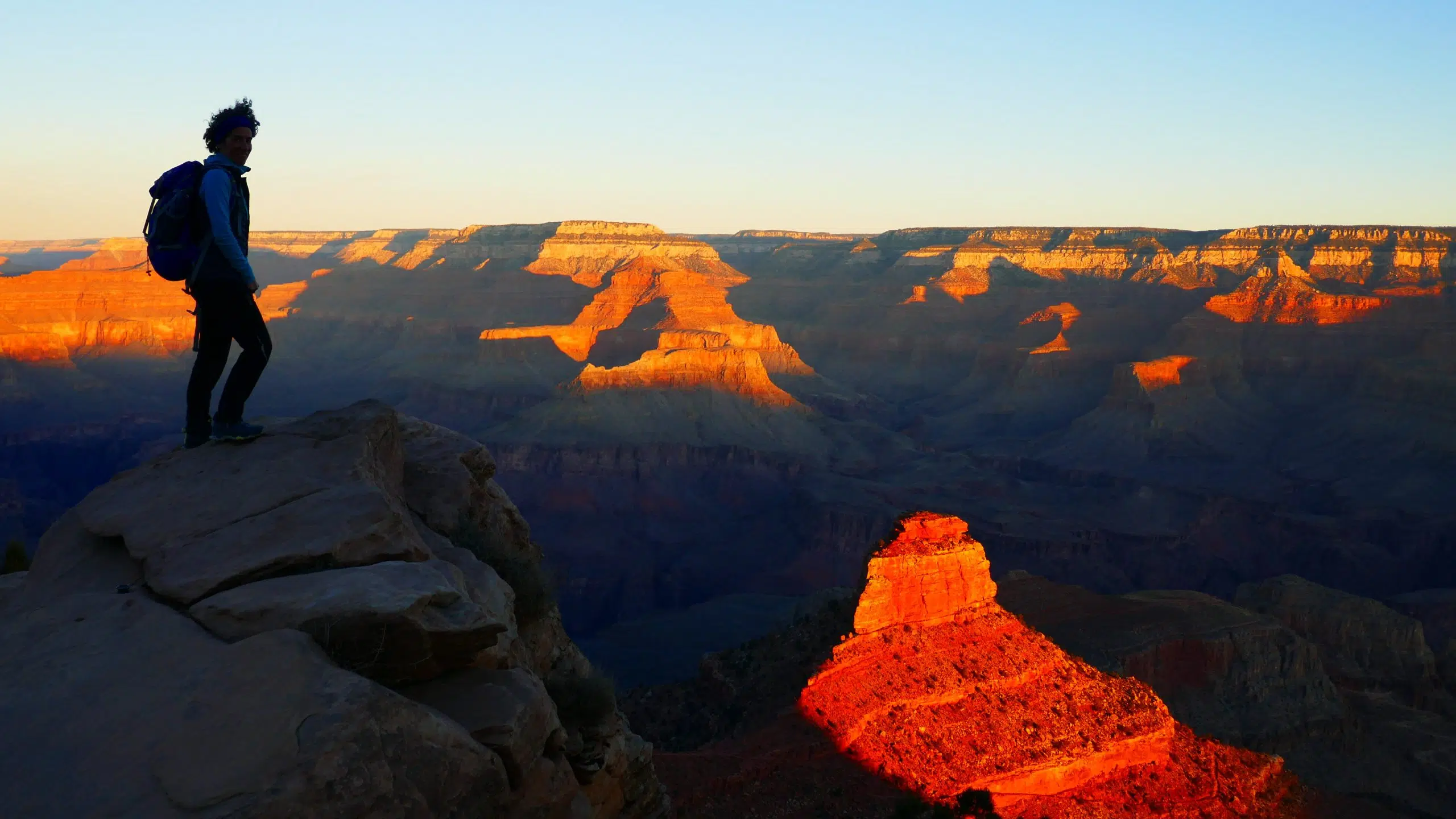
The Grand Canyon of the Colorado, located in northwestern Arizona, is part of the Grand Canyon National Park and is one of the most iconic landscapes in the United States. At first glance, its rocky walls seem endless, displaying a palette of colors that change with the light and the river’s tide.
But beyond its beauty, the canyon is a unique natural record: its rock strata allow for the reconstruction of the planet’s geological history, with formations reaching 1.7 billion years, according to the United States National Park Service (NPS).
Origin and Formation
For decades, it was believed that the Colorado River began carving the canyon about 6 million years ago. However, recent studies suggest that its origin could date back to 70 million years ago, when small canyons joined to form the current structure.
The Grand Canyon measures 446 kilometers long, reaches depths greater than 1,800 meters, and extends up to 29 kilometers wide at its widest point. All this landscape was sculpted by the erosion of the Colorado River as the plateau rose, in a slow and constant process.
Contrasting Climates
Altitude changes generate a wide variety of climates within the canyon:
- At the Bright Angel Ranger Station on the north rim, the climate is cold and humid.
- Just 13 km away, at Phantom Ranch, conditions are warm and dry.
This allows visitors to experience different climates on the same journey, adding appeal to the experience.
Curious Facts about the Grand Canyon
- It is not the deepest canyon in the world: the record is held by the Yarlung Tsangpo in Tibet, with more than 5,300 meters.
- There are no dinosaur fossils: the rocks are much older than they are.
- Other fossils are found: marine remains from 1.2 billion years ago and mammals from 10,000 years ago.
- Within the canyon, there is the village of Supai, in the Havasupai reservation, considered the most remote community in the continental United States. Mail arrives thanks to mules.
Biodiversity Refuge
The Grand Canyon is home to more than 1,750 plant species and 900 animal species, making it a true biodiversity refuge. Due to its ecological, cultural, and geological value, UNESCO declared it a World Heritage Site in 1979.
- Natural laboratory: its strata expose almost 2 billion years of Earth’s history.
- Research: it remains a vital field for geologists studying erosion, Colorado River dynamics, and climate change.
Cultural and Spiritual Value
- Spiritual origin: for native tribes like the Hopi, the canyon is a sacred and origin place.
- Living heritage: native communities continue to manage parts of the canyon and share their culture with visitors.
Economic and Touristic Value
- Massive attraction: it is one of the most visited national parks in the world, with millions of tourists each year.
- Income generation: tourism contributes to the local and national economy through admissions, guided tours, and regional businesses.
- Natural wonder: recognized as one of the seven natural wonders of the world.
- Historical conservation: declared a national monument in 1908 by Theodore Roosevelt and a national park in 1919, ensuring its preservation for future generations.
The Grand Canyon of the Colorado is much more than an imposing landscape: it is a national symbol, a geological laboratory, a biodiversity refuge, and a sacred place for indigenous communities. Its scientific, cultural, and economic value makes it one of the most important natural wonders on the planet, capable of inspiring those who visit it and projecting its legacy to future generations.


