



The municipality of Benito Juárez inaugurated a new Environmental Complex following the definitive closure of the open-air landfill. The initiative marks a structural change in the management of urban solid waste.
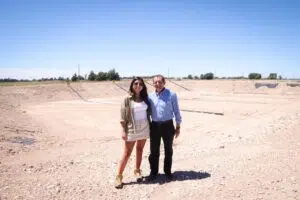
The event was led by the Minister of Environment of Buenos Aires, Daniela Vilar, along with the local mayor. Thus, the district begins a phase focused on sustainability.
The site was completely cleaned up and converted. It now features a sanitary cell, an insulating forest curtain, an equipped recycling plant, and a truck for differentiated collection.
This infrastructure allows for the organization of waste treatment. Additionally, it reduces environmental and health risks associated with informal disposal.
Comprehensive Policy and Municipal Strengthening
Since the creation of the Ministry of Environment of the Province, a comprehensive strategy has been promoted to settle the historical debt in waste management. The policy includes separation at source, differentiated collection, recycling, and safe final disposal.
In this context, a survey of municipalities that still used open-air landfills was conducted. The goal was to identify suitable sites for building sanitary cells and Environmental Complexes.
Simultaneously, the Province strengthened municipal systems with specific equipment. Machinery was delivered to more than 150 productive units and over 100 trucks for differentiated collection.
Furthermore, the role of Environmental Promoters was promoted. These actions include environmental education and community workshops to encourage separation at source.
What are the benefits of converting landfills into Environmental Complexes?
The conversion of landfills reduces soil contamination, air pollution, and groundwater pollution. It also decreases the proliferation of vectors and health risks for the population.
The Environmental Complexes allow for technical control of final disposal through impermeable cells. This prevents leachate infiltration and improves waste traceability.
Additionally, they incorporate recycling plants that valorize recoverable materials. This reduces the volume destined for final disposal and promotes the circular economy.
The presence of forest curtains acts as a visual and environmental barrier. It also helps mitigate odors and capture some of the emissions.
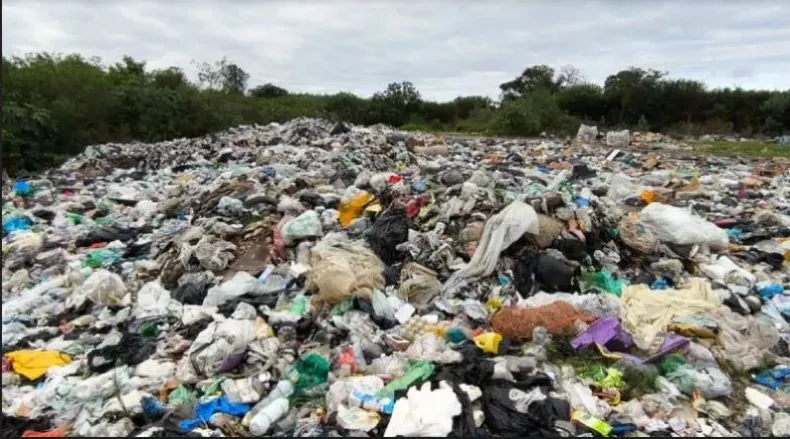
What are Environmental Complexes for?
These spaces organize all stages of waste treatment in a single site. Thus, they integrate separation, classification, recovery, and safe disposal.
Moreover, they generate formal employment and better working conditions for workers in the sector. The professionalization of the system dignifies historically precarious tasks.
On the other hand, they function as educational and awareness nodes. Through campaigns and workshops, they promote responsible habits in the community.
Together, the experience of Benito Juárez demonstrates that environmental planning transforms local realities. The closure of the landfill not only improves the landscape but also strengthens public health and long-term sustainability.


