



With pyrolysis technology transforming waste into resources through tire recycling: the plant that converts used elements into fuels and raw materials.
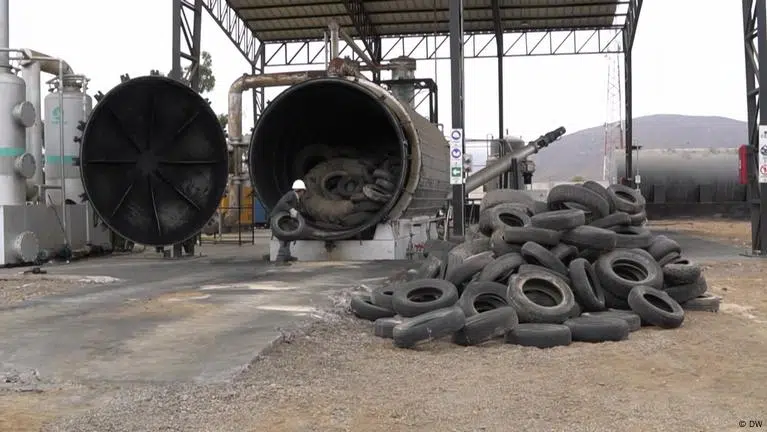
Tire recycling starts with thousands of abandoned tires in Chile now having a sustainable destination thanks to a pioneering plant that uses pyrolysis, a thermal process without oxygen that breaks down rubber into reusable materials.
With the Extended Producer Responsibility (REP) Law in force since 2022, which requires recycling 90% of these wastes by 2030, companies like this lead a crucial change: processing 500 tons of tires, preventing them from polluting for centuries.
Jañia Yestrup, Fabián, and Mauricio Gómez are protagonists of this environmental revolution that combines technology, legislation, and ecological awareness.
 Tire recycling with pyrolysis technology[/caption>
The revolution of pyrolysis: from the street to the reactor with tire recycling
At the heart of the operation is a giant reactor that works like a “pressure cooker.” The tires, including those from mining machinery—previously fragmented—are subjected to extreme temperatures without combustion.
“It’s not burning, it’s thermal transformation,” explains Fabián, plant operator. The process, lasting 21 hours, generates three key products: steel for casting, carbon black (used in alternative fuels), and pyroil, a diesel that fuels the plant itself. “We don’t use oil after the initial ignition,” highlights Yestrup.
Legislative impact and change in business mentality
The REP Law obliges importers and manufacturers to manage their tires, breaking decades of abandonment. Mauricio Gómez, an expert with a background in mining, emphasizes: “Before, companies would wash their hands of them after selling them.
Now they must take responsibility for the volume they introduce into the country.” The legal framework not only prevents tires from ending up in landfills or barricades—where they would take 400 years to degrade—, but also drives a circular economy.
Tire recycling: from toxic pellets to the ultimate solution
Previously, recycling involved shredding tires to create pellets for synthetic turf fields or gym floors. However, European studies warned in 2023 about their danger: “They release toxic gases and particles that reach aquifers and seas,” warns Gómez. Pyrolysis, on the other hand, eliminates the risk:
“The tire disappears as such, without residues”. This technology has already inspired parallel projects, such as using the reactor’s waste heat to dehydrate fruits or air-condition hospitals.
Future innovations and long-term sustainability
The plant is even exploring applications for carbon black. “We compact it with potato starch—abundant in the area—to create ‘little empanadas’ that prevent dust emissions,” details Gómez.
Furthermore, it could replace the bituminous coal that Chilean mining imports from Australia—a 13,300 km journey—, reducing the carbon footprint.
A legacy for future generations
For Gómez, the project goes beyond the environmental aspect: “My grandchildren will have a future with less pollution. They will no longer see buried tires or tires on the streets.”
His excitement reflects a larger goal: to scale this model to other wastes, such as batteries or appliances, under the principle that “those who trade should manage.”
With each tire transformed, Chile moves towards a paradigm where waste is not the end, but the beginning of new productive cycles.


