



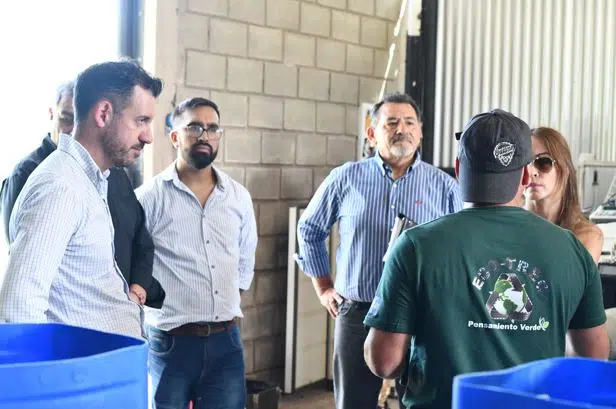
Within the framework of the waste management training cycle, a valuable session dedicated to electronic waste was held in San Luis.
Specifically, the session focused on the treatment of batteries and batteries, one of the most hazardous types of waste with increasing generation in our society.
The educational space, led by technician Sandra Ceballos from the Waste Agency, was developed with an informative and participatory approach. It was specially aimed at municipal administrations and technical teams, with the objective of “promoting a coordinated and collective approach to the complexity of these wastes.”
The technicians from the entity that recovers materials for reintegration into the industrial circuit (Waste Agency) shared experiences and specific challenges from the field.
What are WEEE?
Any discarded electrical or electronic device (home appliances, computers, cell phones, televisions, lighting, solar panels, etc.) becomes WEEE.
This type of waste presents logistical, environmental, health, and economic challenges.
Composition:
- 72%: recyclable materials (plastics, metals, glass).
- 25%: reusable components.
- 3%: hazardous waste (mercury, cadmium, lead).
The latter, although in a smaller proportion, are highly toxic. They affect health (seizures, infertility, kidney and neurological problems) and the environment (non-biodegradable, generate toxic gases, contaminate air, soil, and water).
- Batteries and batteries
In this case, they present similar risks. Their variety and composition make their management difficult, and many still retain their charge when discarded. Argentina does not produce them (except for lead-acid batteries), so it is crucial to control what enters and ensure their safe treatment.
The current situation in Argentina

According to provincial authorities, the management of WEEE does not exceed 3% in the country. It is concentrated in major cities such as Buenos Aires, Mendoza, Córdoba, and Santa Fe. There is a disjointed and heterogeneous value chain.
Only some provinces have specific legislation. The cost of final disposal is high (around $2,500 per kilo), preventing many cooperatives or companies from continuing operations.
Obsolescence and consumption
One of the key topics was programmed and perceived obsolescence, which leads to constant replacement of equipment even if they are still functional. This phenomenon, along with accelerated consumption, fuels the vicious circle: buy – discard – buy.
Among the ideas generated at the meeting, one was to advance a Extended Producer Responsibility Law so that manufacturers and importers take responsibility for products throughout their lifecycle.
Also, strengthening coordination between the Nation, provinces, and municipalities within the framework of the Federal Council for the Environment (COFEMA) and promoting educational campaigns on repair, reuse, and recycling.
Furthermore, another focus was to support circular enterprises and work cooperatives and seek viable economic solutions that decentralize management by strengthening the information and traceability of these wastes.
What Happens in San Luis
“Proper management of this type of waste in San Luis is crucial to protect the environment and public health,” they stated. By correctly managing WEEE, pollution is minimized, valuable materials are recovered, and exposure to hazardous substances is avoided.
Additionally, efficient WEEE management is related to the circular economy and sustainability, generating employment opportunities and reducing the demand for natural resources.


