



In an unprecedented milestone for the country, the Las Lajitas Municipality, in Salta, became the first Argentine town to generate and sell energy from waste. It is marketed through Environmental Offset Certified Units (UCAM).
These are environmental assets with international support that allow transforming waste management into economic and sustainable value.
The initiative is driven by Mayor Fernando “Pini” Alabi and the Secretary of the Environment, Mauro Goldman, who lead the implementation of the innovative system. It converts plastic waste into energy, recording its impact through global certification standards.
From waste to certified environmental asset: the innovation of Las Lajitas
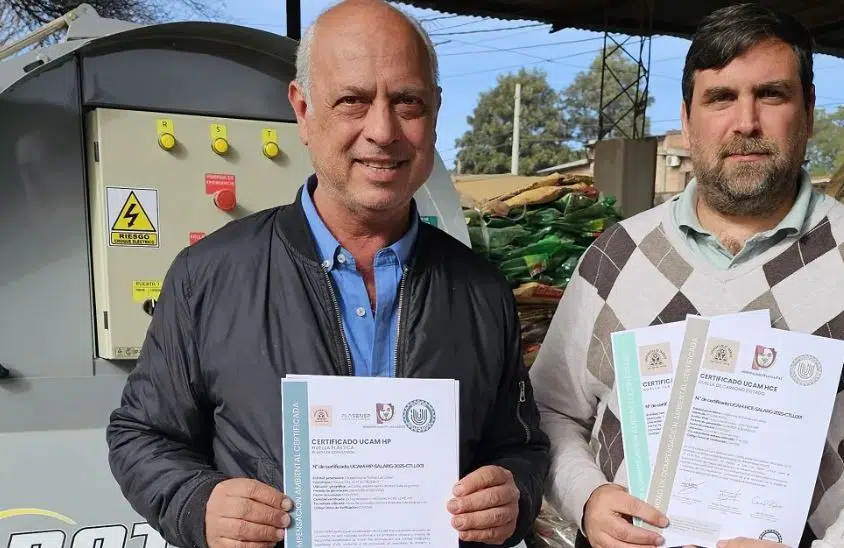 The Certified Environmental Offset Units presented by Las Lajitas. (Photo: Municipality).[/caption>
The project is the result of the joint work between the Municipality, the local cooperative, and the technological company Plasener SRL. The process involves collecting urban and rural plastic waste, processing it through pyrolysis, and transforming it into alternative fuels.
Each action is recorded and certified under the UCAM CERT system, ensuring traceability, independent verification, and transparency in marketing.
“We want every environmental action to have a real, measurable, and certified value that can be recognized by companies committed to sustainability,” explained Goldman.
Types of UCAM available in Las Lajitas
Currently, the municipality generates and sells UCAM in different categories:
- HPR (Recovered Plastic Footprint): for the collection of plastic waste.
- HP (Plastic Footprint): for proper final disposal.
- CCR (Recycled Carbon Fuel): produced from energy recovery.
- HC (Avoided Carbon Footprint): for CO2 emissions that were not generated.
In the future, they reported that new categories related to water footprint, ecosystem services, environmental education, and energy circularity will be added, expanding the program’s scope.
How waste collection and recovery are implemented
The waste is obtained through green points, rural campaigns, agreements with agricultural companies, and educational programs such as Eco-Exchanges. Subsequently, they are transformed into CCR in the Plasener SRL plant, where alternative fuels are produced to partially replace fossil fuels in agricultural machinery, transportation, and both municipal and private electric generators.
The entire process is validated by UCAM CERT, providing confidence and security to those who acquire these units.
A national precedent in circular economy
With this initiative, Las Lajitas becomes the first Argentine municipality to enter the voluntary environmental offset market. It offers companies, institutions, and governments the opportunity to incorporate these assets into their Corporate Social Responsibility (CSR) strategies, sustainability reports, and environmental governance goals.
The experience demonstrates that municipalities in the interior can lead environmental innovation projects, generating economic opportunities and contributing to the achievement of the Sustainable Development Goals (SDGs).
The Las Lajitas case combines public management, community commitment, and cutting-edge technology. It also aims to be inspiring for other towns seeking to strengthen the carbon economy, promote local economic diversification, and provide concrete solutions to the global climate crisis.



