



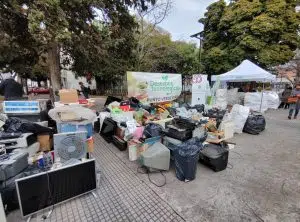
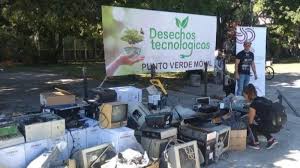
In a new step towards sustainability, the National University of Mar del Plata consolidated its environmental commitment with the fifteenth edition of the Recyclable Materials Reception Days. The initiative, held on April 22, brought together hundreds of participants at the Faculty of Economic and Social Sciences.
Furthermore, the activity extended throughout the day, allowing for the collection of significant volumes of waste. In total, 2100 kg of technological waste, 822 kg of recyclable materials, 205 liters of used vegetable oil, and 149 kg of plastic caps were recovered.
Additionally, this event reaffirms the role of educational institutions as drivers of change. Through concrete actions, it promotes a greater environmental awareness and strengthens the transition towards more responsible consumption models.
Social and health impact: a solidarity network in action
On the other hand, the day not only had an ecological impact, but also a social one. In collaboration with local organizations, 2413 pieces of clothing, 302 diapers, and 100 pairs of shoes were collected for vulnerable sectors.
In this regard, 92 glasses were also received for the Solidarity Friends for Health Association and a significant amount of medication. These were properly managed to avoid health and environmental risks.
Thus, the initiative integrates sustainability with solidarity. It not only reduces waste but also contributes to improving the quality of life for various communities.
A sustained program over time
Throughout its 15 editions, the program has reached remarkable figures. More than 50 tons of electronic waste, 10 tons of eco-bottles, and 5 tons of caps have been processed, along with more than 100,000 expired medications.
Consequently, these results demonstrate a sustained commitment. The collaboration between institutional, social, and productive actors was key to ensuring the continuity of the program.
Moreover, the participation of more than 30 organizations shows that environmental management requires collective efforts. Cooperation allows for expanding the reach and improving the effectiveness of these actions.
Proper waste management: keys and environmental risks
A proper waste management involves source separation, differentiated collection, and specialized treatment. In the case of electronic waste, for example, it is essential to recover materials and prevent the release of toxic substances.
However, when these wastes are not properly treated, they can generate severe impacts. Heavy metals like lead or mercury contaminate soils and waters, affecting both fauna and human health.
In turn, used vegetable oil, if improperly disposed of, can clog sewage networks and contaminate large volumes of water. Therefore, its recycling is essential to prevent environmental damage.
Environmental education and circular economy: a necessary path
Finally, these days reinforce the importance of environmental education. The active participation of the community shows that it is possible to transform everyday habits.
In parallel, the circular economy approach allows reducing pressure on natural resources. Reusing, recycling, and valuing waste becomes a key strategy in the face of the environmental crisis.
Thus, initiatives like this not only solve immediate problems but also build a more sustainable model in the long term.


