



The City of Buenos Aires is experiencing an unprecedented crisis in its urban recycling system. The head of Government, Jorge Macri, announced that the new urban hygiene tender includes moving recycling plants outside the city limits.
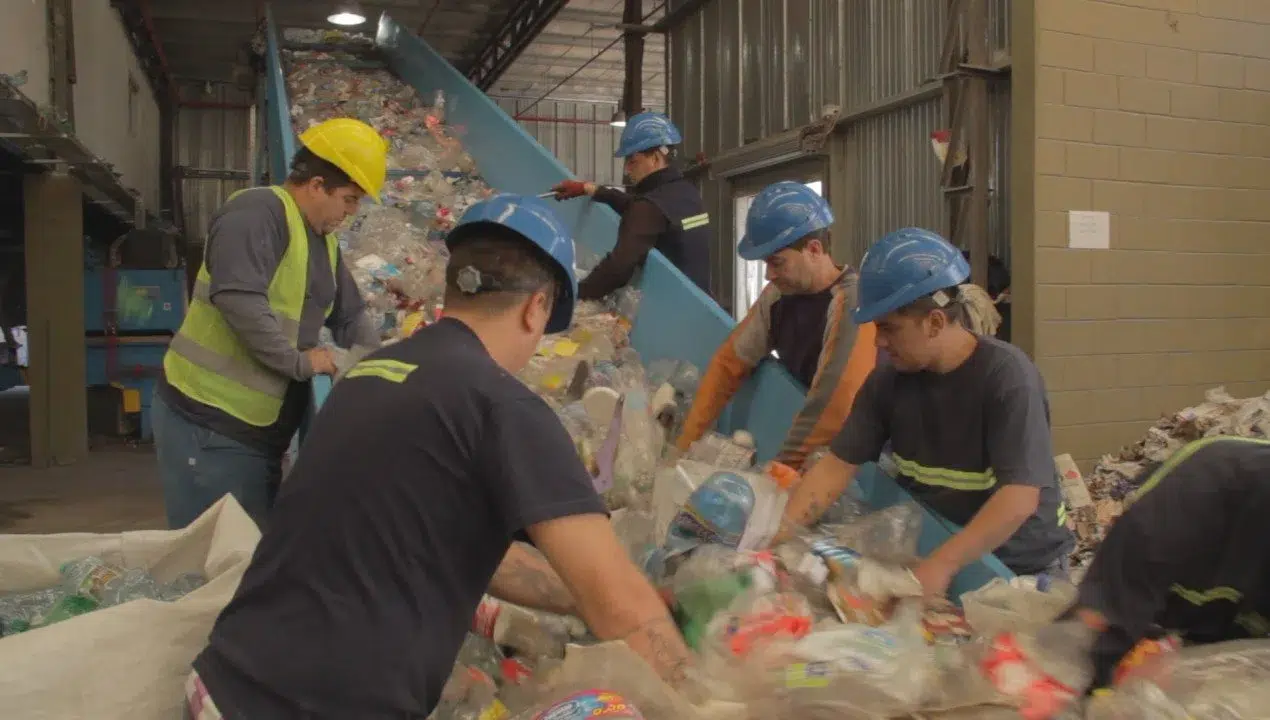
The measure threatens one of the most recognized inclusive recycling systems in Latin America and puts at risk the employment of more than 6,000 urban recyclers.
Social and Environmental Impact
The relocation of the plants generates multiple consequences:
- Job loss for thousands of families dependent on cooperatives.
- Increase in carbon footprint, due to transporting materials over longer distances.
- Increased logistics costs and reduced recovery rates.
- Setback in the circular economy, contradicting global trends.
Organizations such as FACCyR, Taller Ecologista, FARN, Jóvenes x el Clima, GAIA, and Fundación Avina, gathered in the collective “Recycling is in Danger”, warn that the measure condemns hundreds of families to poverty and weakens the waste separation system.
Background of Setback
The disarticulation plan began in 2024:
- Fire at the Centro Verde de Barracas, whose recovery was never completed.
- Eviction of the headquarters in Parque Avellaneda of the cooperative Amanecer de los Cartoneros, the only one dedicated to textile recycling.
Added to this are the closure of green points, the disappearance of bells and containers, and the reduction of separation infrastructure.
The Buenos Aires Paradox
According to CEAMSE data, in just one month the City disposed of 138,249 tons of waste, which represents 25% of all buried garbage in the metropolitan area. In other words, one out of every four kilos of waste that reaches CEAMSE comes from CABA.
The paradox is clear: the jurisdiction that generates and buries the most garbage is the same one that plans to remove recycling plants from its territory, despite having the Zero Waste Law enacted almost two decades ago.
Private Consultancy and Lack of Transparency
The collective “Recycling is in Danger” denounced the hiring of a private consultancy for u$s 2.5 million to develop a new comprehensive waste management plan. However, the results are not publicly known.
The organizations demand:
- Access to information about the tender.
- Environmental impact studies of plant relocation.
- Calculation of the carbon footprint of the relocation.
- Job guarantees for workers in the sector.
While the world moves towards the circular economy, the City of Buenos Aires is regressing. The system that for years allowed materials to be recovered and genuine work to be generated is in jeopardy.
The question that remains is whether the Buenos Aires Government has a real waste management plan or if it simply seeks to “remove the problem from sight”.



