



In 1968, Italian engineer **Giorgio Rosa** pushed his vision of independence to the limit by building an **artificial island in the Adriatic Sea**, off the coast of **Rimini, Italy**.
His project aimed to become a **sovereign state**, free from governmental control, challenging established norms.
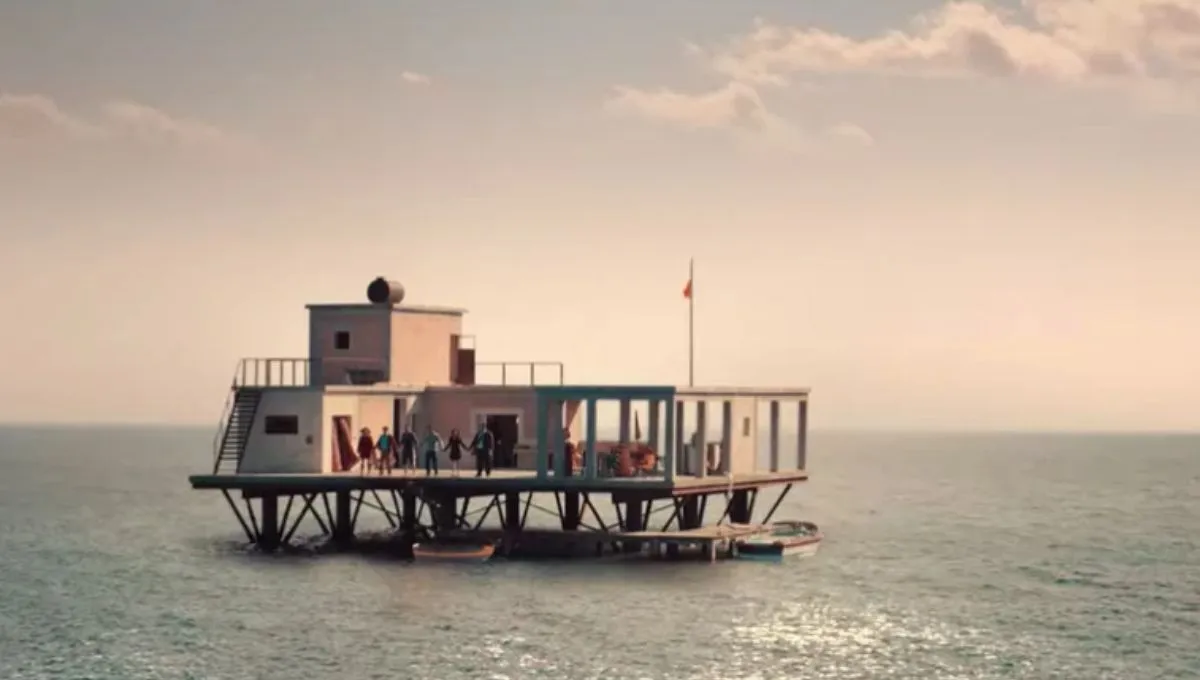
The structure consisted of a **400 m² cement platform**, on which several buildings and services were built:
- A tower and a restaurant for visitors.
- A bar and a helipad.
- Supply of drinking water, its own currency, and a national flag.
The purpose was to establish **a self-sufficient community**, operating as an independent nation in **international waters**, beyond the reach of the **Italian government**.
The challenge and the reaction of the Italian government to the artificial island
Giorgio Rosa’s experiment took place during a time of **political and social turbulence** in Italy, raising questions about its legality.
Authorities viewed the island as **a threat to national order**, acting swiftly. In **1969**, **after only 55 days** of operation, the Italian government **dynamited the platform**, destroying Rosa’s dream and putting an end to his floating nation.
A legacy of rebellion and innovation
Despite its short existence, Rosa’s island became a **symbol of resistance**, creativity, and futuristic vision.
In **2017**, at **92 years old**, Giorgio Rosa authorized the production of a film about his story. He passed away shortly after, but his legacy continues to inspire those who challenge established limits.
His rebellious island showed that dreams can defy the world, even if they only last a few weeks.



