



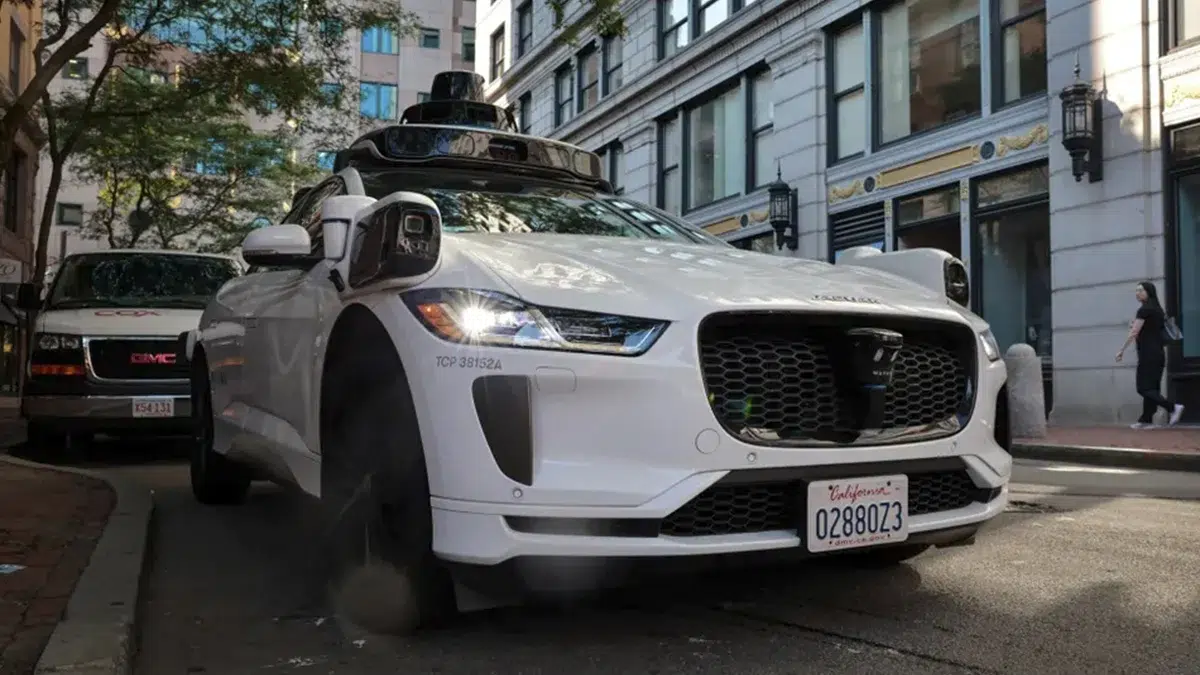
What was once a scene from science fiction is now circulating on the streets of the United States: autonomous vehicles are no longer prototypes or futuristic promises, but a everyday reality. Robotaxis, led by companies like Waymo, are transforming the automotive industry, but not precisely for being more modern or cheaper.
Their growing popularity responds to a much more human factor: emotional security.
More expensive than a traditional taxi? Yes, but more in demand
Contrary to what many expected, the first robotaxi services have not reduced transportation costs. In fact, an average trip with Waymo costs $20.43, compared to $15.58 for a trip with Uber. Despite this difference, the demand has not decreased, but has grown exponentially.
In just five months, Waymo has doubled its number of trips, exceeding 10 million paid journeys. The reason? It’s not the technology, comfort, or savings. It’s peace of mind.
The value of not having to interact
For many users, the possibility of traveling without having to interact with an unknown driver represents a significant improvement in the quality of the journey. The risk of harassment, discomfort, or distrust is eliminated, and autonomy and privacy are gained.
This aspect is especially valued by families. In places like Arizona, some parents already trust robotaxis to take their children to school, something they don’t feel comfortable doing with traditional taxis.
70% of Waymo users claim they prefer to travel in driverless vehicles precisely because of the tranquility they provide.
A paradigm shift in urban mobility
The arrival of robotaxis is proving that the success of an innovation does not always depend on its technical features. Although the main attraction was thought to be economic savings, users have shown that they are willing to pay more for a safer and stress-free travel experience.
This phenomenon redefines the concept of smart mobility, placing not only technological efficiency but also the psychological well-being of passengers at the center.
Global expansion and challenges for competition
Waymo’s success not only validates the viability of robotaxis but poses a strategic challenge for companies like Uber, which could start losing customers to this new form of transportation.
International expansion is already underway: it is expected that in 2026, the first robotaxis will start operating in cities in the United Kingdom and Germany, marking a before and after in the history of urban mobility.
The future of mobility is autonomous, but also emotional
The robotaxi revolution reminds us that the impact of a technology does not always respond to the expected reasons.
In this case, peace of mind has surpassed savings as the main motivation for use. And that redefines not only the future of transportation but also the way we design urban experiences.



