



The Municipal Natural Reserve “Las Piedras” celebrated this week the birth of new rhea chicks.
This milestone confirms the success of the ecological restoration plan of an emblematic species.
Currently, the young specimens of Rhea americana are already roaming the grasslands under the care of the adult male.
In this way, the reserve’s ecosystem is gradually regaining its natural balance.
The Subsecretariat of Environment and Food Security officially announced the arrival of these chicks, known as “charitos”, which are moving around the protected area.
The rhea is the largest bird in America and can reach up to 1.40 meters in height.
Although it does not fly, this native species is an extraordinary runner that has been part of the Las Piedras landscape since 2022.
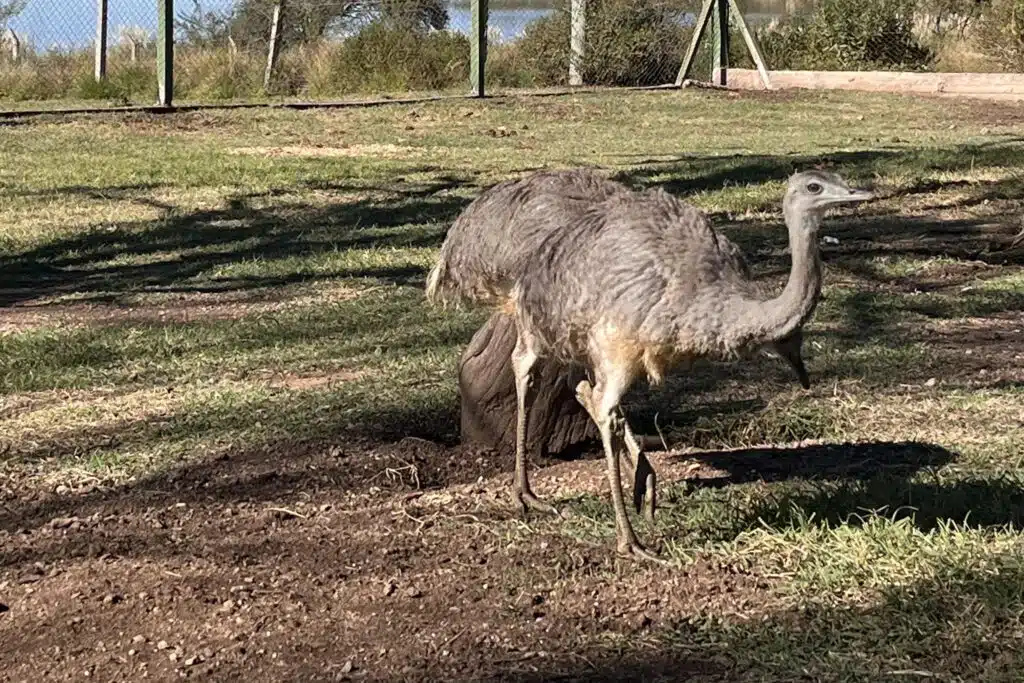
The rhea was rescued from illegal trafficking
The rhea arrived at the reserve thanks to the “Ecosystem Restoration Plan,” which allowed the incorporation of a group of 10 chicks rescued from illegal trafficking.
This intervention was key for the species to establish and reproduce under ideal conditions.
The initiative demonstrates that conservation and protection work yields concrete results when the right conditions are provided: tranquility, food, and sufficient space.
The unique role of the male in rearing
The reproduction of the rhea represents an exceptional case in the animal kingdom.
During the winter, males compete to form their harem, and subsequently, several females lay between 10 and 30 eggs in a single nest.
Then, the male takes full responsibility from that moment on.
He incubates the eggs for 35 to 40 days, minimizing his movements and food intake to avoid leaving the nest.
Once the charitos are born, the father cares for and protects them during the first six months of life.
This paternal rearing behavior is crucial for the survival of the chicks.

The key ecological role of the rhea
The rhea plays a fundamental role in the ecosystem as an omnivorous and opportunistic species. Its diet includes:
- Leaves, shoots, and seeds
- Wild fruits
- Various insects
- Small reptiles and amphibians
With this varied diet, the rhea controls insect populations, disperses seeds, and contributes to the balance of the grassland. Its presence indicates the health of the ecosystem and its ability to sustain native fauna.
The rhea is protected by law
The rhea is protected by National Law No. 22.421 on Wildlife Conservation, Decree 666/97, and the provincial regulations of Entre Ríos.
These regulations prohibit its capture, possession, commercialization, and transfer without authorization.
The Subsecretariat of Environment reminds the community that rheas cannot be pets or bought or sold.
Non-compliance should be reported to the Provincial Directorate of Natural Resources (3446-15417362) or the Subsecretariat of Environment and Food Security (3446-420443).
The birth of these charitos confirms that the Las Piedras Natural Reserve provides the suitable habitat for a threatened species to successfully reproduce.
It is the result of the joint effort to recover and protect the region’s native ecosystems.



