



The recent official report from the European Union reveals that Spain has reached its highest annual emissions from forest fires in more than two decades in 2025, with record figures recorded in just one week in August. The analysis, supported by the Copernicus Atmosphere Monitoring Service (CAMS), illustrates the extent of the environmental impact of the fires that have marked the year.
According to the document, 2025 will be the worst year in terms of area devastated by forest fires in Europe, with more than one million hectares affected on the continent, an unprecedented figure since systematic records began.
Upward trend and transformation of fire seasons
The special report, published by the EU, relies on data from the European Forest Fire Information System (EFFIS). Since the beginning of 2025, more than 7,200 outbreaks have been recorded in the 37 countries participating in the EU Civil Protection Mechanism, with an area devastated equivalent to double that recorded in 2024.
The closest previous record dates back to 2017, when 987,000 hectares were burned, while the annual average over the past two decades was 353,000 hectares. The magnitude of the 2025 fires far exceeds these historical values.
Moreover, the fire season is undergoing notable transformations. Previously concentrated between June and September, it now also extends to spring and autumn, with severe episodes documented outside the usual months of risk.
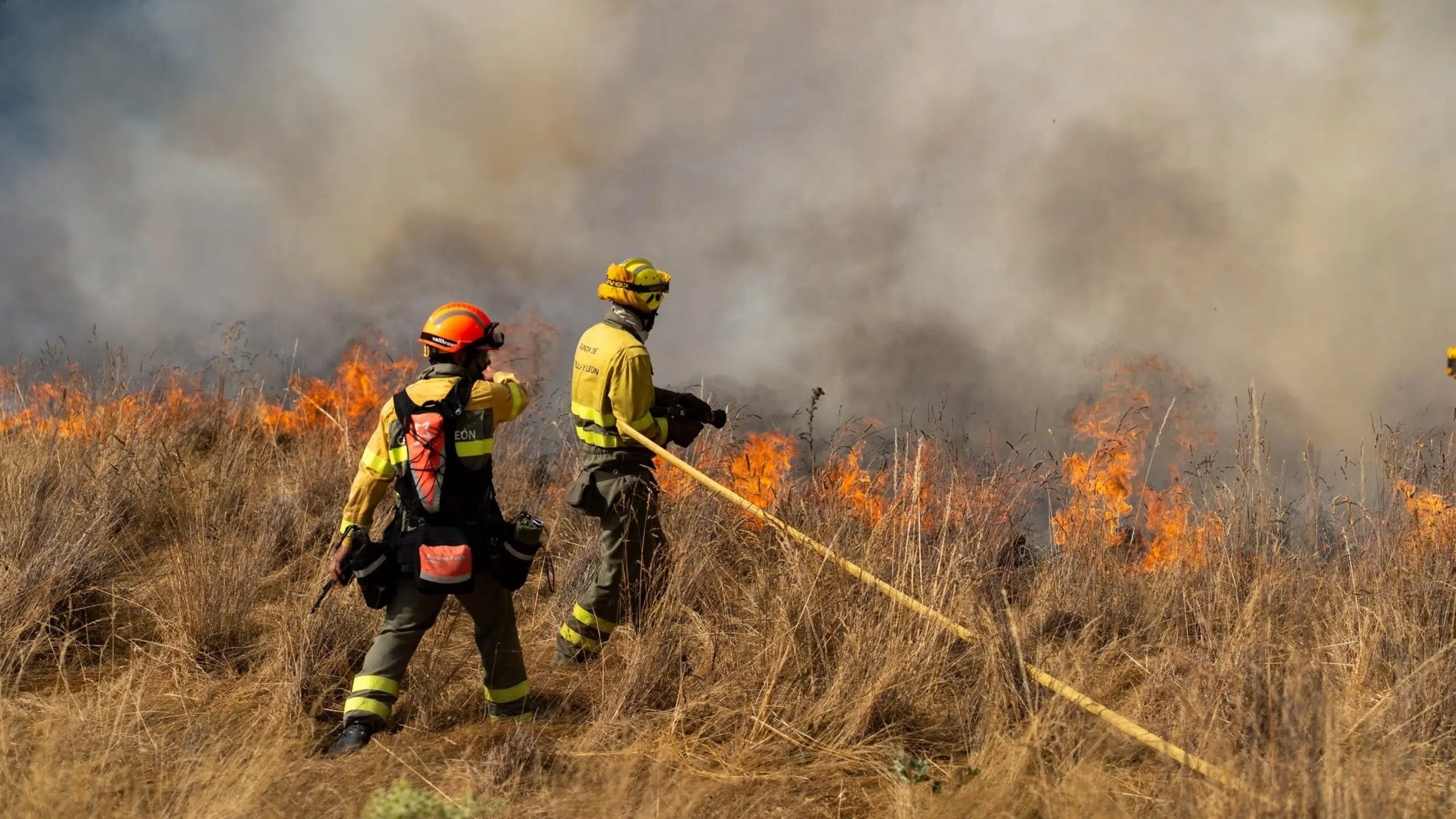
Comparison with 2024 and most affected countries
During 2024, EFFIS recorded 8,343 fires in the countries of the EU Civil Protection Mechanism. Spain, Portugal, Greece, Italy, and Bulgaria were the most affected.
The report emphasizes that both Spain and Portugal concentrated almost a quarter of the total scorched area of the year in September, due to large fires occurring in just one week. In total, 334,940 hectares were burned in the European Union, while countries like Albania, Bosnia and Herzegovina, North Macedonia, Turkey, and Ukraine also reported significant fires.
Impact on atmospheric emissions
The high number of fires in 2025 brought considerable impacts on atmospheric emissions. The Copernicus Service indicated that the fires caused the highest annual total of carbon emissions recorded in the EU and the UK in the last twenty years, with nearly 13 megatons of carbon released into the environment.
In Spain’s case, adverse weather conditions —continuous heatwaves and extreme dryness— directly influenced the increase in fires and their consequences. These circumstances led Spain to surpass its historical annual emissions data in the last 23 years, a record broken in just seven days in August.
Institutional challenges and international cooperation
The combination of the increase in devastated area and the rise in emissions highlights the challenges for European and global firefighting services. The report warns that fire seasons show a trend to prolong and become less predictable, forcing a review of prevention and response strategies.
The previous European average, set at 353,000 hectares burned per year, is far exceeded by what was recorded in 2025. Only in 2017 were similar values reached, without surpassing the million hectares devastated. Since 2006, when systematic records began, the upward trend appears consolidated and sustained.
Community authorities emphasize that the challenges posed affect not only the immediate response but also the environmental management and risk prevention, with impacts that affect the atmosphere and the health of ecosystems.
The European Union report confirms that forest fires have become a matter of utmost concern for the continent. Spain, with record figures of emissions and devastated area, reflects the severity of a phenomenon that requires strengthening international cooperation and adapting prevention strategies to increasingly longer and unpredictable seasons.


