



The temperate rainforests of southern Chile continue to surprise science. An international study revealed that the oldest larch trees hide an extraordinary diversity of fungi beneath the soil, playing an essential role in the ecosystem’s health and carbon storage.
The study, published in the scientific journal Biodiversity and Conservation, analyzed fungal communities living in the soils of forests where the larch grows. The results showed that ancient specimens concentrate a much greater underground biodiversity than young trees.
Additionally, researchers discovered that a single large larch can host hundreds of different fungal species. Many of them could even be new to science.
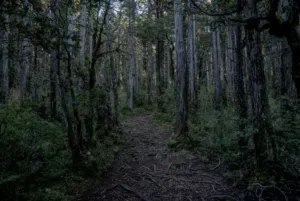
Millennial forests sustaining southern Chilean biodiversity
The research was conducted in the temperate forests of the Coastal Range, especially in the Alerce Costero National Park, a protected area that preserves some of the oldest specimens of this species.
In these ecosystems, numerous animal and plant species coexist. Among them are reptiles, small wild felines, and various climbing plants that are part of the complex web of the humid forest.
Above this diversity rise the giant larches, whose trunks can reach extraordinary dimensions. These trees grow slowly and have a very low natural mortality, allowing them to survive for millennia.
Due to these characteristics, larch forests function as one of the planet’s most important carbon sinks, as they store large amounts of carbon both in the wood and in the soil.
A hidden world beneath the earth: the fungi sustaining the forest
The study revealed that the oldest trees act as true refuges of underground biodiversity. In particular, the specimen known as “Alerce Abuelo,” over 2400 years old, exhibited a fungal diversity far superior to that of other analyzed trees.
Researchers identified more than 300 exclusive fungal species associated with this tree. These organisms are part of a microscopic network that connects the plant roots and allows for the exchange of nutrients.
Among them are the mycorrhizal fungi, which transport water and minerals to the trees and, at the same time, help plants resist droughts, diseases, and other environmental stress factors.
Moreover, these fungal communities play a crucial role in the carbon cycle. Globally, it is estimated that this type of fungi transports around a billion tons of carbon to the soil each year.
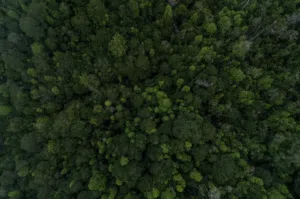
The larches: millennial trees key to forest balance
The larch, scientifically known as Fitzroya cupressoides, is one of the longest-living tree species on the planet.
Also called Patagonian cypress or lawal in the Mapuche language, it can live over 3600 years, making it the second longest-living tree on Earth, after the Pinus longaeva.
These giant plants grow mainly in southern Chile and the foothills of the Andes Mountains. However, their distribution has drastically reduced over the centuries due to the exploitation of their wood and the expansion of human activities.
As a result, the species currently faces threats linked to land use changes, infrastructure development, and climate change.
A finding that reinforces the need to protect ancient forests
Scientists argue that the loss of a millennial tree can have a significant impact on the ecosystem. This occurs because each of these specimens hosts underground communities that took thousands of years to develop.
If these trees disappear, many of the fungal species that depend on them also vanish, which can trigger cascading effects on the forest’s functioning.
For this reason, the research concludes that the protection of the oldest trees is key to conserving soil biodiversity and maintaining the resilience of forest ecosystems.
In a global context marked by climate change and biodiversity loss, these forest giants appear as true invisible guardians of the planet’s ecological balance.


