



In 2021, during construction works in Davinópolis, state of Maranhão, fossil remains were discovered that turned out to belong to a new species of long-necked dinosaur. Named Dasosaurus tocantinensis, this sauropod reached about 20 meters in length, becoming one of the largest dinosaurs ever found in Brazil.
The study, published in Journal of Systematic Palaeontology, confirms that this specimen is related to Garumbatitan morellensis, discovered in Spain, which reinforces the hypothesis of land connections between South America, Africa, and Europe about 120 million years ago, when Gondwana still maintained large continental masses united.
Fossil Evidence
The remains include:
- Front leg bones.
- Ribs and pelvis.
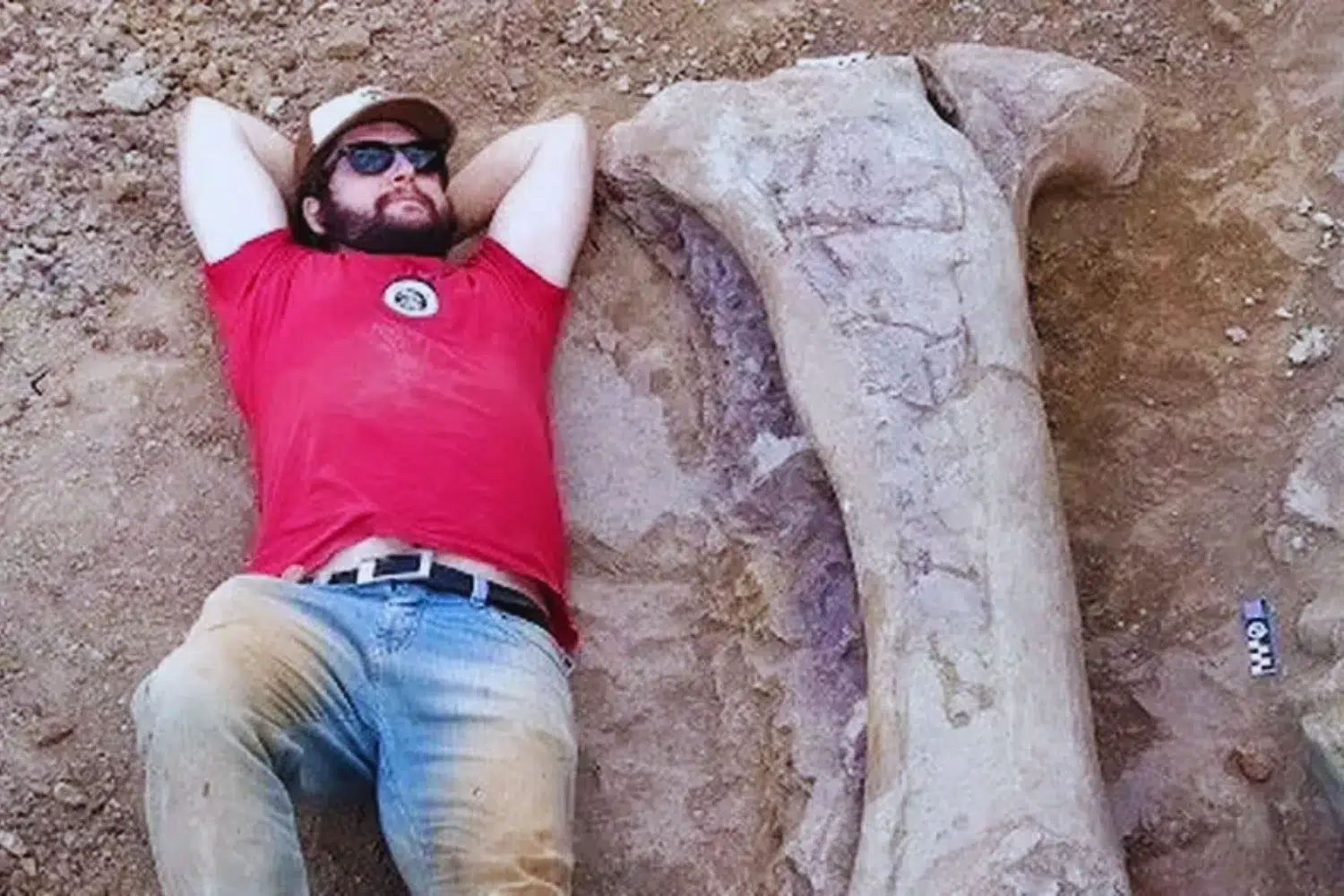
- A 1.5-meter femur, a key piece for estimating the animal’s dimensions.
Paleontologist Leonardo Kerber (UFSM) reported that the discovery of the femur was decisive for calculating the size of the dinosaur, confirming that it was one of the largest sauropods recorded in Brazil.
Characteristics of the New Long-Necked Dinosaur
Dasosaurus tocantinensis belonged to the titanosauriformes, a group of sauropods that includes the titanosaurs, considered the largest dinosaurs that ever existed.
- It exhibited traits shared with more derived groups, such as the titanosaurs that dominated South America millions of years later.
- Its name combines local references: Dasosaurus means “forest reptile” and tocantinensis alludes to the Tocantins River, near the discovery site.
Transatlantic Connection
The analysis indicates that the lineage of Dasosaurus originated in Europe and dispersed to South America via North Africa between 135 and 115 million years ago.
This connection explains the kinship with the Spanish dinosaur Garumbatitan morellensis and provides evidence about the biogeographic routes of Gondwana.
Scientific and Heritage Importance
The discovery has multiple implications:
- Paleogeographic: confirms links between continents now separated by the Atlantic.
- Paleontological: expands the record of sauropods in Brazil and provides data on their evolution.
- Heritage: the excavation in a quarry reveals new possibilities for finding fossils in places other than traditional sites.
Moreover, the discovery contributes to the understanding of how dinosaurs dispersed and evolved on different continents, offering clues about the dynamics of Gondwana and the formation of prehistoric ecosystems.
The discovery of Dasosaurus tocantinensis constitutes one of the most significant findings in recent Brazilian paleontology. Its kinship with a European dinosaur reinforces the theory of continental connections in Gondwana and opens new lines of research on the dispersion of sauropods. As paleontologist Kerber noted, “it has been one of the most fascinating excavations I have participated in.”



