



An innovative construction technique developed in Colombia proposes to transform the way of building homes. Consequently, it uses blocks made from recycled plastic.
The system was promoted by the company Conceptos Plásticos. Additionally, it proposes a faster and more accessible alternative.
This solution addresses housing and environmental challenges. Therefore, it combines recycling with innovative construction.
From logistical difficulty to a sustainable solution
The idea arose from problems in transporting traditional materials. Consequently, a more efficient alternative was sought.
The project was developed by Fernando Llanos and Óscar Méndez. Additionally, it integrated engineering and architectural knowledge.
Thus, a system based on recycled plastic was born. Therefore, a waste was transformed into a resource. Likewise, the approach aims to reduce costs and times. In this way, construction is optimized.
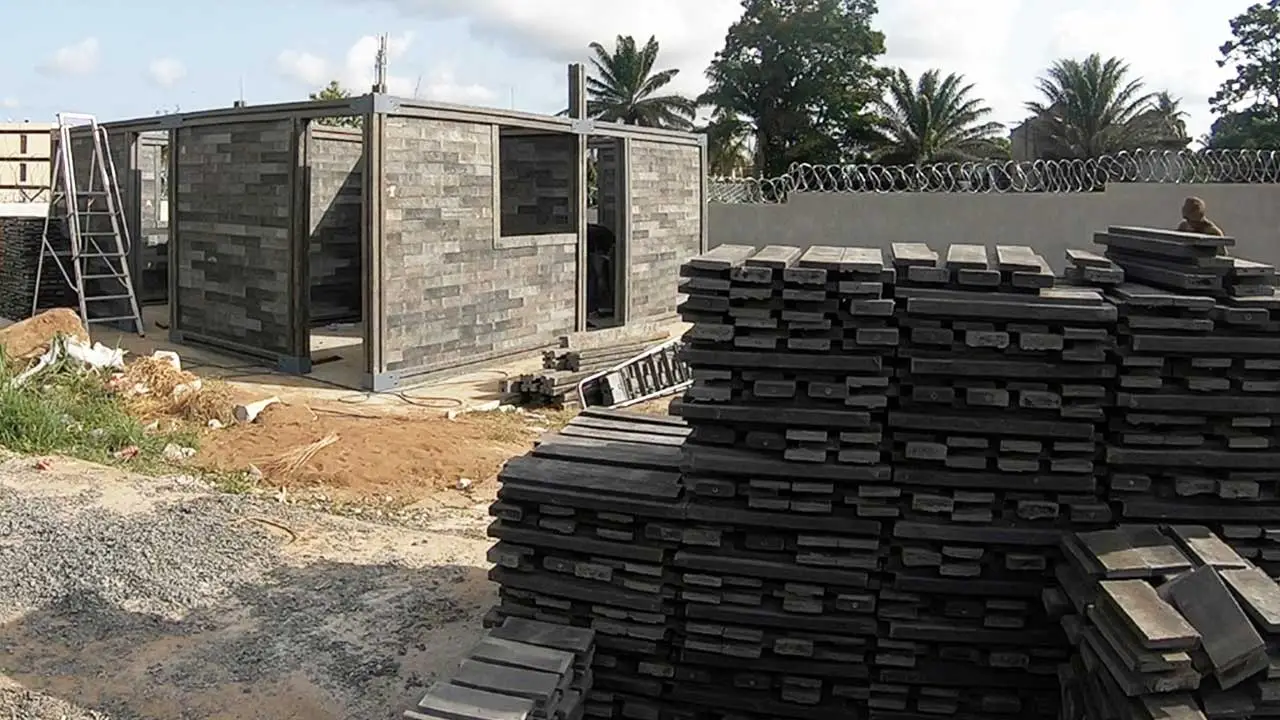
How the modular block system works
The blocks are manufactured through an extrusion process. Consequently, the plastic is melted and molded. Each piece fits with others like a modular system, reducing the use of mortar.
This allows for the construction of homes up to two stories. Therefore, it significantly speeds up the work. Likewise, the lightweight facilitates transportation. In this way, its use is expanded in remote areas.
Accessible and quick-to-build homes
The system allows houses to be built in a few days. Consequently, a basic home can be constructed in five days.
These units include essential spaces. Additionally, their cost is around 6,800 dollars. This represents an economic alternative. Therefore, it improves access to housing. An example occurred in Guapi, where homes were built for 42 families.

The environmental and social benefits of the initiative
The initiative reduces the accumulation of plastic waste. Consequently, it reuses materials with long degradation times. Additionally, it promotes the circular economy. Therefore, it turns waste into useful resources.
Likewise, it decreases the environmental footprint of construction. In this way, it reduces emissions and consumption of traditional materials.
It also generates a positive social impact. Thus, it provides quick housing solutions in vulnerable contexts.
An alternative to future challenges
The model proposes a new way of building. Consequently, it combines innovation, sustainability, and accessibility.
Additionally, it addresses global problems such as plastic pollution. Therefore, it offers a comprehensive solution.
Likewise, its replicability opens new opportunities. In this way, it can expand to other countries. Ultimately, this technology redefines construction. Thus, it paves the way towards more sustainable and resilient cities.



