



The expansion of space activity brings with it an increasingly concerning problem: space debris. Out-of-service satellites, rocket remnants, and fragments of old missions orbit the Earth at speeds exceeding 27,000 km/h, and in many cases, they end up re-entering the atmosphere.
Currently, it is estimated that there are 1.2 million fragments between 1 and 10 cm orbiting the planet, which together represent about 16,200 tons of space debris. However, only about 44,000 objects can be permanently monitored from Earth.
MIRA: innovation from UNLP
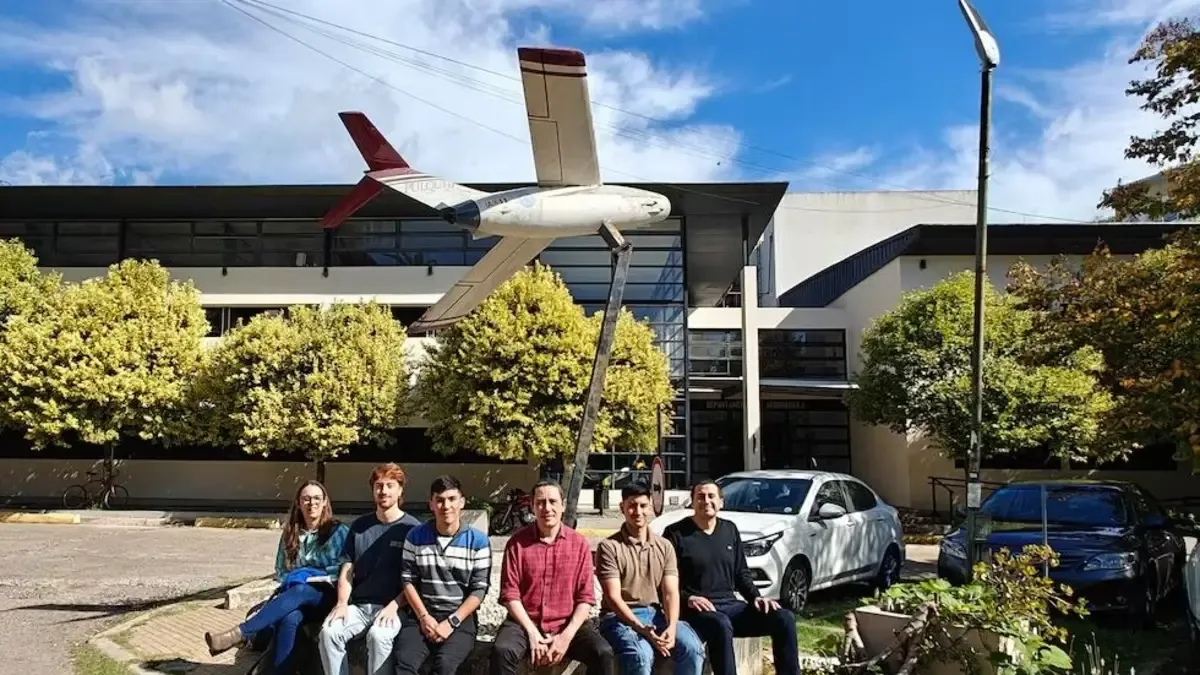
Researchers from the National University of La Plata (UNLP) developed MIRA (Monitoring of Atmospheric Reentries), the first system created in Latin America to anticipate the fall of space objects and assess associated risks.
The project was presented at the II Latin American Conference of the International Academy of Astronautics (IAA) on Space and Society, held in Salta, with participation from organizations such as NASA, ESA, CONAE, CONICET, and INVAP.
An interdisciplinary approach
The system was designed by the Interdisciplinary Center for Space Studies (CIEE) of the UNLP, with a team composed of specialists in:
- Aerospace engineering.
- Data science.
- Space law.
- Environmental studies.
- Materials engineering.
MIRA combines orbital monitoring, data analysis, mathematical modeling, and risk assessment to estimate when and where space debris might fall.
Early warnings and risk management
The platform integrates information from international databases and classifies objects according to size, orbit, and risk level. With this data, it generates models that simulate descent trajectories and possible impact zones.
When it detects a significant reentry, MIRA can issue early warnings to civil protection agencies, aeronautical authorities, and emergency management areas.
More than engineering
One of MIRA’s key contributions is that it does not limit itself to the technical aspect. It also incorporates a legal, environmental, and public policy perspective, recognizing that space debris is a global governance challenge.
Although most debris disintegrates upon entering the atmosphere, some components—such as fuel tanks and metal structures—can survive and reach the Earth’s surface.
Additionally, international studies analyze the environmental impact of reentries, as they release metallic particles and chemical compounds in the upper layers of the atmosphere.
Trend in Latin America
Specialists warn that in the last five years, there have been more reentries over Latin America than in the previous fifteen, a trend linked to the growth of satellite launches and constellations.
This underscores the importance of having regional systems like MIRA, capable of anticipating risks and providing strategic information for civil protection and environmental conservation.
MIRA marks a scientific and technological milestone for Latin America. From La Plata, Argentine researchers provide a tool that combines science, law, and environment to tackle a global problem: space debris.
Its development demonstrates that the region can be a protagonist in building innovative solutions for future challenges.


