



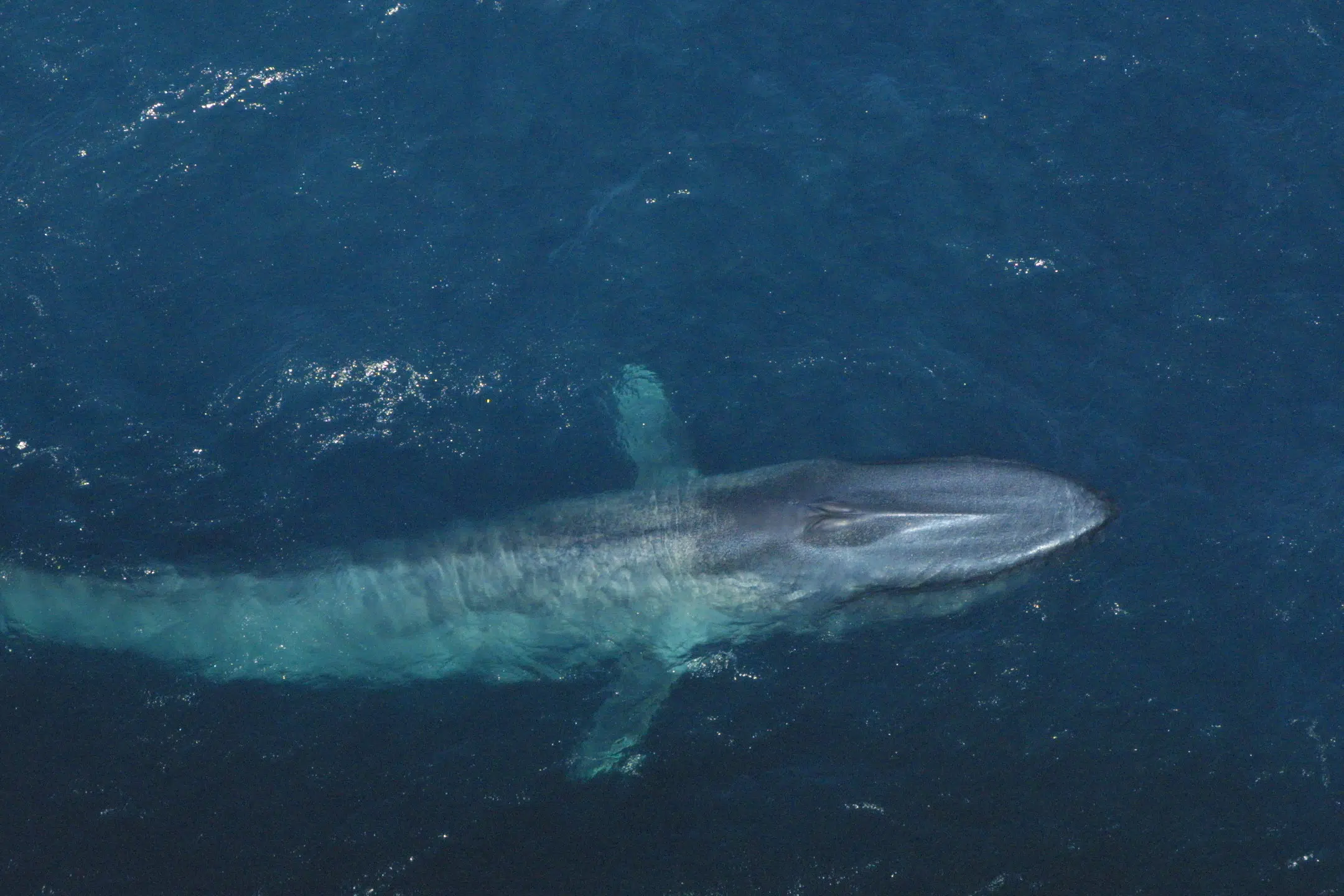
Después de décadas de massive hunting and an almost irreversible decline, scientists are beginning to detect signs of recovery in Antarctic blue whales and southern fin whales.
A study led by the University of Cape Town compiled over 60 years of records in Namibia and South Africa, revealing an increase in sightings since 2012, suggesting that these species are slowly returning to part of their former territory.
Key study data
- Blue whale: 12 confirmed sightings, one stranding, and five additional records.
- Fin whale: 76 sightings and six strandings, with more constant presence throughout the year.
- 95% of observations occurred since 2012, after decades of almost total absence.
- The study area corresponds to the Benguela upwelling ecosystem, a nutrient-rich region that was historically key for feeding and breeding of these species.
Historical context
Between 1913 and 1978, commercial hunting exterminated approximately:
- 350,000 blue whales.
- 725,000 fin whales.
This impact led to a brutal population collapse. Today, the Antarctic blue whale is still classified as “Critically Endangered” by the IUCN, with just 3% of its historical levels, although it is growing between 5% and 8% annually. The fin whale, categorized as “Vulnerable”, has recovered about 30% of its original numbers, with an annual growth of 4% to 5%.
Positive signs and scientific caution
Researchers warn that more sightings do not automatically mean more whales. Part of the increase may be due to a greater presence of observers on commercial ships and in seismic surveys for oil and gas.
“The increase in sightings is consistent with a gradual recovery, although it may also reflect a greater observation effort,” explained co-author Simon Elwen.
Current threats
Although commercial hunting is no longer the major threat, whales face new risks:
- Collisions with ships.
- Entanglements in fishing gear.
- Underwater noise that disrupts their communication.
- Pollution and climate change, which alter marine ecosystems.
Other species in recovery
- The humpback whale is one of the most successful examples after the ban on commercial hunting.
- The North Atlantic right whale shows moderate signs of improvement, although it remains in critical condition, with just 384 individuals estimated in 2024.
Experts’ recommendations
The study authors suggest:
- Expanding passive acoustic monitoring.
- Increasing the presence of trained observers on commercial ships.
- Incorporating whale distribution into marine planning to reduce risks from traffic and industrial exploration.
The signs of recovery of blue whales and fin whales are encouraging, but still insufficient to speak of a complete recovery.
The lesson is clear: when human pressure is reduced, nature responds, albeit slowly and with scars. Maintaining protective measures for decades will be key to ensuring that the return of these marine giants does not remain halfway.



