



This week, trap cameras recorded the image of a wild jaguar moving through the forests of Iberá National Park, in the province of Corrientes.
The footage, shared by the organization Rewilding Argentina, marks a historic moment for the conservation of native wildlife, as this species had disappeared from the region for much of the 20th century.
The return of the jaguar to Iberá: a symbol of environmental restoration
More than 35 individuals live freely thanks to a reintroduction program started a decade ago.
Considered the largest feline in South America and classified as a critically endangered species in Argentina, the jaguar (Panthera onca) was reintroduced in Iberá through a project that combines controlled breeding, satellite monitoring, and progressive release.
Its return not only represents a victory for biodiversity, but also restores key ecological functions in the ecosystem.
“A few years ago, this image seemed impossible,” said Nicolás Muñoz Oliver, author of the video showing the animal in the Corrientes jungle.
Pelusa: a young ocelot starting her life in the wild
The release of this female marks a new step in the recovery of functional species in Iberá.
In parallel, Iberá National Park was the scene of another significant event: the release of Pelusa, a female ocelot (Leopardus pardalis) born in the species reintroduction center.
Her parents came from captivity, but Pelusa was raised in environmental enrichment enclosures, where she learned to hunt natural prey and develop autonomy.
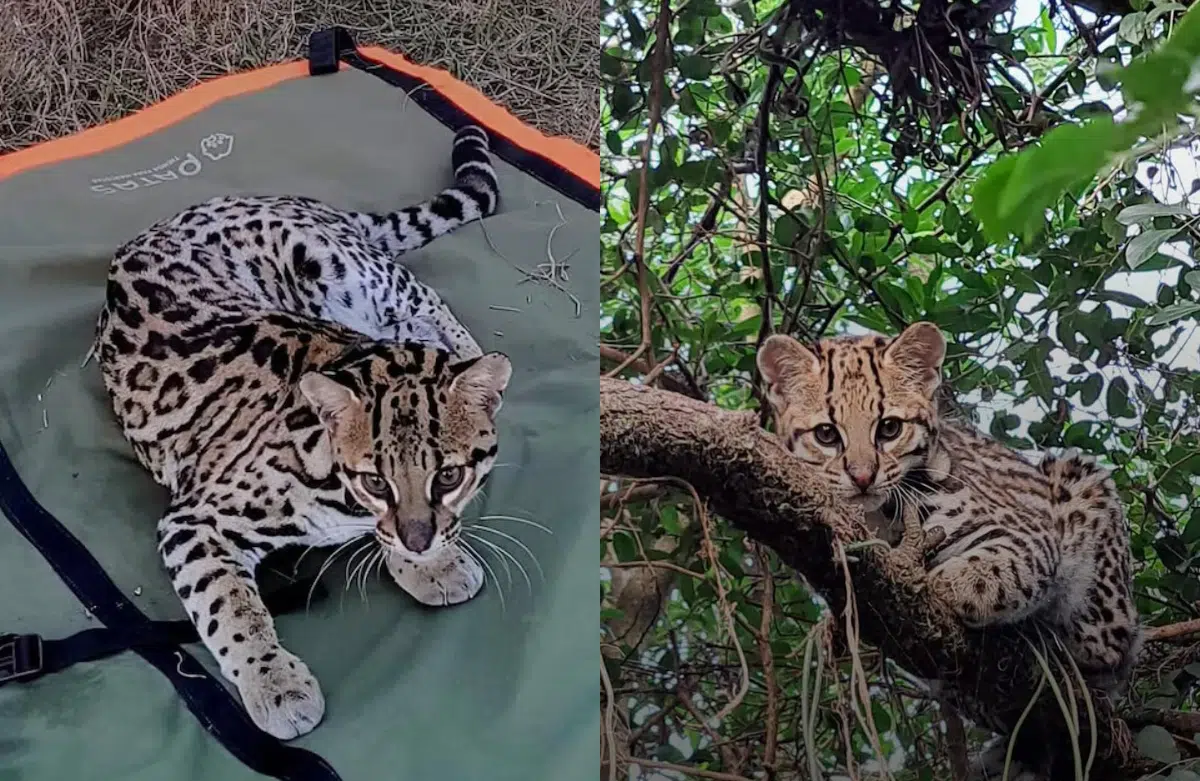
Satellite monitoring and adaptive tracking
A GPS collar will allow studying her movements and habits in the Corrientes ecosystem.
Before her release, the technical teams of Rewilding Argentina fitted her with a satellite tracking device, which will enable:
- Monitor her movements in real-time
- Evaluate her adaptation to the wild environment
- Collect data for future reintroductions
“Understanding her habits is key to ensuring her survival and adjusting conservation strategies,” explained the foundation.
Ecological restoration: restoring lost functions to the landscape
The ocelot regulates populations of medium-sized prey and contributes to the natural balance.
The return of the ocelot, the third largest feline in South America, aims to restore its ecological role in the forests and wetlands of Iberá.
Its presence helps control population dynamics, favoring biological diversity and the ecosystem’s resilience.
Iberá National Park as a model of active conservation
The reintroduction of locally extinct species demonstrates that restoration is possible.
Both the jaguar and the ocelot had disappeared from the Corrientes landscape. Their return, the result of scientific, community, and political efforts, shows that it is possible to reverse local extinction processes and rebuild functional ecosystems.



