



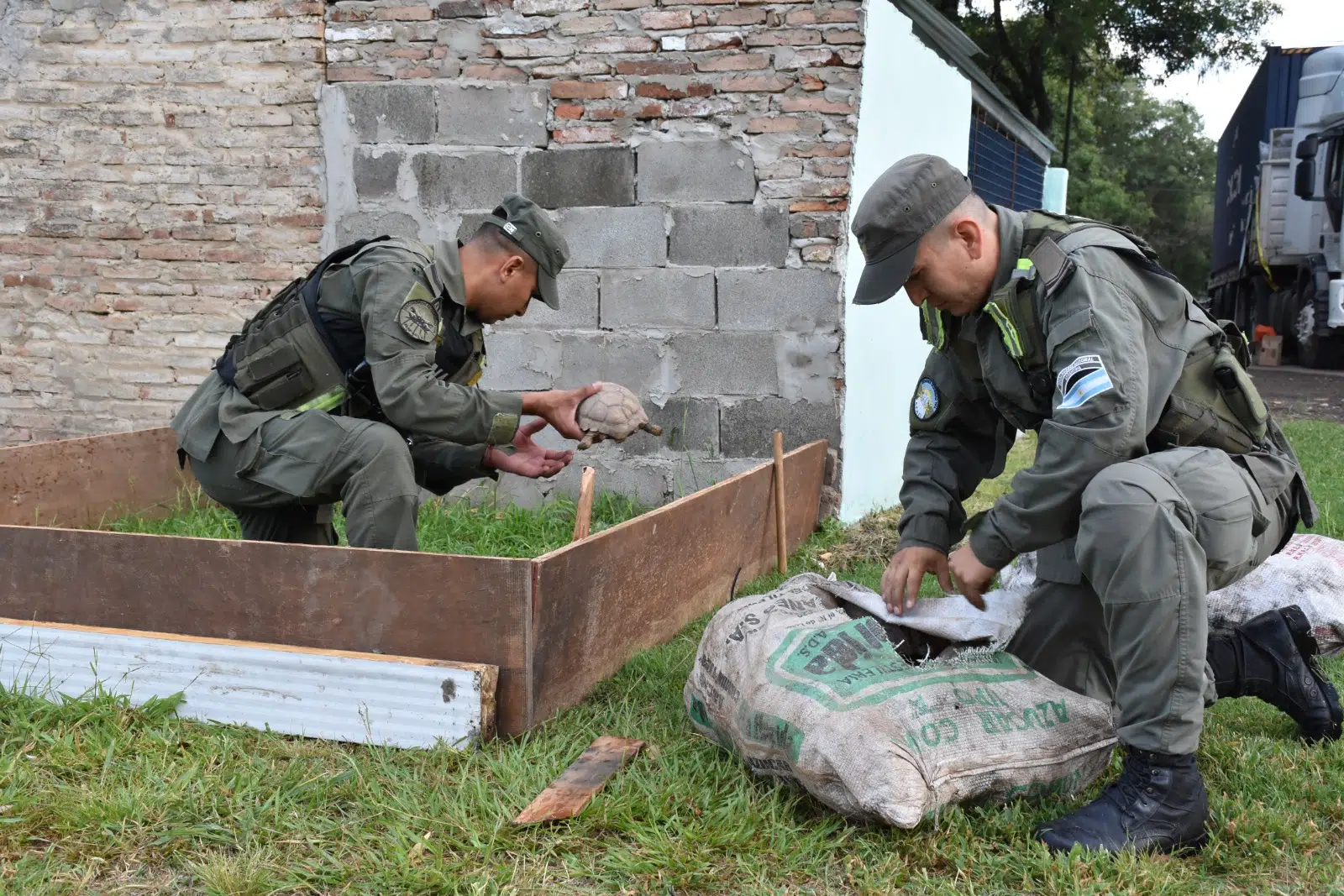
On Wednesday, February 11, personnel from the Rafaela Road Section in an operation against illegal trafficking, under the Road Safety Squadron of the Gendarmerie, stopped a truck with a semi-trailer coming from Tucumán on National Route No. 34. During the inspection, the gendarmes found boxes with wild animals in the cabin and, after a more thorough review, they found 17 packages with turtles and birds.
The final count revealed 150 land turtles and 100 parrots, all hidden in precarious conditions. The animals were destined for the province of Buenos Aires. The Rafaela Decentralized Prosecutor’s Office intervened in the case, with advice from the Risk Management and Environmental Protection Directorate.
The business behind wildlife trafficking
The organization Aves Argentinas presented a survey that exposes the magnitude of illegal wildlife trafficking in the country. The study, based on seizures recorded in digital media over the past 12 years, identified:
- 15,597 individuals belonging to 226 different species.
- 11% of the seizures consisted of derivatives such as skins, leathers, taxidermies, slaughtered meat, and tusks.
- It is estimated that 9 out of 10 animals die after being captured due to the extreme conditions of captivity and transport.
Most affected species
Birds are the most trafficked group. The Red-crested Cardinal tops the list, followed by endangered species such as the Yellow Cardinal and the land turtle. Trafficking also reaches threatened plant species, such as Palo Santo and Pino del Cerro.
Geography of the crime
The provinces with the highest incidence of operations and records are:
- Buenos Aires
- Entre Ríos
- Córdoba
- Santa Fe
- Mendoza
This crime involves a structured chain that includes captors, collectors, transporters, sellers, and end consumers.
Environmental and social impact
Illegal wildlife trafficking represents a direct threat to biodiversity and the balance of ecosystems. The massive extraction of individuals from their natural habitat weakens wild populations and puts vulnerable species at risk.
“It is concerning the number of individuals that are extracted from nature and how this practice represents a direct threat to biodiversity and the balance of ecosystems. Making these data visible is key to understanding the magnitude of the problem and reinforcing the need for more controls, but also for greater education and social commitment to curb demand,” expressed Cecilia Maqueda, from the Illegal Wildlife Trafficking Program of Aves Argentinas.
The operation in Rafaela once again exposes the seriousness of illegal wildlife trafficking in Argentina. Beyond the specific seizure, the problem requires stricter controls, effective sanctions, and environmental education campaigns that reduce demand. The protection of wildlife is essential to preserve biodiversity and ensure the balance of ecosystems.

