



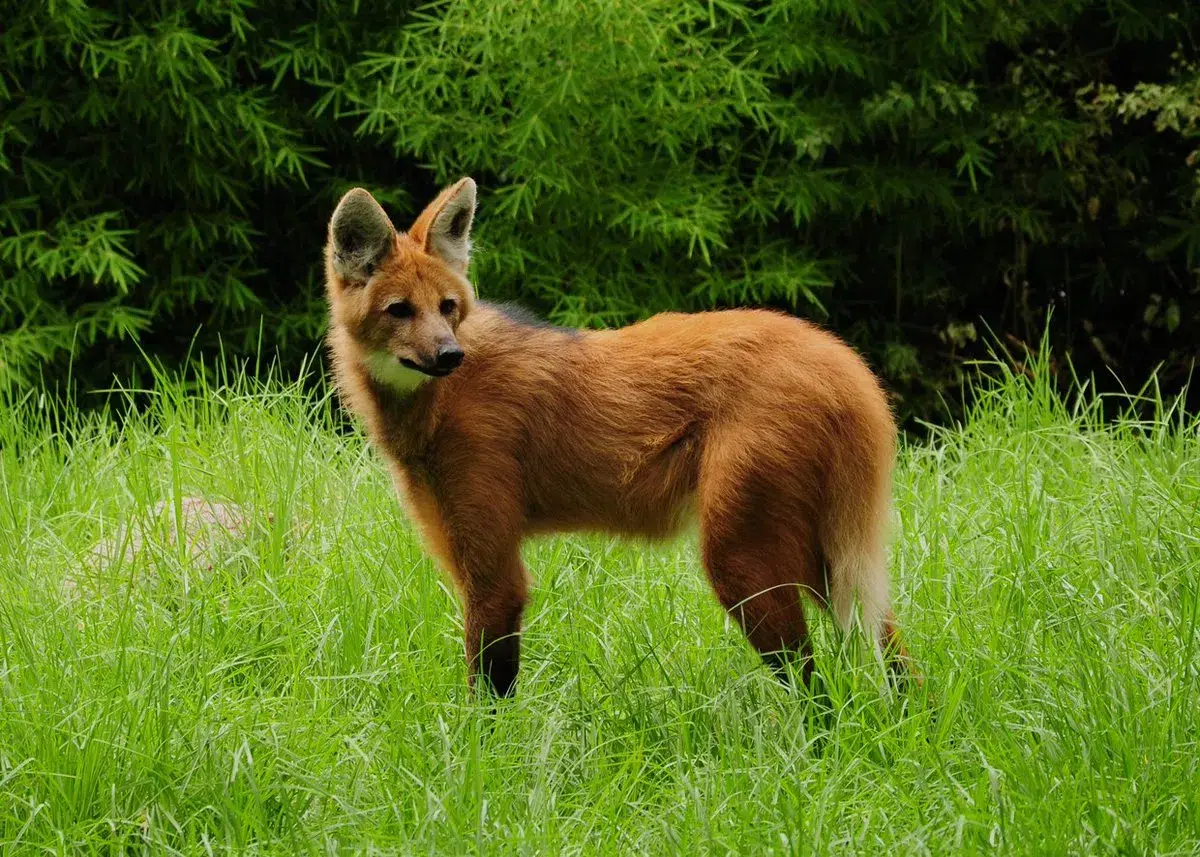
Within the framework of the Environment Week, celebrated between June 1 and 7, the Ministry of Environment and Climate Change of Santa Fe released a report on the situation of the maned wolf and the actions developed at the La Esmeralda Wildlife Rescue, Research, and Interpretation Center.
The data collected by the Fauna area show how human pressure continues to affect this emblematic species of Argentine wetlands and grasslands. At the same time, they demonstrate the advancement of conservation strategies that combine specialized veterinary care, scientific research, and new tracking technologies.
Additionally, the experience developed in the province reflects a paradigm shift in the management of wildlife, where the rescue of specimens is integrated with long-term monitoring and ecological restoration programs.
From old zoo to reference center for native fauna
La Esmeralda has been undergoing a process of institutional transformation for years. What once functioned mainly as a recreational space is now positioned as a center focused on conservation, environmental education, and scientific research.
Every time a maned wolf enters the facility, a comprehensive protocol is activated. The process includes clinical exams, laboratory studies, health evaluations, and behavioral analyses aimed at determining if the specimen can return to wildlife.
Furthermore, the work is carried out alongside specialists from the Faculty of Veterinary Sciences of the National University of the Littoral, strengthening knowledge about rehabilitation and management of native fauna.
Rescues that reflect the challenges of coexisting with wildlife
The official records show various entries that occurred in Santa Fe over the past few years. Among them are rescues carried out in Alto Verde, Huanqueros, Coronda, Elisa, Soledad, and Monte Vera.
Some specimens arrived after appearing in urban or industrial areas, while others presented dehydration conditions, injuries caused by parasites, or health problems associated with adverse environmental conditions.
However, most managed to recover and return to suitable natural environments. The most recent case involves a female found in Monte Vera, who received veterinary treatment for a renal parasitosis before being released near San Cristóbal.
Satellite monitoring to protect biological corridors
One of the most important advances of the provincial program is the use of telemetry collars installed on released specimens. This initiative is developed alongside the Temaikèn Foundation and allows for valuable information on the species’ movements.
Thanks to these devices, specialists can identify movement routes, feeding areas, and sectors where the animals face greater risks, especially near roads and productive areas.
On the other hand, the data obtained is used to plan biological corridors, design wildlife crossings, and define priority areas for the conservation of the ecosystems where the maned wolf lives.

The conservation status of the maned wolf in Argentina
The maned wolf is the largest canid in South America and is protected in various Argentine provinces. In Santa Fe, it holds the category of Provincial Natural Monument, the highest level of legal protection.
Although populations remain present in different regions of the country, the species continues to face significant threats. The loss and fragmentation of natural habitats, due to agricultural and urban expansion, increasingly reduce the spaces available for its survival.
Added to this are road accidents, one of the main causes of mortality recorded in adult specimens. Due to their nocturnal habits and the need to cover long distances, these animals often cross roads with heavy traffic.
Comprehensive conservation to preserve ecosystems
The experience developed in La Esmeralda demonstrates that the protection of a species requires much more than specific interventions. Rescue, rehabilitation, monitoring, and research must work in an articulated manner to achieve lasting results.
Additionally, the conservation of the maned wolf involves protecting the wetlands, grasslands, and natural environments that support enormous biodiversity. The presence of this opportunistic predator contributes to the ecological balance and the functioning of ecosystems.
Therefore, specialists and authorities highlight the importance of citizen participation. Early reporting of risk situations, illegal trafficking, or pet keeping is a fundamental tool to ensure the survival of one of the most representative species of Argentine fauna.



