



On Kangaroo Island, off the coast of South Australia, the installation of a predator-proof fence at the Western River Refuge became one of the clearest examples of how well-designed infrastructure can recover species on the brink of extinction.
After the 2019-2020 fires, which destroyed more than 90% of the habitat of vulnerable species, the landscape was exposed: animals without shelter and under extreme predation pressure from feral cats, considered one of the major extinction factors for small mammals and birds in Australia. In that context, the fence ceased to be a scientific experiment to become an ecological rescue mission.
Surprising Recovery
In just five years, populations of endangered species like the Kangaroo Island dunnart, a small nocturnal marsupial, doubled. Not because there is more food or better climate, but for something more basic: they are no longer systematically hunted by introduced predators.
The protected enclosure covers 380 hectares of scrub, forest, and sandy soil. For small animals, it is a whole world where ecological processes function again with natural logic: insects, seeds, birds, and mammals interacting without constant artificial pressure.
Key Species in Balance
The dunnart, although little known, plays an essential role in insect control and seed dispersal. Its recovery, with a population growth of between 90 and 100%, is a sign that the system is rebalancing.
The same happens with birds like the western whipbird and the Bassian thrush, which had disappeared after the fires and are now returning within the fence. The lesson is clear: when the invasive predator is removed, nature responds quickly.
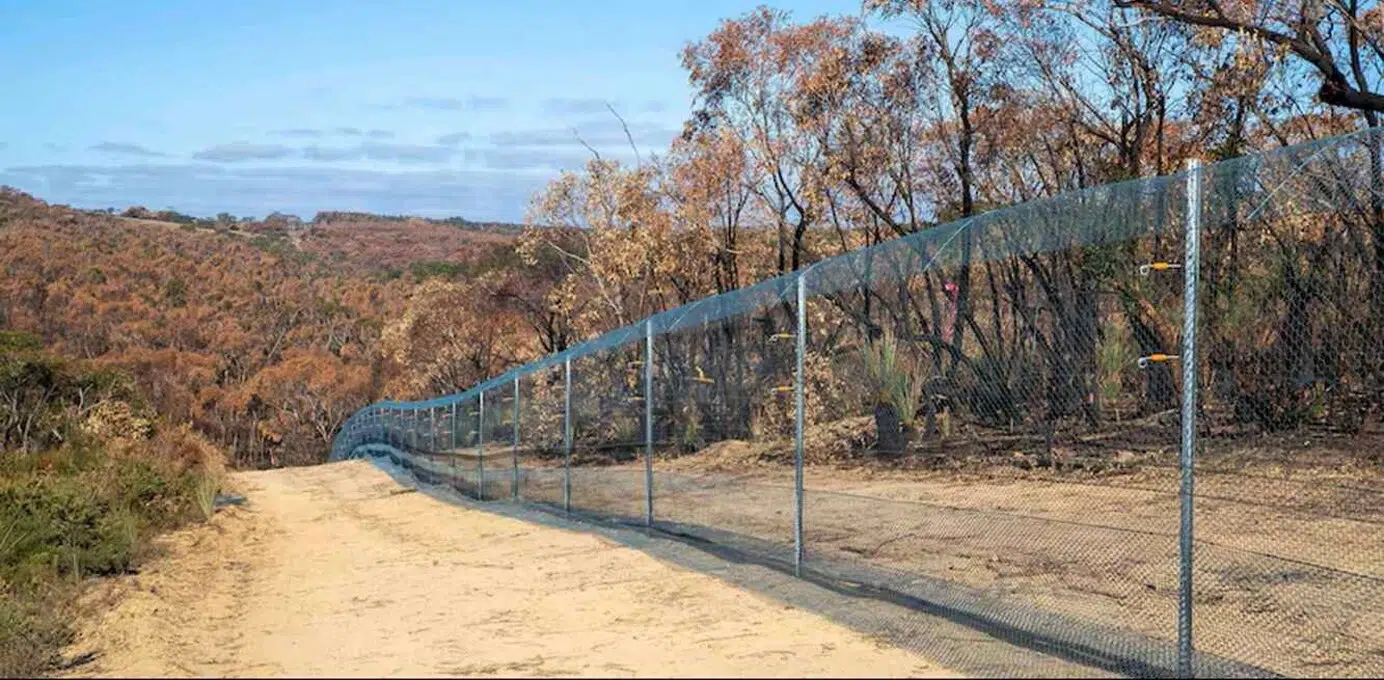
The Fence as a Biological Firebreak
The synchrony between the construction of the fence and the climate catastrophe was decisive. The surviving animals concentrated in small patches of unburned vegetation, making them vulnerable to feral cats. The fence acted as a biological firebreak, allowing the few survivors to reproduce without that pressure.
Outside the enclosure, many populations continued to decline. The experience shows that passive restoration is no longer enough in a world of extreme fires and invasive species: sometimes it is necessary to intervene with physical structures.
A Replicable Model
This approach is beginning to spread to other places in Australia and New Zealand, where similar projects combine selective fencing, predator eradication, and vegetation restoration.
It is not a global solution, but it is a powerful tool in ecosystems on the edge.
Cultural Dimension
For the Ngarrindjeri community, traditional custodians of these lands, the recovery of fauna is also an act of cultural reconnection. The returning species are not just numbers: they are part of a network of stories and practices linked to the territory, interrupted by colonization and ecological degradation.
The collaboration between conservationists and indigenous people opens a different path: managing the landscape in a living way, incorporating cultural burns, vegetation management, and long-term reading of the territory. This approach is already observed in restoration projects in Canada, the United States, and Northern Europe.
The experience of Kangaroo Island shows that it is possible to recover species even after severe climate disasters if the most destructive human pressures are reduced. By eliminating feral cats from a specific area, the ecosystem reorganized itself, without fertilizers, without massive reintroductions, or heavy engineering.



