



The pangolin, known as the armored mammal, inhabits regions of Africa and Asia, adapting to tropical forests, savannas, and semi-arid areas.
Although it is a solitary and nocturnal creature, its uniqueness has captivated scientists and conservationists alike. Its evolutionary history, dating back more than 80 million years, makes it one of the oldest mammals still alive.
Scales, camouflage, and natural defense
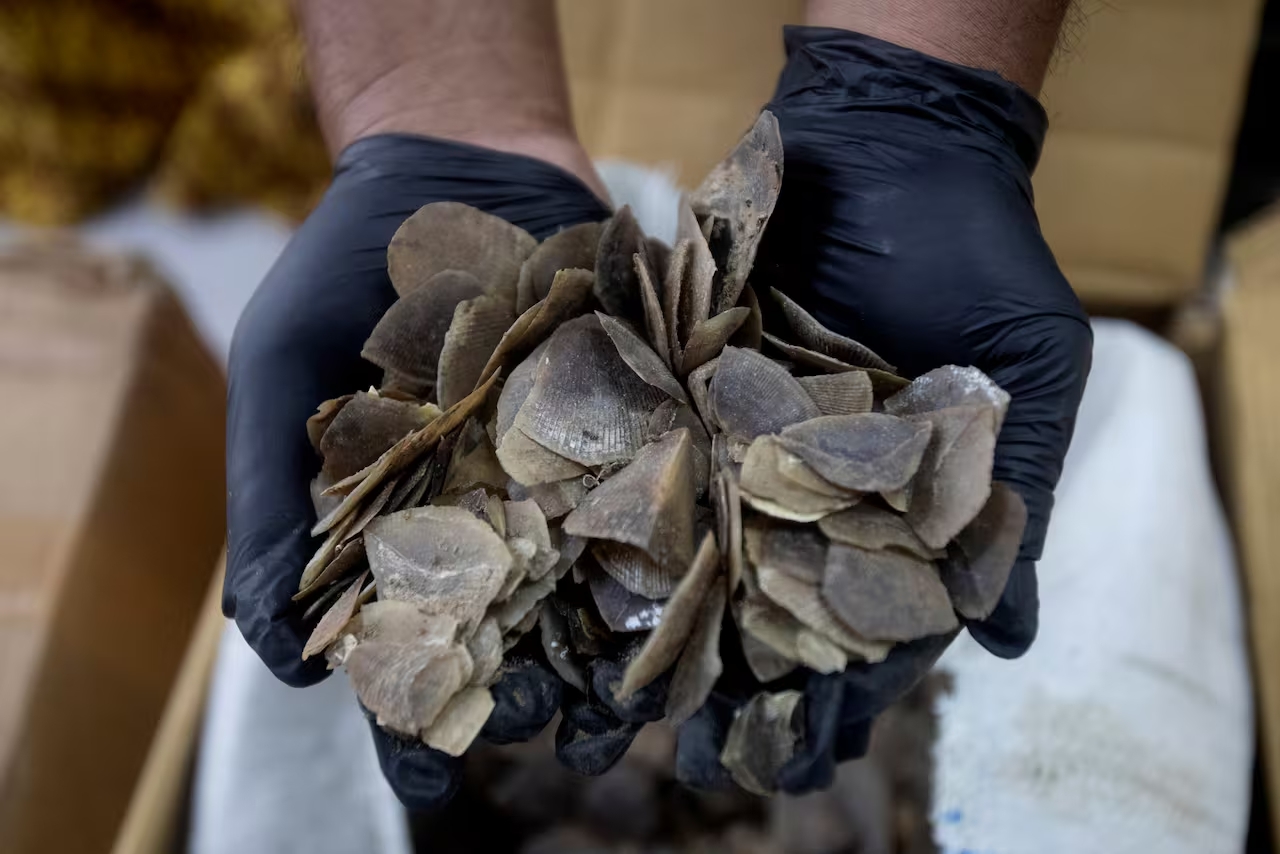
The pangolin’s keratin scales, hard and sharp, protect it from predators like lions and tigers, turning it into an impenetrable “armored ball”.
Additionally, its color and texture allow it to camouflage with the environment, going unnoticed in its habitat. This defense has inspired many cultures to see it as a symbol of protection and strength.
Extraordinary digestive adaptations
The pangolin has a long and sticky tongue, which can exceed 40 cm, ideal for capturing ants and termites in deep tunnels.
Without teeth, it uses a muscular stomach with gastroliths (ingested stones) to grind the exoskeletons. Its digestive system includes a pH of 2.2, comparable to that of a battery, allowing it to efficiently extract nutrients.
Locomotion, digging, and olfactory communication
A peculiar gait, reusable burrows, and pheromones as territorial language.
The pangolin walks on its hind legs, keeping its front claws folded. It is an expert digger, capable of building complex burrows that serve as shelter and breeding space.
Its keen sense of smell allows it to detect food at 200 meters, while its vision is limited. To communicate, it uses pheromones that mark territory and convey information about age, reproductive status, and food availability.
Convergent evolution and genetic diversity
A unique evolutionary line with no close relatives in the mammal tree.
The pangolin belongs to the family Manidae, divided into three genera: Manis (Asia), Phataginus, and Smutsia (Africa).
Although it is compared to armadillos or anteaters, it represents an independent evolutionary line, an example of convergent evolution.
Its genetic separation occurred 37.9 million years ago, allowing unique adaptations in different ecosystems.
Slow reproduction and vulnerability of the young
Prolonged gestation, soft scales at birth, and intensive rearing.
Females have a slow reproductive rate, with gestations lasting 70 to 150 days and only one offspring per litter.
At birth, the scales are pink and soft, so the mother carries the young on her tail to protect it. Initial lactation is later supplemented with insects collected by the mother.
The most trafficked mammal in the world
Luxury meat and traditional medicine without scientific basis have brought it to the brink of extinction.
The pangolin is a victim of a massive illegal trade, driven by the demand for exotic meat in countries like China and Vietnam, and by the use of its scales in traditional Asian medicine, despite having no proven medicinal properties.
The eight species of pangolins are currently endangered, and international trafficking remains difficult to control.



