



Locally known as “yellow hammerhead”, the Sphyrna corona is a rare and little-studied species of hammerhead shark that is classified as Critically Endangered.
Its population has declined by more than 80% in the last three decades, according to the IUCN, and in countries like Mexico, it is considered locally extinct. However, in the Colombian Pacific, this species is still frequently recorded.
A biocultural refuge in the Chocó Biogeographic Region
The Uramba Bahía Málaga National Natural Park protects key habitats and is managed alongside Afro-Colombian communities.
This marine park, declared a protected area in 2010 by the initiative of the Afro-Colombian community councils, covers 479 km² and is home to more than 1,300 registered species.
Its ecosystems include mangroves, beaches, cliffs, rocky islands, and mudflats, making it a natural laboratory for marine conservation.
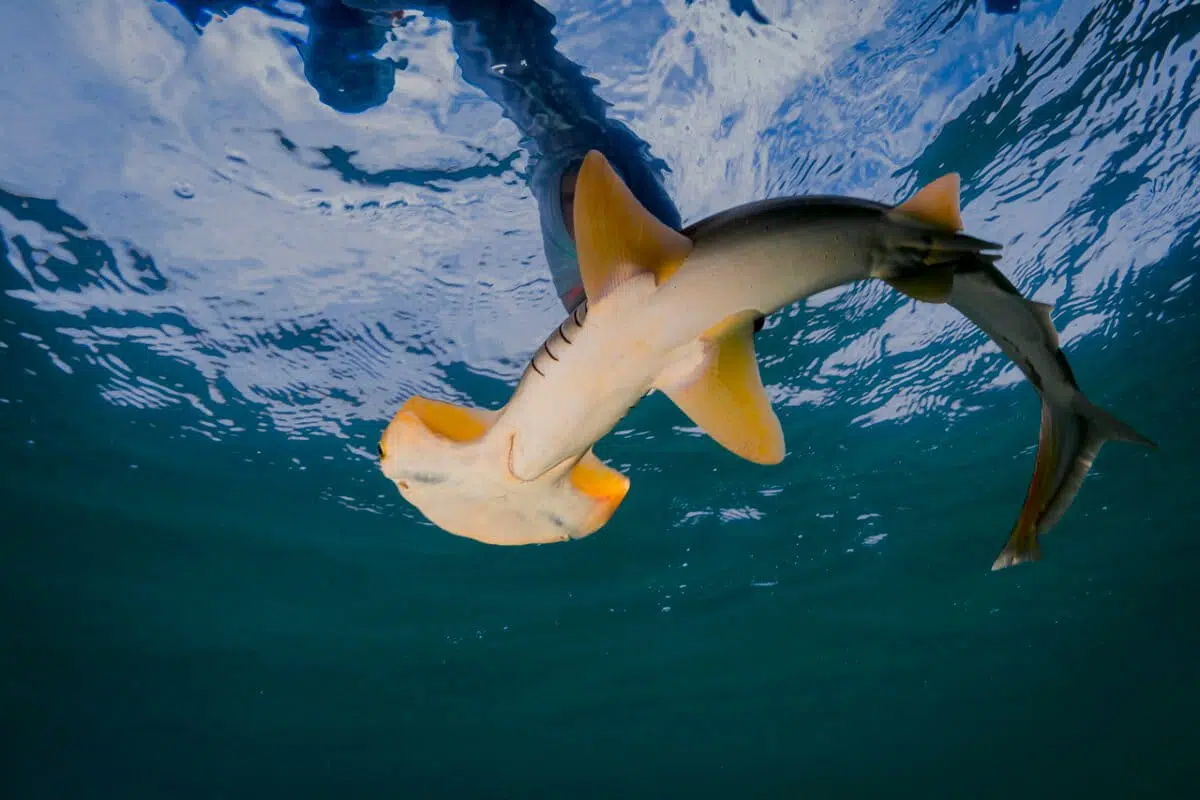
Collaborative science to conserve the yellow hammerhead
Fishermen and biologists work together to study and protect the smallest hammerhead shark on the planet.
Between 2022 and 2023, artisanal boats were transformed into mobile laboratories, where fishermen captured sharks and scientists implanted acoustic telemetry chips to track their movements.
In the first year, the movements of 27 adult individuals were mapped, revealing that they move in small areas, which allowed for the agreement of voluntary conservation and no-fishing zones.
“All the components for a successful long-term project are present in Bahía Málaga,” the researchers affirm.
Second phase: community-led monitoring
More than 50 navigation days have allowed the identification of 160 sharks and the recording of pregnant females.
Since 2024, monitoring has been carried out by local communities, who navigate weekly to capture, tag, and release sharks. This process has generated valuable data on reproduction, abundance, and diversity, and has strengthened local commitment to conservation.
New questions and scientific tools
Stable isotopes and vertebrae studies to understand the species’ ecology.
Researchers have begun analyzing vertebrae samples to study ecological variables such as diet and habitat, using carbon and nitrogen isotopes.
They also seek to understand the origin of the species’ yellow color and its population health status.
A hammerhead shark hotspot in the Colombian Pacific
Bahía Málaga hosts nearly half of the world’s hammerhead shark diversity.
In addition to Sphyrna corona, other species such as Sphyrna media, Sphyrna tiburo, and juvenile specimens of Sphyrna lewini have been identified, making this area a marine biodiversity epicenter.
Cover photo: Emilio Posada



