



The presence of the Tumbes crocodile (Crocodylus acutus) in the basins of the Tumbes and Zarumilla rivers represents much more than a natural attraction.
This large reptile is a symbol of cultural identity and an indicator of the good health of aquatic ecosystems in northern Peru. Its survival has been possible thanks to a combination of state efforts, conservation initiatives, and the daily commitment of local communities.
A formidable reptile
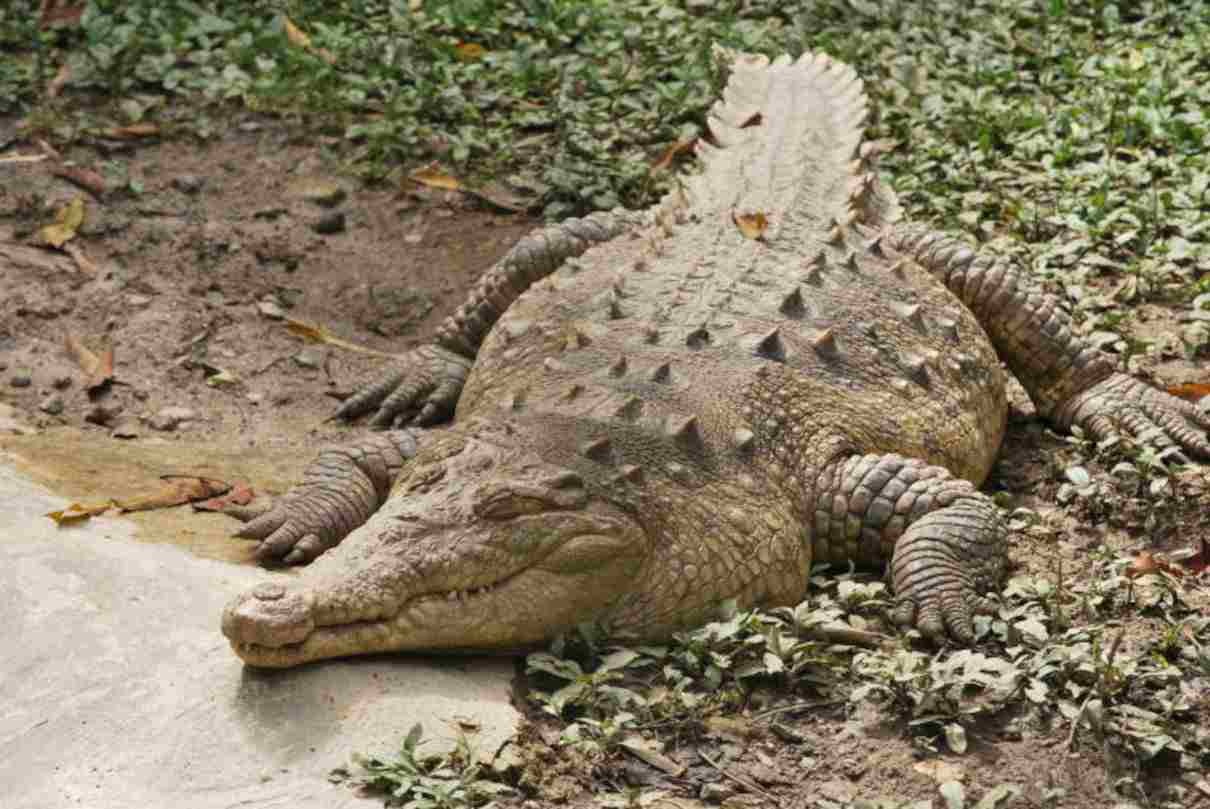
The Tumbes crocodile can reach up to six meters in length. Its grayish body with dark spots, clear and smooth belly, and muscular tail give it an imposing presence. Adapted to high temperatures, this ectothermic animal regulates its body temperature through water or by opening its mouth to release heat.
For decades, illegal hunting driven by the high value of its skin, meat, and bones drastically reduced its populations, placing it under the threat of extinction.
Protection and recovery strategies
Faced with this critical situation, organizations such as the National Fisheries Development Fund (Fondepes) and the Supervisory Body for Forest Resources and Wildlife (Osinfor) deployed management strategies that today allow for a glimpse of recovery.
In Villa Puerto Pizarro, the Tumbes Crocodile Conservation Center functions as a refuge and captive breeding space. There, under the carob trees and the flight of herons, a constant and silent task is developed.
“This place was born to conserve an emblematic species that exists only in the north of the country. The goal was always clear: to prevent its extinction and ensure its perpetuity over time,” said Flavio Saldarriaga, head of the center.
Currently, more than 320 crocodiles —both juveniles and breeders— inhabit the facilities, reflecting the result of a sustained effort to preserve biodiversity.
Technical knowledge and breeding protocols
The accumulated experience allowed for the definition of techniques for breeding in controlled conditions. This knowledge was consolidated in the Tumbes Crocodile Captive Breeding Protocol, developed by Fondepes, which today guides conservation actions at the national level.
The daily work depends on people like José Jacinto Morales, a caretaker with 28 years of experience, who describes:
“I have seen them grow. Each one has its character. Some are calmer, others get upset if you get too close. The animals already recognize us, they know who takes care of them and who feeds them.”
His son Miguel continues the work, reinforcing the family bond with specimens like Godzilla, a 3.50-meter, 300-kilogram crocodile, born in captivity and considered the noblest in the center.
Environmental education and sustainable tourism
The center also plays an educational and touristic role. More than 60,000 national and international visitors come each year to learn about the ecological value of the Tumbes crocodile, a key predator for the balance of coastal ecosystems.
Guided tours promote environmental education and favor the local economy through tourism, transportation, gastronomy, and crafts, integrating conservation into the sustainable development of the community.
Supervision and official recognition
The technical support of Osinfor ensures the legality and sustainability of wildlife management. In June 2025, the center received its certificate of compliance with obligations, an official recognition that certifies its responsible management.
“Osinfor not only supervises, it also guides and provides technical assistance to improve the management of the center. That commitment to continuous improvement maintained the very good rating and official recognition,” highlighted Fredy Palas Yarcila, coordinator in Chiclayo.
At sunset in La Tuna Carranza, the crocodiles submerged in the warm water embody a story of resilience and hope. The preservation of the Tumbes crocodile symbolizes the collective effort of communities, institutions, and the State to maintain the balance of ecosystems and project a future where coexistence between humanity and biodiversity is possible.



