



The Justice of Entre Ríos issued an unprecedented measure in environmental matters: it banned drone fumigations in fields adjacent to a home in Aldea Salto, Diamante department, following a complaint by a father whose 12-year-old daughter suffers from “chronic genotoxic damage” linked to exposure to agrochemicals.
The resolution was signed by Judge Adriana Acevedo, member of the Administrative Litigation Chamber of Paraná, who ordered the suspension of the use of unmanned aerial vehicles (UAVs) for spraying in the area until the core of the lawsuit is resolved.
A girl, a diagnosis, and a claim
The case was initiated by Gerardo Gareis, father of the affected minor, who filed an environmental protection action represented by lawyers Aldana Sasia and Lisandro Garabentos.
Genetic studies confirmed that the girl has chronic genotoxic damage, a cellular alteration that can lead to serious diseases and which expert reports link to constant exposure to agrochemicals.
In his judicial request, Gareis demanded that applications be banned within a radius of 1,000 meters for ground fumigations and 3,000 meters for aerial or drone applications.
A ruling that questions the current law
Judge Acevedo confirmed the damage to the girl’s health and emphasized that the legal requirements for the use of agricultural drones —such as registration, record, and authorization— are not implemented in Entre Ríos, making their current use illegal.
The precautionary measure will remain in effect until a final ruling determines the “safety zones according to scientific and constitutional standards”. Additionally, the magistrate will analyze the possible unconstitutionality of Articles 63° and 66° of the Agrochemicals Law No. 11.178 and its Regulatory Decree No. 1719/2025, considering that they violate fundamental rights such as health, a healthy environment, and the protection of children and adolescents.
Currently, the provincial regulation establishes minimum distances of only 10 meters for backpacks or drones, 100 meters for ground spraying, and 200 meters for aerial spraying with airplanes. According to scientific evidence, these distances are insufficient to protect human health.
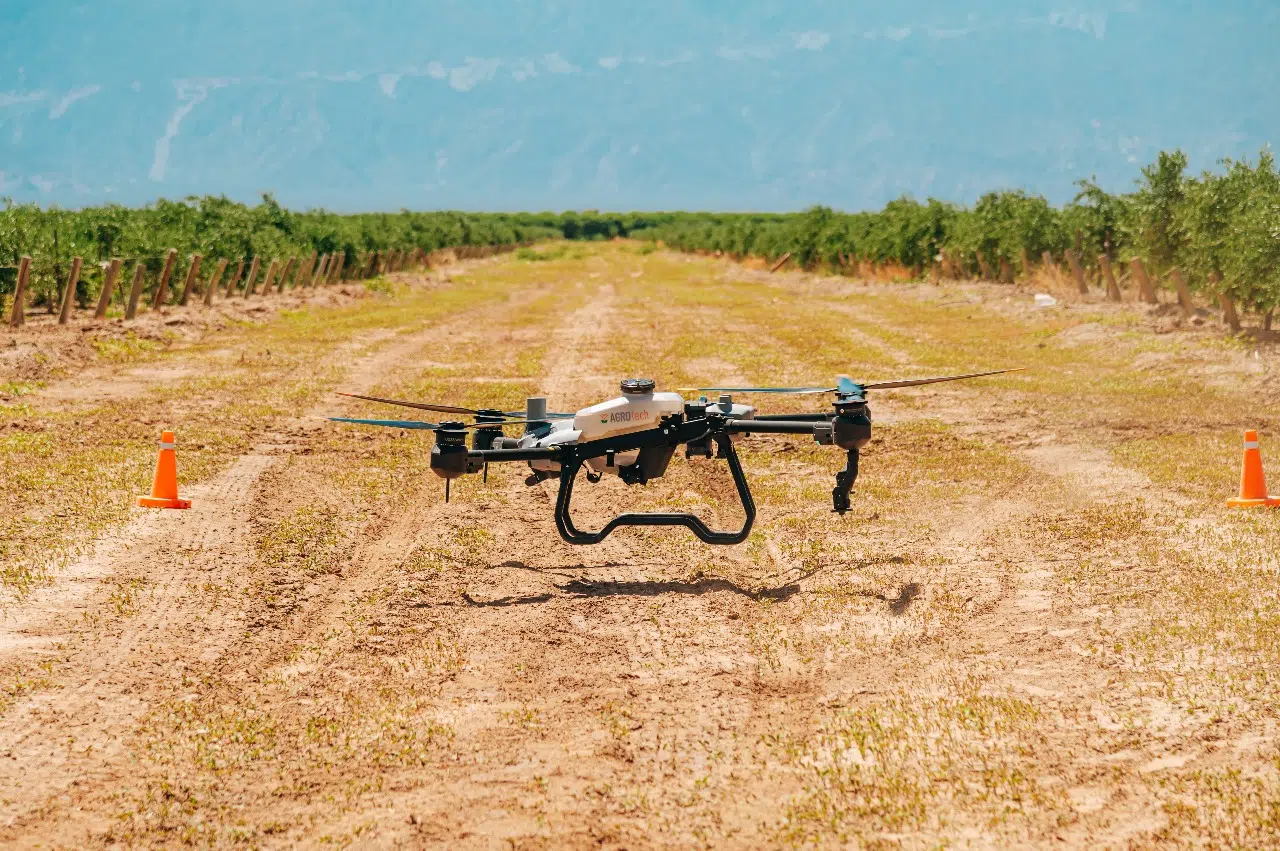
Uncontrolled technology and legal void on drone fumigations
The case exposes a regulatory void that is concerning. In Entre Ríos, as in other Argentine provinces, agrochemical applicator drones still lack a clear technical and legal framework:
- There are no specific records.
- Authorization protocols have not been approved.
- Phytosanitary product labels do not consider their use with drones.
While agriculture incorporates new technologies to increase efficiency, legislation progresses more slowly than productive reality, leaving rural communities without effective protection.
Health, environment, and production model
The judicial resolution not only protects a family but also questions the agro-industrial model based on the intensive use of agrochemicals, which has expanded for years without evaluating its impacts on health and the environment.
Socio-environmental and human rights organizations celebrated the ruling as a historic precedent, recognizing the precautionary principle and the priority of the right to a healthy environment over agricultural profitability.
For Judge Acevedo, the State must ensure that technological advances are accompanied by public policies that protect the life and health of the population, especially the most vulnerable sectors such as children.
A before and after in regulation
Although the precautionary measure currently only applies to the fields of Aldea Salto, its symbolic and legal scope is much greater. It opens the door for other communities to demand wider exclusion zones and effective controls over fumigations.
The ruling could become jurisprudence in future environmental cases challenging the use of drones or the scant regulation of agrochemicals in different provinces.



