



Since January 17, 2026, international waters have ceased to be a territory without clear rules and have come to have a common protection framework with the High Seas Treaty.
This agreement seeks to regulate the use and the conservation of almost half of the planet, today subjected to growing environmental pressures.
Thus, the international community begins to assume a collective responsibility over key ecosystems for the global climate balance.
Cooperation to protect what belongs to no one
The treaty establishes unprecedented mechanisms to manage marine spaces outside of national jurisdictions.
On one hand, it enables the creation of marine areas protected in high seas, something that previously lacked legal backing.
Additionally, it incorporates environmental impact assessments for new and emerging activities, such as geoengineering or carbon capture in the ocean.

Latin America facing a new oceanic scenario
In this context, Latin America and the Caribbean appear as relevant actors within the implementation of the agreement.
The region actively participated in the negotiations through flexible alliances that allowed for assuming technical leaderships.
In this way, countries managed to position priorities linked to marine conservation and biodiversity protection.
Two emblematic proposals underway
Among the first regional initiatives, the Salas and Gómez Ridge and the Thermal Dome stand out. The Salas and Gómez Ridge, driven by Chile, is supported by a strong oceanic tradition and the contribution of knowledge from the Rapa Nui people.
In parallel, the Thermal Dome, led by Costa Rica, is based on scientific evidence of its high biological productivity.
Biodiversity and science as axes of protection
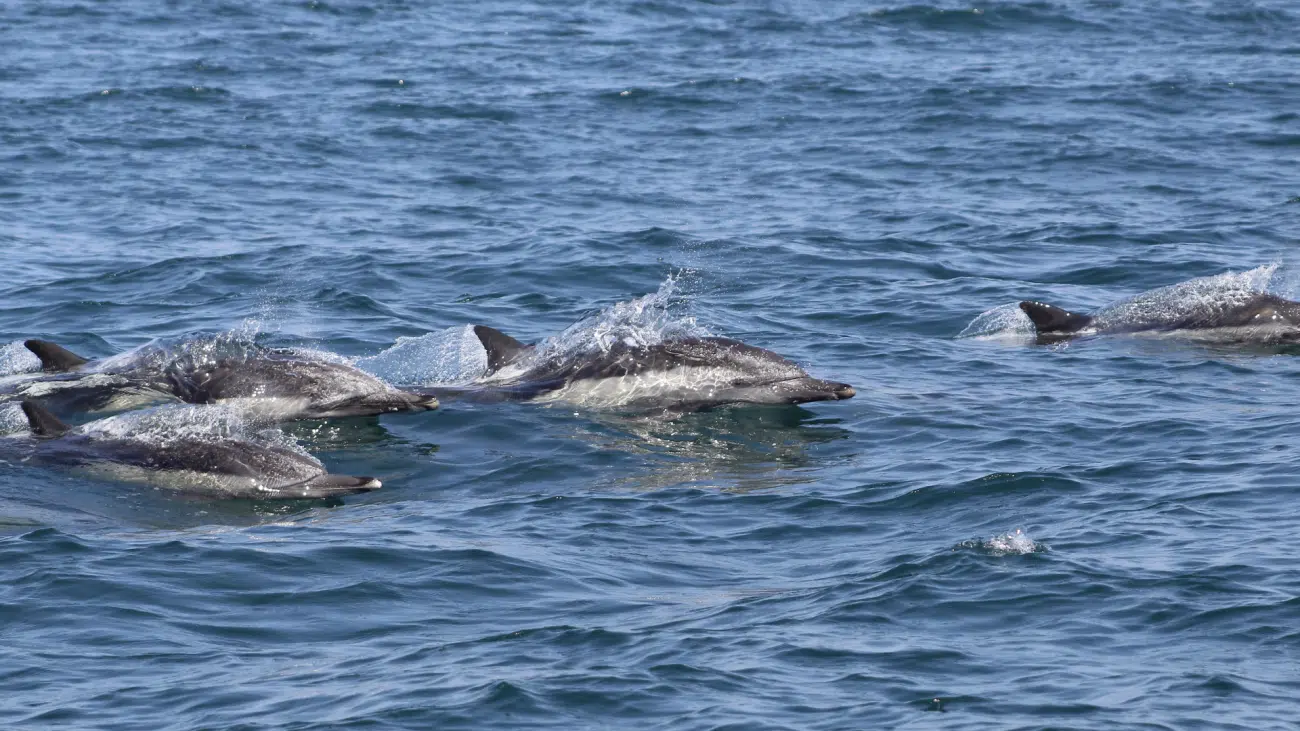
The Thermal Dome is an oceanographic phenomenon of the Central American Pacific that concentrates emblematic species such as the blue whale and the leatherback turtle.
Although historically associated with Costa Rica, it is now projected as a joint proposal since it involves international waters. Thus, the initiative promotes a shared management based on science and regional cooperation.
Integrated governance against old threats
The treaty also introduces an integrated perspective on projects that, even within national waters, may affect the high seas.
In that sense, activities such as hydrocarbon exploration must be evaluated if they generate significant impacts beyond the borders.
This logic seeks to overcome a fragmented governance and move towards coordinated and consulted decisions.
The High Seas Treaty and its strategic benefits
The agreement contemplates the fair distribution of benefits derived from marine genetic resources. Likewise, it strengthens the transfer of technology and the creation of capacities for countries with fewer scientific resources.
In this way, Latin America and the Caribbean can access key information on deep biodiversity and sustainable development.
A shared ocean with common rules
With the entry into force of the High Seas Treaty, the protection of the oceans takes a decisive step. The high seas cease to be a legal vacuum and transform into a space of global cooperation.
In this path, the Latin American region positions itself as a protagonist of a new stage for ocean governance.



