



The disappearance of beaches is rapidly advancing across the planet, and Argentina is not far behind.
According to experts, almost half of the sandy coasts could disappear before the end of the century.
This is due to the rise in sea level and the pressure of coastal urbanization, as warned by scientists at the FAPESP Day Uruguay symposium.
The phenomenon, known as “coastal squeeze”, threatens not only marine biodiversity but also local economies that depend on tourism and fishing.
In this way, coastal cities are increasingly exposed to the advancement of the sea.
Uruguay, Brazil, and Argentina share the threat of beach disappearance
Uruguayan marine scientist Omar Defeo, a professor at the University of the Republic (UdelaR), presented the warning during the opening sessions of the symposium held last month in Montevideo.
“Almost half of the beaches will disappear by the end of the century. We in Uruguay, Brazil, and Argentina share these resources,” Defeo stated.
And he affirmed: “Therefore, we must work in partnership with Brazilian scientists to manage and conserve coastal ecosystems“.
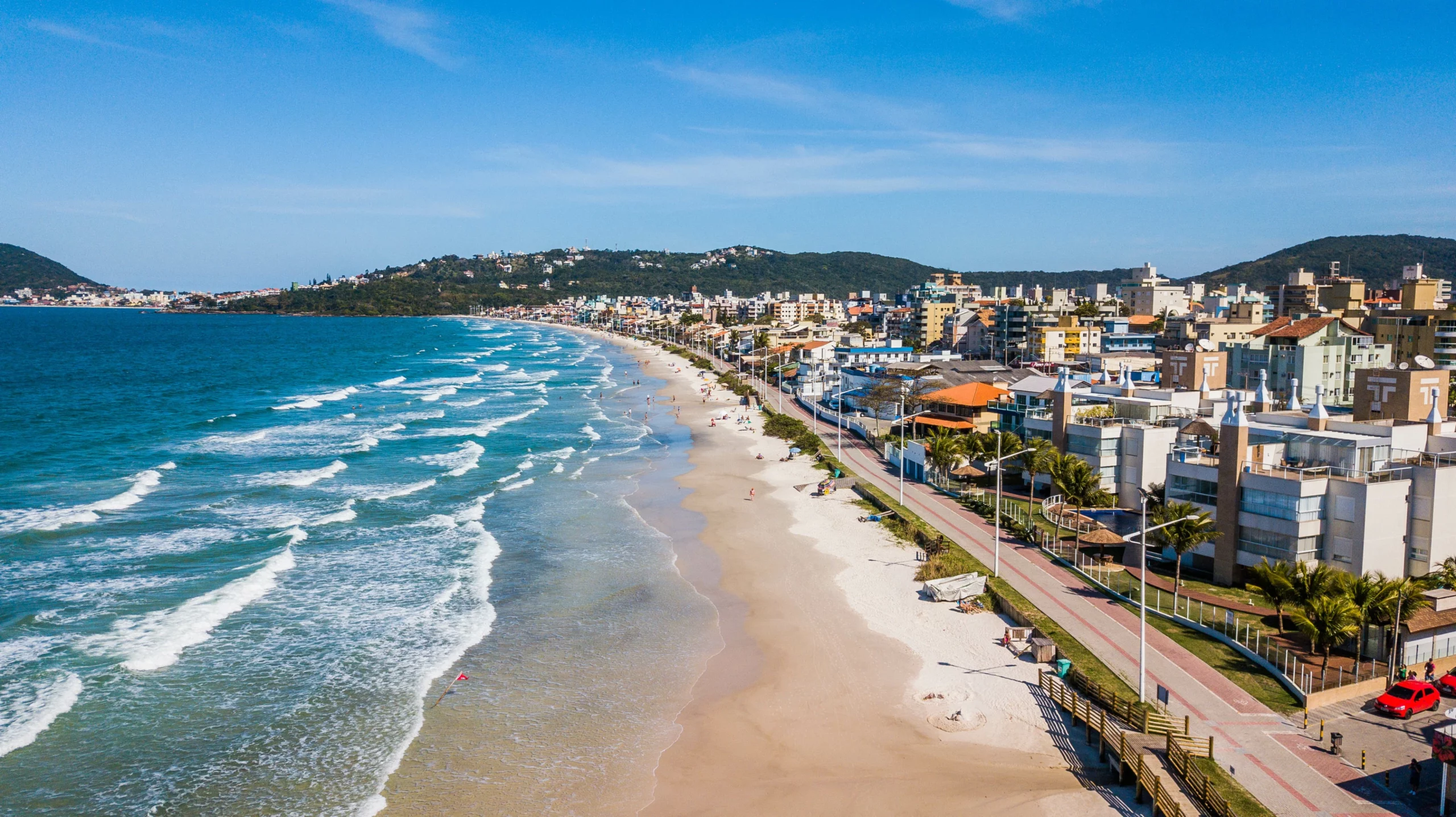
Currently, coastal erosion already shows worrying signs, with high rates of intense, extreme, or severe erosion.
This is shown by a study published in Frontiers in Marine Science, conducted by Defeo along with Brazilian scientists, which revealed that a fifth of the 315 beaches analyzed globally are at risk.
The three-zone system that protects coasts
According to Defeo, the coastal ecosystem currently functions as an interconnected system of three essential regions:
- The dune (post-beach): area above the high tide line where sand forms mounds
- The beach (beach face): strip exposed at low tide and covered at high tide
- The submerged zone (foreshore): extends from the low tide limit to where waves break
“These zones form an interconnected coastal ecosystem that is essential for environmental balance,” warned the scientist.
And he detailed that here, “the wind transports sand from the dry area to the surf zone. And when the waves advance, they bring the sediment back to the beach.”
This bidirectional movement generates a constant exchange where one zone feeds the other. When a storm arrives, the dune acts as a natural buffer.
“When urbanization removes the dune, the result can be the destruction of coastal houses” and the disappearance of beaches, warned Defeo.

The impact of human activity on biodiversity
A study conducted in collaboration with Brazilian researchers supported by FAPESP demonstrated that when one of these three coastal zones is compromised by urbanization, the effects damage the entire ecosystem.
The research, led by Brazilian Guilerme Corte, analyzed biodiversity in 90 locations along 30 beaches on the northern coast of São Paulo.
The results, published in Marine Pollution Bulletin, show that the number of bathers is the most impactful urbanization variable.
This correlates negatively with species richness and biomass, especially in submerged areas.
Additionally, the presence of buildings on the sand and mechanical cleaning activities also reduce biomass and species richness.
Paradoxically, the abundance of specimens was higher in locations near urban centers due to the increase of opportunistic species like polychaetes.
“The study showed that human impacts are not restricted to the place where they occur,” explained Defeo.
And he added: “The stress factors such as construction and the high number of visitors on the upper part of the beach negatively affect biodiversity in the lower and submerged areas.”
The group analyzed various factors behind the phenomenon, including the rise in sea level, wind patterns, and waves.
“We observed that human activities play a significant role, particularly on reflective beaches and intermediate beaches,” noted the researcher.
The progressive disappearance of beaches not only represents an environmental loss but also an economic and social one for millions of people who depend on the coasts.



