



In the Indigenous Land of Xingu, one of the largest reserves in Brazil, forest fires have become a constant threat. What used to be a humid landscape has turned into a scenario fueled by deforestation in the surroundings and the advance of climate change.
This protected territory of 2.6 million hectares, located between the Amazon and the Cerrado, is home to 16 indigenous peoples who see their ancestral land facing increasingly intense fire seasons. Elders remember that in the sixties, rains were frequent, but now prolonged droughts turn every spark into a risk.
The agricultural pressure in the region has contributed to environmental degradation, while uncontrolled burns and traditional agricultural practices increase vulnerability. Nowadays, fires not only threaten biodiversity, but also the security of communities that depend on the forest.
Faced with this critical scenario, the indigenous peoples themselves have taken a leading role. Xingu’s firefighters combine knowledge passed down from generation to generation with new technological tools that enhance their capacities for prevention and response.

Ancestral wisdom at the service of prevention
Fire has been part of the life of the peoples of Xingu for centuries. Used to clear land and prepare crops, it was part of a balanced cycle with nature. However, climate change has altered that dynamic, and what used to be controllable can become devastating.
That’s why firefighters visit villages to educate on safe practices and persuade neighbors to avoid burns at dangerous times. This task, based on community dialogue, aims for tradition to adapt to a reality marked by more severe droughts and intense winds.
Indigenous leadership is key in this process. Chiefs, knowledgeable about the territory, support the brigades by guiding operations in hard-to-reach areas. Their role as forest guardians strengthens the cultural and spiritual connection that peoples maintain with the environment.
This comprehensive approach shows that defending Xingu is not just an environmental act, but also an action of cultural preservation and sovereignty over a vital territory.
Technology as an ally in the fight against fire
In recent years, the incorporation of technology has transformed the way fires are tackled in the reserve. Satellite monitoring tools allow for the identification of active hotspots almost in real time, reducing response time and optimizing available resources.
The use of drones facilitates aerial reconnaissance in inaccessible areas, detecting the spread of flames and helping plan safe routes for firefighters. Helicopters, funded by environmental support programs, complement the strategy with fast transportation and water drops in critical areas.
Mobile applications and weather forecasting systems provide data on winds, temperature, and humidity. This information is crucial to anticipate risks and design more precise prevention plans, avoiding fires getting out of control.
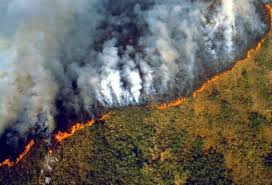 Indigenous firefighters combine ancestral knowledge and technology to fight fire in the Amazon. Photo: Naturaleza con Derechos.
Technology at the service of the environment
Furthermore, technology helps address a particular challenge in the region: peat fires, which burn underground in soils rich in organic matter. Thermal sensors allow for locating these invisible hotspots, impossible to identify with the naked eye, and acting before they resurface on the ground.
The integration of these resources does not replace indigenous experience, but enhances it. The combination of traditional practices with technological innovation creates a stronger and more effective strategy to protect the jungle.
A hope for the future of Xingu
The work of indigenous firefighters shows that the fight against fire is also a fight for life. Every saved hectare means preserving centuries-old trees, unique species, and the ecological balance of one of the most biodiverse regions on the planet.
Although challenges persist, collective actions show encouraging results. Early arrival of rains and reinforced prevention have reduced the intensity of recent fires, strengthening confidence in a safer future for the reserve.
Xingu stands today as an example of resilience. With the support of technology, community commitment, and ancestral wisdom, indigenous peoples have managed to turn the crisis into an opportunity for ecological innovation and cultural reaffirmation.



