



Cartagena announced a historic investment of over $150 million to modernize and recover its water bodies. The announcement was made during the Rivercity Global Forum, an international meeting that brought together experts in urban development and sustainability around the rivers as axes of transformation.
The Caribbean city, which turned its back on its channels, lagoons, and bays for decades, is now betting on a paradigm shift. The goal is to reverse over 15 years of environmental neglect and turn water into a driver of sustainable development, tourism, and mobility.
Among the main projects are the Grand Malecón del Mar, urban renewal in Bocagrande and Castillogrande, the Creative District of Manga, the Green Highway, and the comprehensive recovery of La Bocana in La Boquilla. Each project aims to strengthen the city’s relationship with its water resources and restore their ecological and social function.
The district administration also sees the bay as a mobility corridor. With over 50 natural ports, a water transportation system is projected to connect strategic sectors and decongest land traffic, thus integrating sustainability and efficiency.
 Colombia works on the recovery of its water bodies. Photo: El Tiempo.
The Challenge of the Canal del Dique
Cartagena’s water future also depends on the recovery of the Canal del Dique, an arm of the Magdalena River that connects to the bay and supplies drinking water to over a million people. Currently, its deterioration due to sedimentation threatens navigability and the health of sensitive ecosystems such as the Rosario Islands.
The restoration of the canal is considered one of the country’s most urgent environmental projects. Its implementation will help mitigate floods, strengthen agriculture and fishing, and preserve the biodiversity of the Caribbean region.
However, while the works progress in planning, other nearby ecosystems, such as the Ciénaga de la Virgen and the beaches of La Boquilla, remain at risk due to invasions, uncontrolled tourism, and the effects of climate change. The challenge, then, will be to extend the recovery model to all water bodies that sustain life and the city’s economy.
Cartagena now emerges as an example of how water can cease to be a symbol of neglect and become the basis for a more just, resilient, and sustainable development.
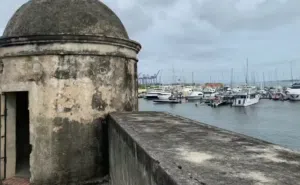 Colombia works on the recovery of its water bodies. Photo: El Tiempo.
The Importance of Rivers in Big Cities
Rivers and bodies of water that run through large cities play a fundamental role in their environmental balance. They are not only sources of water supply but also ecological corridors that maintain biodiversity and regulate the local climate.
In the Colombian case, cities like Medellín, Cali, and Bogotá grew around their rivers, although they often polluted or relegated them to a secondary role. Today, it is recognized that restoring them is not a luxury but a necessity to ensure public health, water security, and resilience to climate change.
Urban rivers also represent social integration opportunities. When restored and turned into meeting spaces, they improve quality of life, promote ecotourism, and generate cultural identity. Cartagena, with its channels and bay, now seeks to replicate this model to recover the lost relationship between the city and water.
Additionally, these water systems are key to sustainable mobility. An efficient water transport can reduce the carbon footprint and offer alternatives to urban congestion. The experience of other cities worldwide shows that leveraging rivers as natural highways is a viable and environmentally friendly strategy.



