



This Tuesday, the Government formalized the call for extraordinary sessions in Congress and, among the topics, included a review of the Glacier Law for its flexibilization.
Although the Executive has not yet presented the project, it did include the review of Law No. 26.639 in the call for extraordinary sessions, which will run until December 30.
In fact, the Executive is preparing to present a “Bill for the Adjustment of the Minimum Budget Regime for the Preservation of Glaciers and the Periglacial Environment“.
This would reach Congress this week and, to be approved, it must pass with a green light from both the House of Representatives and the Senate.
In line with what President Javier Milei announced, the plan is to redefine the concept of “periglacial environment” and transfer its regulation to the provinces.
The ultimate goal is to relax the rules that currently protect glaciers in the country in order to boostmining investments in mountain areas rich in copper, lithium, and other strategic minerals.
Therefore, the initiative generates an intense environmental debate between those who see an opportunity for mining development and those who warn about water risks.
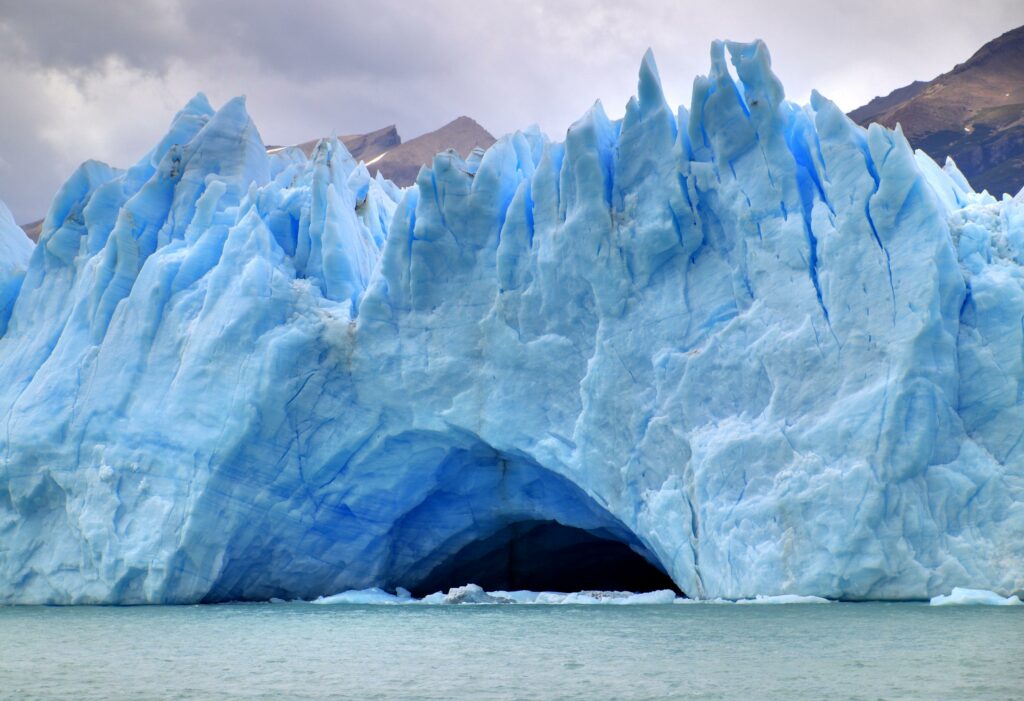
What the relaxation of the Glacier Law proposed by the Executive entails
According to the proponents of the relaxation, the current definition of “periglacial” in the Glacier Law is too broad and imprecise.
This “vagueness” allows judicial or environmental claims to halt productive projects even when there are no actual glaciers.
The reform thus proposes returning to the provinces the ability to define which areas should remain protected according to their local technical studies.
In this way, each jurisdiction would determine its own environmental protection zones.
The change seeks to promote the Executive’s plan to attract “large investments“, especially in regions with mining and hydrocarbon potential that currently face restrictions due to national regulations.
Conflicting positions: mining provinces vs. environmentalists
The provincial governments of the so-called Copper Table —Mendoza, San Juan, Catamarca, and Jujuy— support the initiative.
These officials consider that determining their own periglacial areas represents an act of “environmental federalism“.
From these provincial legislatures, the change represents an opportunity to attract capital, generate employment, and boost local economies after years of obstacles related to the current regulations.
However, more than 25 organizations of environmentalists, scientists, and social groups issued a statement warning about the risks of modifying this law.

For Greenpeace, the reform implies a “systematic environmental setback” and points out that “without glaciers there is no water”.
The glaciology specialist from CONICET, Lucas Ruiz, warns that there are visible and “hidden” glaciers —such as debris or periglacial glaciers— that fulfill hydrological functions.
Therefore, relaxing the protection would be “a direct threat” to those vital functions.
What the current Glacier Law says and what are the risks of its relaxation
Law 26.639 defines glaciers as “any mass of perennial ice, stable or slowly moving”.
It considers periglacial areas as mid and high mountain zones where frozen soils act as freshwater reserves.
Under this concept, mining, hydrocarbon activities, infrastructure construction, and the treatment of toxic substances are prohibited in those protected areas.
But now, the relaxation of the Glacier Law that the Government seeks to approve in extraordinary sessions would allow provinces to redefine these areas.
Critics of the reform warn about potential risks that include:
- Loss of water reserves in the medium and long term by allowing protected areas for mining
- Alteration of the hydrological regime with more erratic flows and less natural storage
- Ecological risk for the biodiversity of fauna, flora, and aquatic ecosystems
- Impact on sustainable tourism in areas like Los Glaciares National Park

Santa Cruz: the special case with double protection
Santa Cruz maintains its own provincial regulation —Law 3123— that protects glaciers and periglacial areas as strategic water reserves.
This jurisdiction prohibits extractive activities in those areas with local legislation.
Deputies from Unión por la Patria in Santa Cruz warned that changing the national law “represents a direct threat to democracy, ecological balance, and the rights of future generations“.
If the national law changes, a scenario of redefinition of maps, permits, and criteria opens up.
This generates uncertainty about the future of basins, land use, and environmental conservation in the province.
The debate in Congress will determine whether Argentina transitions from a centralized and national model to a decentralized and provincial one.
The discussion promises to extend during the extraordinary sessions of December with clearly opposing positions.



