



The urban rivers are once again suitable for swimming in several European cities, after decades of investments in sewage, purification, stormwater infrastructure, and health monitoring.
In a context of increasingly frequent heat waves, cities like Paris, Basel, and Copenhagen have turned former polluted waterways into safe recreational spaces.
The emblematic case of the Seine
In Paris, the Seine River went from a symbol of filth to an emblem of recovery.
- Prohibited for swimming since 1923, when wastewater and waste made it unhealthy.
- The debate about its cleanliness began in 1988 and intensified in 2016 under Mayor Anne Hidalgo, as part of the 2024 Olympic bid.
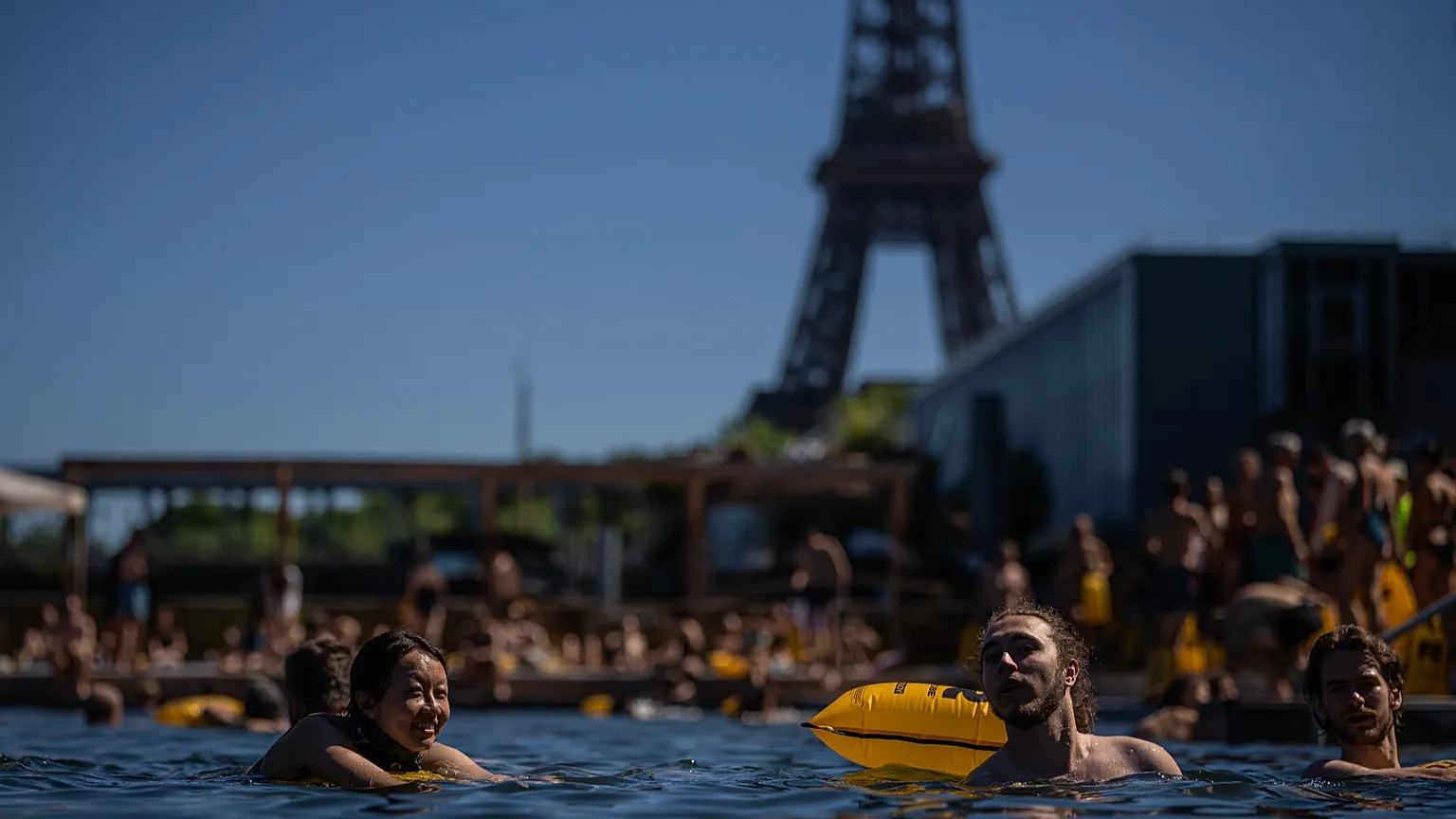
- In July 2025, the Seine officially opened to the public: more than 100,000 people swam in the three designated areas.
- Today, the city analyzes the water daily to detect E. coli and enterococci, complying with European Union standards.
Despite the progress, a symbolic rejection persists: in 2021, 70% of the French described the Seine as dirty and smelly.
Basel and the Rhine: tradition and culture
About 400 km from Paris, Basel offers a very different relationship with its river. There, hundreds of people float every summer on the Rhine, even to commute to work.
- The custom dates back to the 15th century, with records of nuns refreshing themselves in the river.
- The first official bathhouse opened in 1831.
- For four decades, the practice of drifting with floating waterproof bags, called Wickelfisch, has become a regular part of summer.
However, the path was not free of setbacks. In 1986, a fire at a Sandoz warehouse released toxic substances into the Rhine, turning the water red and devastating the wildlife. That disaster prompted legal changes and improvements in treatment plants and monitoring systems.
Switzerland and water management
Switzerland leads in wastewater treatment and has made its urban rivers some of the cleanest in the world.
- In 2016, it passed a pioneering law to remove microcontaminants like medications and pesticides.
- Each year, specific treatment facilities are added to existing plants.
- The Swiss political system allows the population to push for regulations through referendums, strengthening the culture of water as a common and trustworthy space.
Ecosystems and pending challenges
Experts warn that water suitable for swimming does not equate to an intact ecosystem.
- Many Swiss waterways have been channeled and fragmented by hydroelectric plants, with habitat loss and alteration of sediment flow.
- The need to monitor invisible pollutants that affect both human health and aquatic fauna persists.
The recovery of urban rivers in Europe reflects decades of investment and environmental awareness.
Paris, Basel, and other cities demonstrate that it is possible to transform degraded waterways into safe and recreational spaces, offering solutions to extreme heat and recovering historical cultural practices.
The challenge now is to ensure that cleanliness for swimming is accompanied by true ecological restoration.


