



A total of 67 countries have already submitted their national adaptation plans for climate disasters to the United Nations (UN).
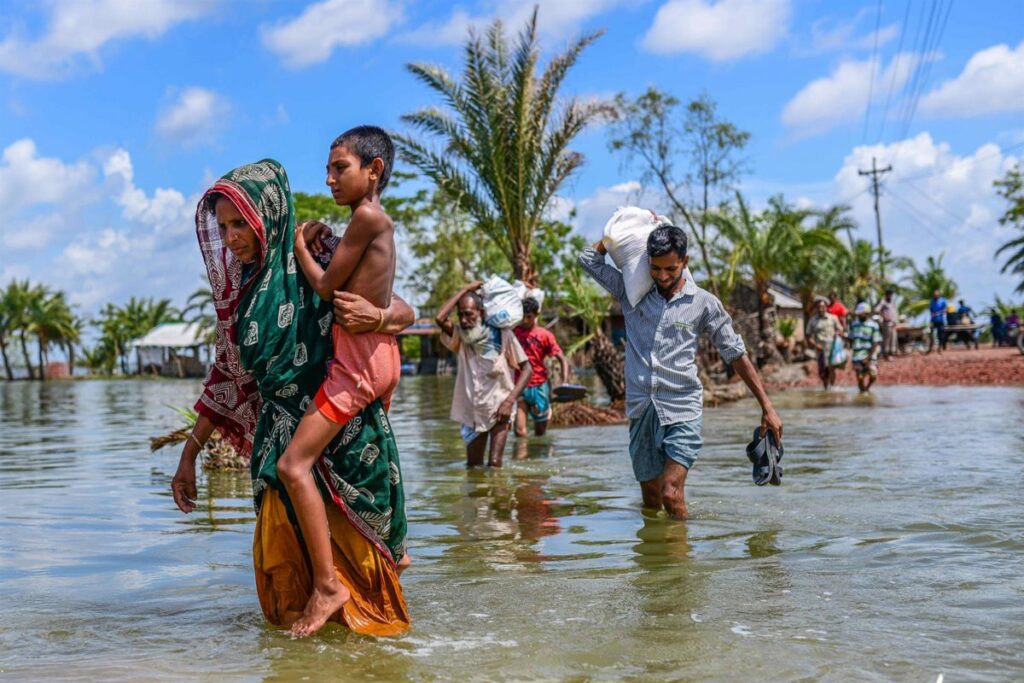
The goal is to incorporate them into their environmental policies and protect communities from natural disasters such as floods, droughts, wildfires, and storms.
The figure represents a significant advance in global preparedness against the climate emergency, according to the UN’s first report on climate change ahead of the COP30 in Brazil.
Priority Climate Threats
The adaptation plans address multiple climate hazards:
- droughts;
- floods;
- rising temperatures;
- sea level rise;
- changes in rainfall patterns.
Strategies against forest and land degradation are also included.
“Adaptation is increasingly being integrated into national development plans,” explained Simon Stiell, executive secretary of the UN on Climate Change.

Climate Disaster Plans Are Growing
As of September 30 of this year, 144 developing countries have initiated or launched processes for formulating climate adaptation plans.
Of these, 67 have already completed and submitted their National Adaptation Plans (NAP) to the United Nations Framework Convention on Climate Change.
Among the countries that submitted plans are 23 of the least developed countries (LDCs) and 14 small island developing states (SIDS).
Although the plans are focused on developing nations, also 13 developed countries have submitted their documents. Spain is one of them.
The growth is steady: in 2024 there were 60 countries with submitted plans, in 2023 there were 52, and the number has been progressively increasing since 2015.

How Countries’ Plans Against Climate Disasters Are Coming Along
Since 2015, 116 national or supranational adaptation projects have been approved for implementation.
These projects are funded through the Green Climate Fund (GCF) aimed at developing countries with submitted NAPs.
The committed financing reaches nearly 7 billion dollars.
“Almost all developing countries are working on their adaptation plans,” assured Stiell.
With the NAPs, the goal is for governments to lay the foundations for more climate-resilient economies and societies.
To achieve this, it is necessary to implement coordination mechanisms, financing strategies, and monitoring systems in key sectors such as agriculture and health.
The adaptation plans also show an approach that encompasses the whole society: more women, youth, indigenous peoples, local communities, and the private sector participate in the planning.
Adaptation “is not optional but absolutely essential,” Stiell noted. It is “key to unlocking the great transformative power of investing in climate resilience.”
The Financing Barrier and the Role of COP30
Despite the progress, there are “concerning aspects” that hinder progress.
“Many countries still lack access to the necessary financing,” warned Stiell.
Often many nations face complex approval processes, fragmented support, and excessive reliance on external experts.
The direction against the climate emergency is correct, but “urgently” needs speed, according to the UN: “We must accelerate the pace.”
The NAPs and their development will be a central topic at the COP30 to be held soon in Belém, Brazil.
There, nations will have to respond on adaptation: “It will be a central topic,” anticipated Stiell.
Parties are expected to agree on adaptation indicators and work to close “the financial gap.”
“Climate financing is not charity, it is vital to protect all populations and economies.”
“No more excuses, investors!” could have been the title of the report, Stiell noted. “Financing must flow now.”


