



Indigenous peoples of southwestern Bolivia, where the country’s largest lithium deposit is located, have requested the government of Rodrigo Paz to include environmental impact studies and free, prior, and informed consultation in the exploitation projects.
The request aims to ensure that the initiatives do not have negative effects on the region and that the communities are recognized as central actors in decision-making.
The demand was embodied in a bill drafted by authorities of the province of Nor Lípez, in the department of Potosí. “We want to know what awaits us in ten years,” expressed Iván Calcina, general secretary of the Central Única Provincial de Comunidades Originarias.
Environmental and Social Concerns
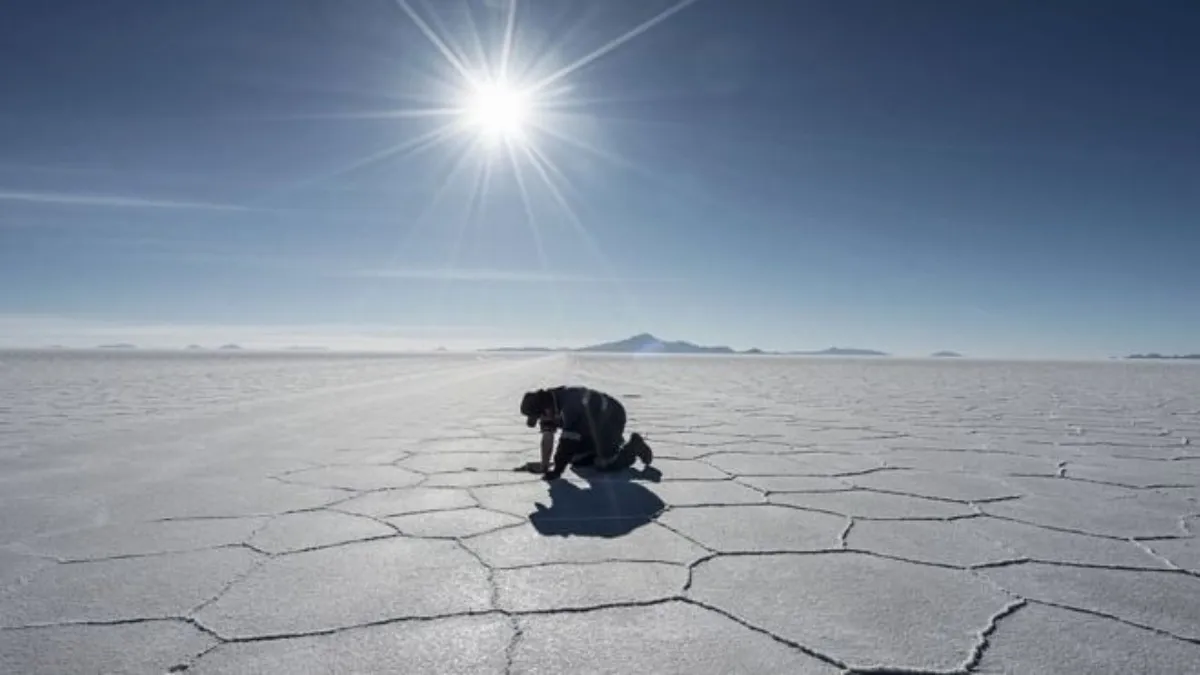
According to Calcina, there are 14 communities living around the Uyuni salt flat that could be directly affected by water scarcity and other environmental impacts resulting from lithium exploitation and industrialization.
The main demand is to have a hydrological study that assesses the risks for the region and for the country as a whole.
The concern arises after the contracts signed by the government of Luis Arce (2020-2025) with companies from China and Russia to apply direct lithium extraction (DLE) technology.
These projects, with planned investments of over 2 billion dollars, were questioned for lacking environmental studies and prior consultation processes, as required by Bolivian regulations.
Criticism of Previous Projects
Energy experts agreed that the initiatives of foreign firms “did not have solid foundations on environmental impact,” which could lead to serious consequences for local communities.
During Arce’s administration, it was estimated that lithium reserves in Bolivian salt flats reached 23 million tons, mostly in Uyuni, an area of 10,000 km² that also constitutes one of the country’s main tourist attractions.
In December 2023, a state industrial complex was inaugurated there with the capacity to produce 15,000 tons annually of lithium carbonate through evaporation ponds. However, the plant, located in the municipality of Colcha K, operated at less than 20% of its capacity and had design flaws. The initial investment was 96 million dollars.
The “Lithium Era” and Its Setbacks
The project had been initiated by the government of Evo Morales (2006-2019) and continued by Arce, who announced the beginning of the “lithium era” in 2023. However, the results fell short of expectations.
The current president Rodrigo Paz, who took office in November 2025, denounced that in previous administrations “the lithium was stolen” due to the lack of concrete progress in exploitation and industrialization. Paz assured that his government will work on real solutions for the sector.
Community Expectations
Iván Calcina expressed that they hope the bill drafted together with other indigenous authorities will be considered by the government. “We want to be taken into account in decisions and protect ourselves from environmental impacts,” he stated.
The claim of the indigenous communities of Nor Lípez puts at the center of the debate the need to reconcile lithium exploitation with environmental protection and the rights of indigenous peoples. Prior consultation and technical studies appear as indispensable conditions to move towards a development model that does not repeat the mistakes of the past.



