



After almost six years of closure, the last bears and a tigress were rescued, and the specimens began their journey to specialized sanctuaries in Bulgaria and Netherlands, marking a milestone in the definitive closure of the controversial site.
In an unprecedented logistical deployment coordinated by the international organization Four Paws, this Monday the transfer of animals from the former Luján Zoo to new destinations in the Old Continent was completed.
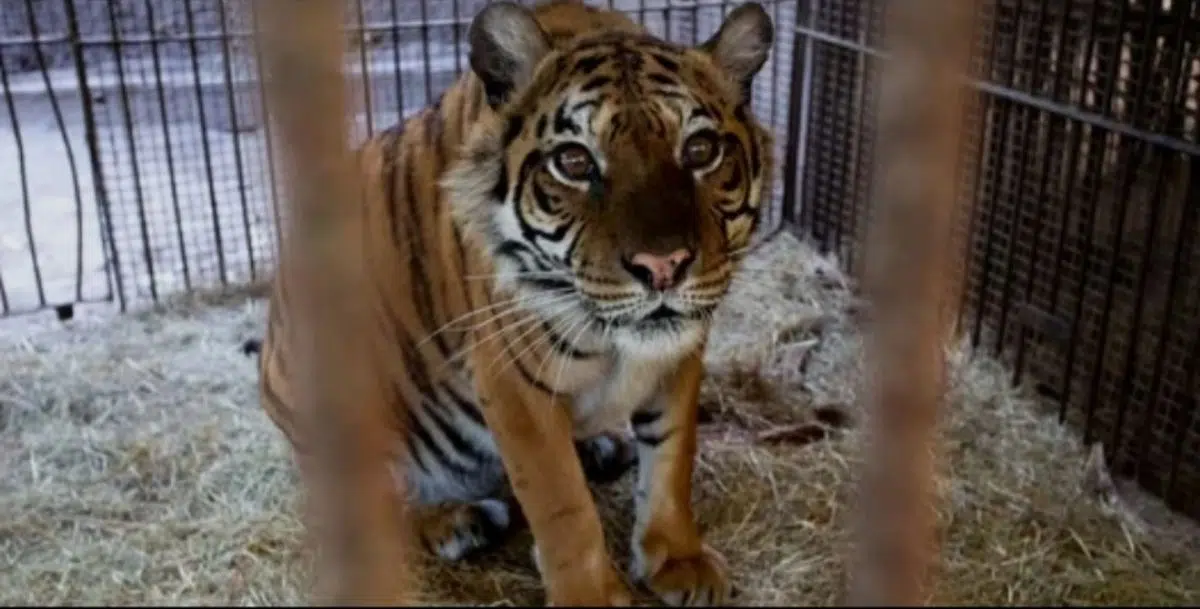
The protagonists of this mission are Gordo and Florencia, two 17 and 18-year-old brown bears, and Flora, a Bengal tigress who lived in critical captivity conditions.
The operation represents the second phase of a comprehensive rescue plan aimed at ensuring the welfare of the wildlife that remained in the Buenos Aires site after its definitive closure in 2020.
The journey began by land, traveling along Route 6 to Cañuelas, where strict routine veterinary checks were conducted.
A key point of the operation is that the specimens travel fully conscious, without sedation to minimize health risks during the flight.
After a technical stop in Las Heras, the convoy headed to Ezeiza International Airport, from where they will depart on cargo planes specifically conditioned for the transatlantic transport of wild species.
The itinerary of the animals is divided according to their biological needs:
-
The brown bears: Their destination is the sanctuary of Belitsa, in Bulgaria (created with the support of the Brigitte Bardot Foundation). There, they will undergo a preventive quarantine before being integrated into an environment that emulates their natural habitat.
-
The tigress Flora: She will travel to a specialized recovery center in Amsterdam, Netherlands, leaving behind the small four-square-meter cage where she survived.
This transfer of animals from the former Luján Zoo is the result of years of judicial and health management. The first stage of the mission consisted of the medical evaluation of the 62 specimens that inhabited the place, most of them felines.
Experts from Four Paws highlighted that, although this departure is a great advance, there are still about 60 large felines remaining in the establishment, in addition to dromedaries and primates awaiting a similar relocation in international sanctuaries.
With this movement, it is expected that Gordo, Florencia, and Flora will have a successful rehabilitation in environments designed for their species, away from the exhibition model that characterized the old zoo in the western area for decades.



