



The General Department of Irrigation of Mendoza published a new edition of the Hydronivometeorological Bulletin on January 13, a document that allows for the evaluation of the current state of water in the province. The report summarizes the situation of rivers, reservoirs, and snow in the high mountains, in a context marked by drought.
The bulletin is prepared by the Water Management Directorate and the Department of Irrigation Hydrology, and it is updated daily with data from 118 stations distributed in Mendoza, which measure flows, reservoirs, and climatic variables. The information is processed via satellite and compared with historical averages of more than three decades, offering a clear picture of the situation.
Spill Forecast 2025-2026
The central data of the report is the spill forecast for the 2025-2026 season:
- Mendoza, Tunuyán, Diamante, and Grande Rivers: classified as moderate drought, with volumes expected between 58% and 63% of historical values.
- Atuel River: classified as scarce, with a limited flow equivalent to 73% of the historical average.
- Malargüe River: also appears with a scarce classification, reflecting reduced availability.
These indicators confirm a tight scenario that requires careful management of the water resource.
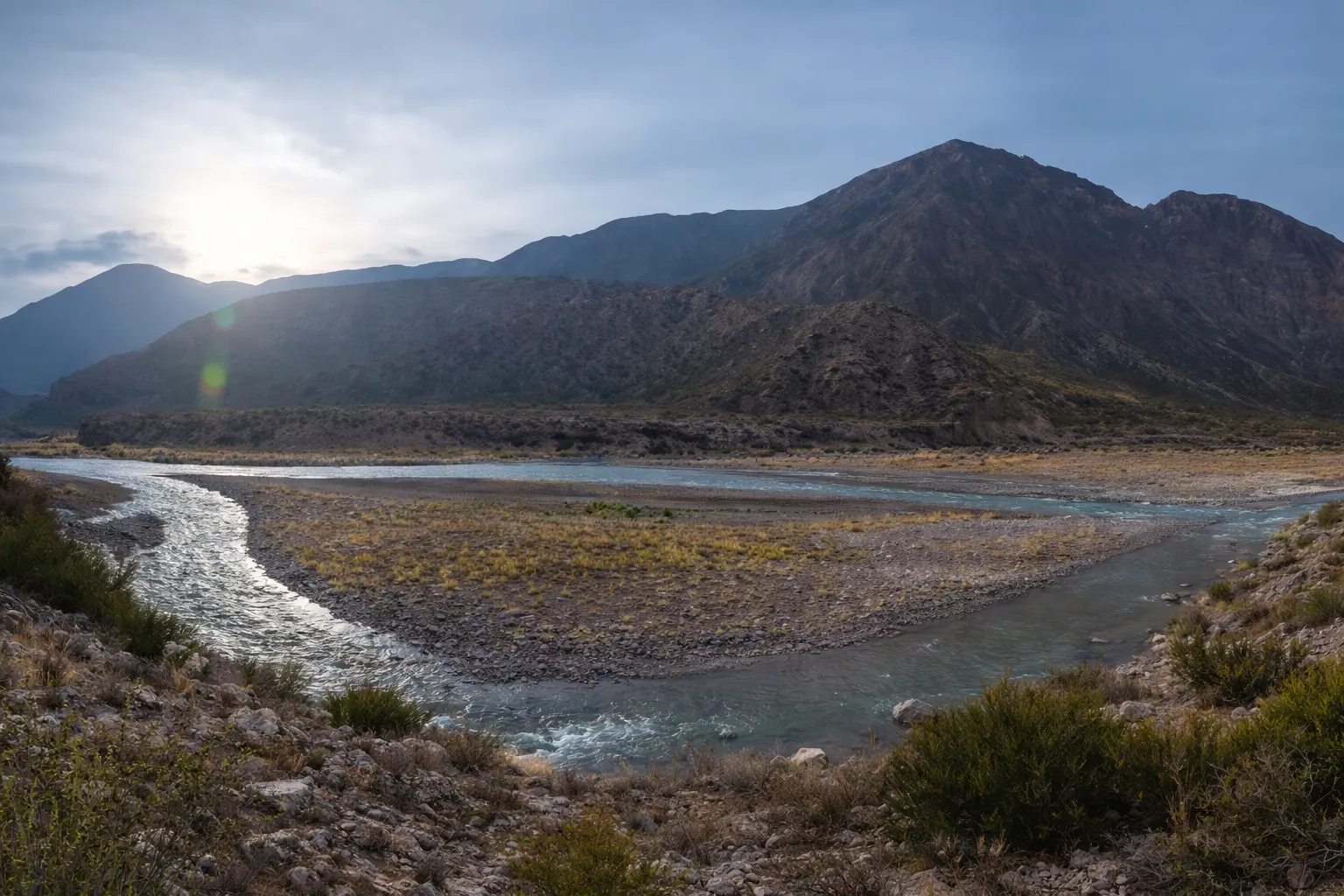
Water Issues in Mendoza
The bulletin and specialists highlight that the province faces a complex water challenge, crossed by multiple factors:
Water Scarcity and Drought
- Flow Reduction: significant reduction of available water in the basins.
- Glacier Retraction: climate change reduces the main water reserve.
Pollution
- Aquifers: presence of toxic substances, such as in El Carrizal.
- Agricultural Use: fertilizers and pesticides that contaminate water sources.
Management and Administration
- Insufficient Infrastructure: the water system does not meet growing demand.
- Inefficiency: leaks and poor management in the distribution network.
- Usage Conflicts: disputes between urban, agricultural, and industrial sectors.
Impacts of Climate Change
- Alteration of natural cycles.
- Increased frequency of droughts and forest fires.
Consequences of the Crisis
The water issue has multiple effects:
- Economic: losses in agriculture and livestock, affecting food security.
- Social: increase in poverty, deterioration of quality of life, and rise in diseases due to lack of hygiene.
- Environmental: death of flora and fauna, forest fires, and ecosystem degradation.
The Hydronivometeorological Bulletin confirms that Mendoza is experiencing a structural drought, with flows below historical averages and adjusted reservoirs.
The combination of climate change, pollution, and insufficient management compromises the future of water in the province. The urgency is clear: to move towards an efficient and sustainable management of the resource, capable of balancing the needs of the population and productive activity.



