



In September 2023, three indigenous reserves in the Colombian Amazon began a key research project to protect their health and territory. Their goal was to measure the concentration of mercury in fish commonly consumed, an essential food in their diet. The participants were El Itilla in Calamar (Guaviare); La Victoria on the Apaporis River; and Mocagua on the Amazon River.
The work, driven by the Sociedad Zoológica de Frankfurt en Colombia and funded by the Alianza para el Clima y el Uso del Suelo (CLUA), spanned several months and concluded in February of this year. The results raised alarms: up to 28% of the analyzed species exceeded the levels of mercury recommended by the World Health Organization (WHO).
Among the species with the highest concentration of this metal are the piranha, the needlefish, the vampire fish, the payarín, and the corvina. The research revealed that the values vary depending on the capture location, with Mocagua recording the lowest levels and La Victoria the highest.
Piscivorous species measuring over 35 to 40 centimeters in length showed the highest concentrations, while fish feeding on mud, detritus, or fruits showed significantly lower values. This difference is directly related to their position in the food chain.
 Concerns about mercury levels in consumed fish. Photo: Pixabay.
A study to understand and prevent the risk
To obtain the data, the team conducted expeditions in different phases of the hydrological cycle: high, descending, low, and ascending waters. This approach made it possible to detect variations in mercury concentration according to the season. During each outing, researchers and community members collected fish muscle samples, which were later sent to laboratories at the universities of Cartagena and Córdoba.
The research established a solid baseline for the analyzed areas. In Mocagua, 563 samples from 104 species were collected; in El Itilla, 308 samples from 35 species; and in La Victoria, 348 samples from 32 species. This detailed record will allow monitoring the situation and making decisions to reduce risks.
The role of the communities was essential. Fishermen and residents actively participated in fishing, sample collection, labeling, and packaging. Additionally, they provided insights into the species, their habits, and maturity status, which allowed the creation of fishing logs that enhance the scientific value of the study.
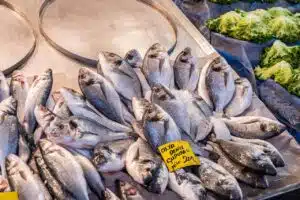 Concerns about consumed fish in the Colombian Amazon. Photo: Pixabay.
The growing threat of illegal mining
While mercury naturally occurs in the Amazon, the main external source comes from illegal gold mining. This metal is used to separate minerals from other materials, releasing it into the environment and contaminating rivers and fish. Additionally, the release of mercury from the soil caused by deforestation and burning worsens the risk to biodiversity and food security.
This issue not only threatens the health of indigenous communities but also the ecological balance of the region. Mercury can accumulate in organisms, move from prey to predator, and reach toxic levels in key species. This compromises both wildlife conservation and access to safe food for populations relying on fishing.
Reducing this threat involves strengthening control over illegal activities, protecting forests, and promoting responsible fishing practices. The experience of these reserves demonstrates that community science is a powerful tool to highlight environmental issues and act before their consequences become irreversible.



